
Yolk Folk Hero

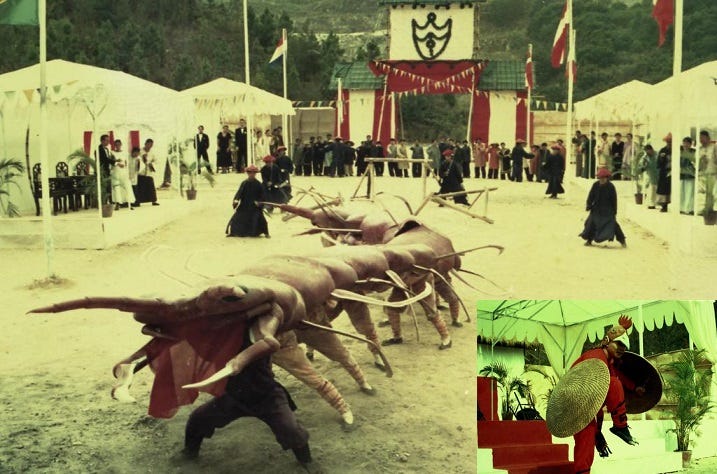
Wong Jing’s Last Hero in China (1993) is not only a tribute to the genre of cinema that he worked in as a screenwriter but one that he loved as a fan. Bryan Leung Kar-Yan's real-life character, Leung Fu, is the same character that he had played in an 1981 movie about folk hero Wong Fei-Hung: Dreadnaught. The twist is that his personality has more in common with the goofy idiot that he played in Sammo Hung's Knockabout (1979). Hiring Yuen Woo-Ping to be the fight choreographer was an extension of the fact that he had directed Dreadnaught as well as the two old Jackie Chan movies which are referenced in Last Hero in China i.e. Snake in the Eagle's Shadow (1978) and Drunken Master (1978).
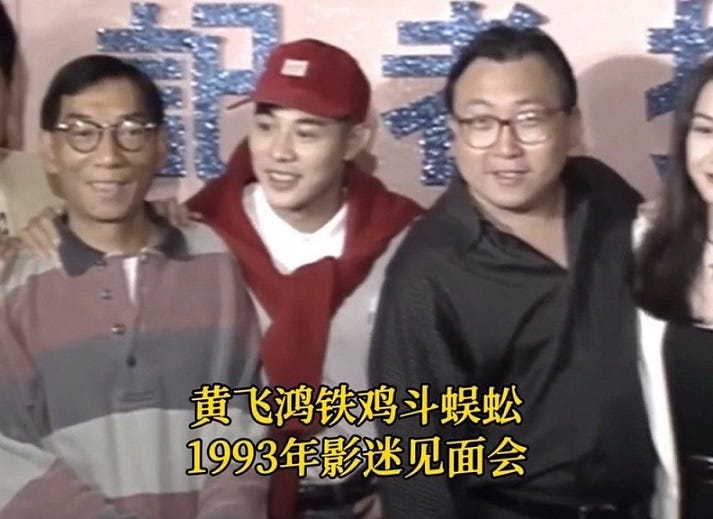
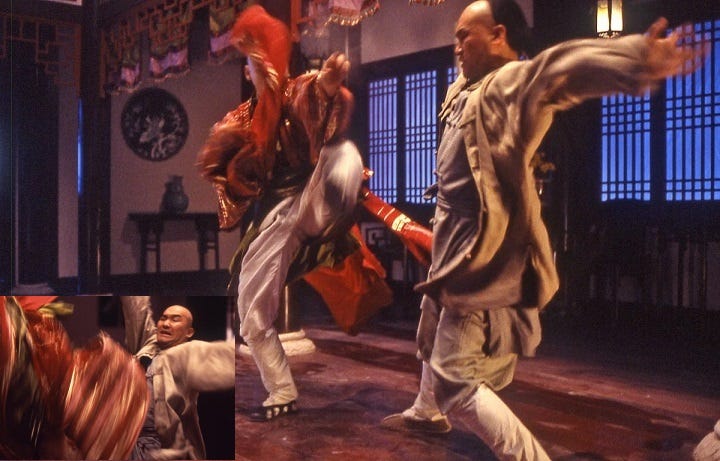
The casting of Hong Kong stuntman Chung Fat as Yuen Lung works on two levels. The name is what Sammo Hung used during his early days as a stuntman whereas the character is a homage to the one that Chung played in Encounter of the Spooky Kind (1980). In Sammo's movie, Chung played a wizard who could channel spirits. As Sammo's reluctant sidekick, he enabled him to fight like a monkey against a man armed with a large gold ring. In Wong Jing's movie, Chung does the monkey style of Kung Fu while one of his cronies uses a large gold ring. In its own way, this is a reference within a reference since Wong Jing’s Royal Tramp II (1992) featured a battle scene involving large gold rings, which was an extension of what he conceived in his script for Shaolin Prince (a 1983 Shaw Brothers movie by directed Tong Kai).
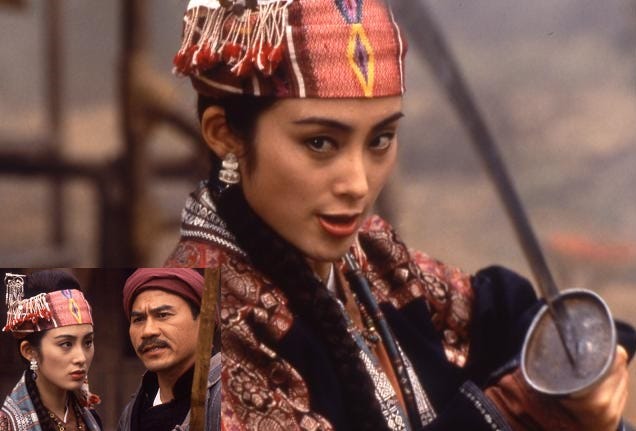
Last Hero in China is the best example of literal stunt casting in a Kung Fu movie, and not squarely because of the above reasons alone. Gordon Liu Chia-Hui being cast as an evil Shaolin monk is ironic since he famously played heroic monks during his Shaw Brothers heyday and even in other movies outside the studio. Alan Chui, however, remains in characteristic villainous form. The most inspired bit of casting, however, is Law Ho-Kai reprising his role as the Chinese traitor in Jackie Chan's Project A (1983). In that historical epic about pirates, Law played a flamboyant VIP Club manager who dressed as a Westerner and spoke English.
On that note, Last Hero in China has a character who is meant to remind Kung Fu movie aficionados of Whang Ing-Sik's first appearance in Jackie Chan's The Young Master (1980). In his first scene in the latter, Whang is a cuffed convict with scruffy clothes and long hair. In Jackie's movie, Whang breaks free to fight guards. In Wong Jing's movie, the convict breaks free to fight Wong Fei-Hung. The convict is played by Dion Lam. The last but not least example of stunt casting is Jet Li. He could be regarded as the last big star to emerge from the golden era of Kung Fu cinema, especially since Shaolin Temple out in 1982 - the last profitable year (as well as the best year). Also, Jet Li had already played Wong Fei-Hung in a series of serious films directed by Tsui Hark i.e. the Once Upon a Time in China trilogy. Yuen Biao, the star of the aforementioned Dreadnaught, played Leung Foon in the first part of Jet Li’s trilogy.
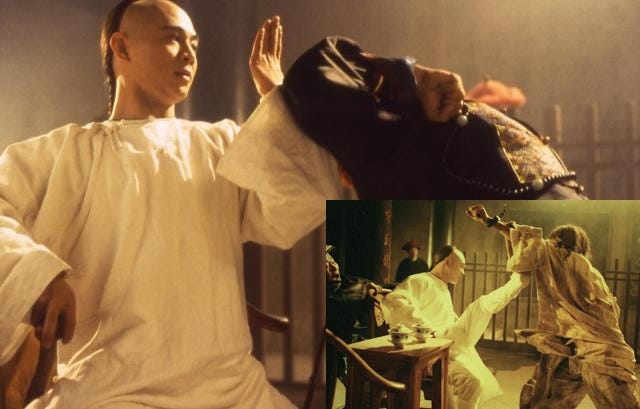
The director of Dreadnaught, Yuen Woo-Ping, had even worked on the most profitable part of the trilogy i.e. Once Upon a Time in China II (1992). Yuen’s Snake in the Eagle's Shadow had a scene where Jackie Chan's underdog character creates a new style of Kung Fu after witnessing a cat kill a snake. In Last Hero in China, Wong Fei-Hung sees a chicken attack a centipede. It had to be this precise match-up because there was a 1956 film called Iron Cock Against Centipede where Kwan Tak-Hing's version of Wong Fei-Hung dresses up as a rooster to do battle with centipede-garbed evildoers. In Yuen Woo-Ping’s Drunken Master, Jackie Chan's take on Wong Fei-Hung learns how to be impervious to pain thanks to alcohol. When Wong Jing wrote the script to Last Hero in China, he decided that Wong Fei-Hung should do drunken boxing as a way of things coming full circle.
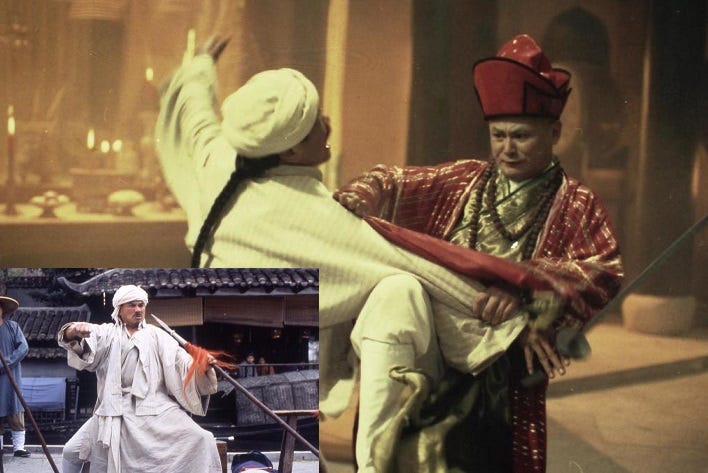
There were many people in Hong Kong who thought that Jackie Chan made Drunken Master II (1994) as a reaction to Jet Li’s drunken boxing scene to prove that he could not be outclassed. However, Jackie was already thinking of doing a sequel during the making of Wong Jing’s City Hunter circa 1992. In fact, Jackie even told Paul Fonoroff in English during a televised interview that was filmed on the set of City Hunter. What's memorable about the interview is that Jackie referred to it as Drunken Monkey II because he didn't know the official English title of the predecessor. When Drunken Master II made more than twice as much money as Last Hero in China at the box office, Wong Jing was embarrassed.
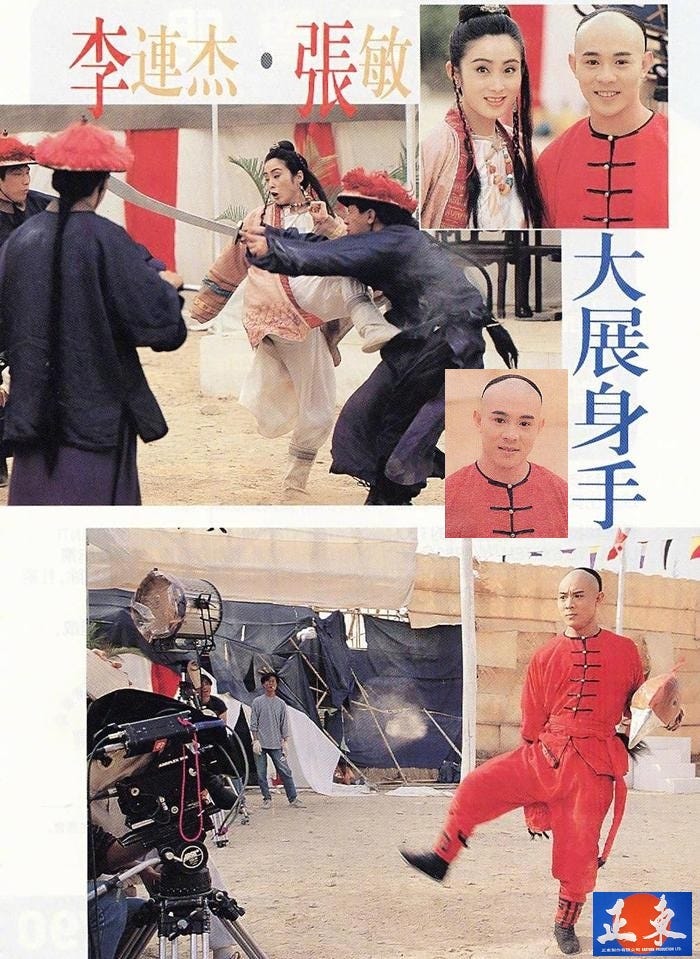
Ironically, this added to the enduring legacy of Jet Li’s Wong Fei-Hung comedy. In a sense, Last Hero in China could be interpreted as a precursor to the antagonism aimed at Jackie Chan in Wong Jing’s High Risk (1995) because not only do we have Jet Li doing drunken boxing in a more stylistic (Wushu) manner but there is an unusual attempt at mimicking Jackie's tradition of having out-takes played during the closing credits. Now that I think about it, this compensates for the fact that we don't get to see a parody of Jackie's gimmick in High Risk. The moral of the story is that, left to his own devices, Wong Jing can devise deviant things.
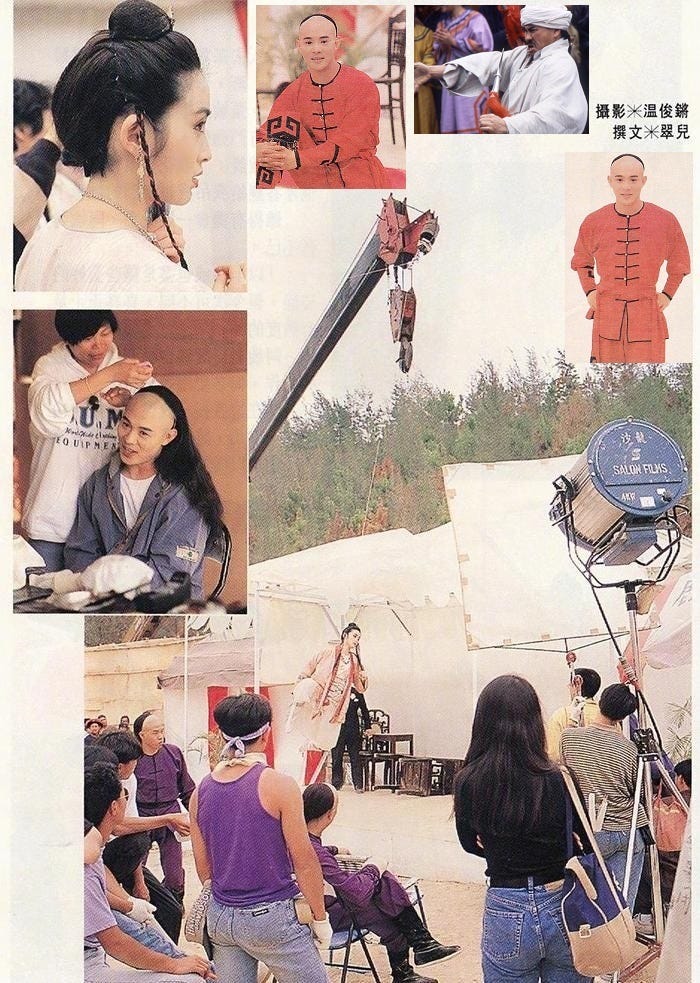
When Wong Jing constructed the storyline of Last Hero in China, he took a sharp dig at Jackie Chan for disowning City Hunter by having Wong Fei-Hung be depicted as someone who is seriously embarrassed about opening a Kung Fu school next to a brothel. There is a scene where Wong Fei-Hung's students are infatuated with the prostitutes and try to impress them. This was commentary on the fact that Jackie Chan's stuntmen became all the more excited to work with Chingmy Yau when Naked Killer was filming, much to Jackie's chagrin. Naked Killer, written and produced by Wong Jing, was released a month before City Hunter. Jackie became self-conscious since City Hunter was supposed to be the Hong Kong equivalent to a PG-13 movie, so Chingmy’s presence was like what if Shannon Tweed had been cast as one of the heroines in a ‘90s comic book movie.
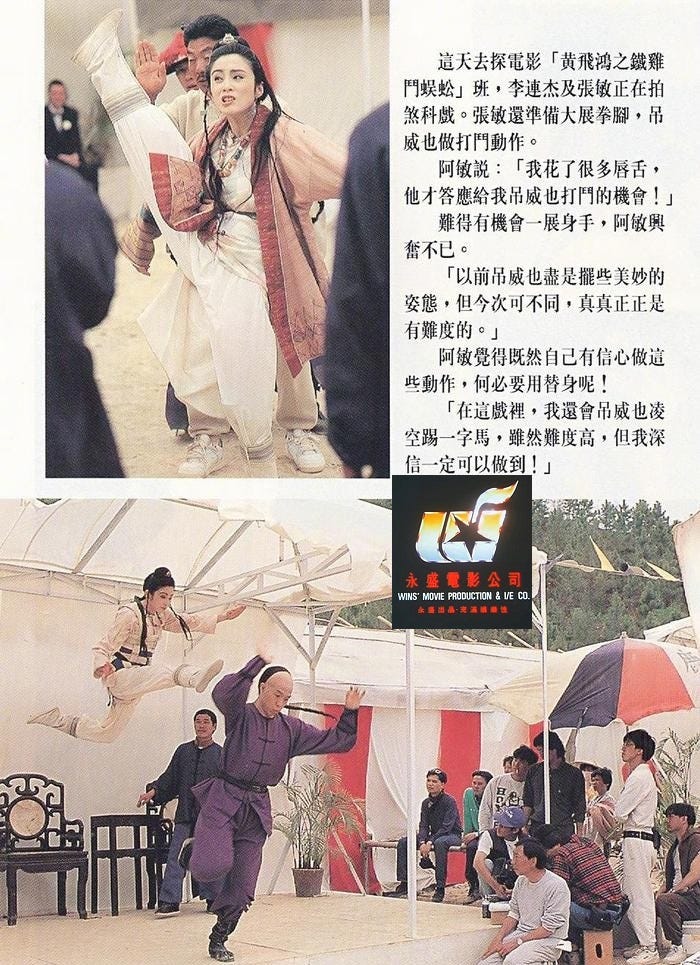
Wong Jing’s father, Wong Tin-Lam, appeared in Last Hero in China. Back in the fifties, he had directed two films about Wong Fei-Hung. In 1956, Wong Tin-Lam directed How Wong Fei-Hung Vanquished the Ferocious Dog in Shamian. Before that, Ling Yun helped him co-direct a long 1953 film that was released as two. It was called How Wong Fei-Hung Redeemed Haichuang Temple. Wong Jing being the director of Last Hero in China is an extension of the fact that his name was mentioned in Jet Li’s Fong Sai-Yuk (1993). The set-up for the joke is that folk hero Fong Sai-Yuk tells his friends what fake name that he gave to the local constables. Wong Fei-Hung’s ancient theme song, On the General’s Orders, plays as Jet Li’s character sounds like he’s about to say Wong Fei-Hung. The punchline, Wong Jing, is a red herring joke in a film about the importance of the Red Flower Society.