
Unlikely Marksman

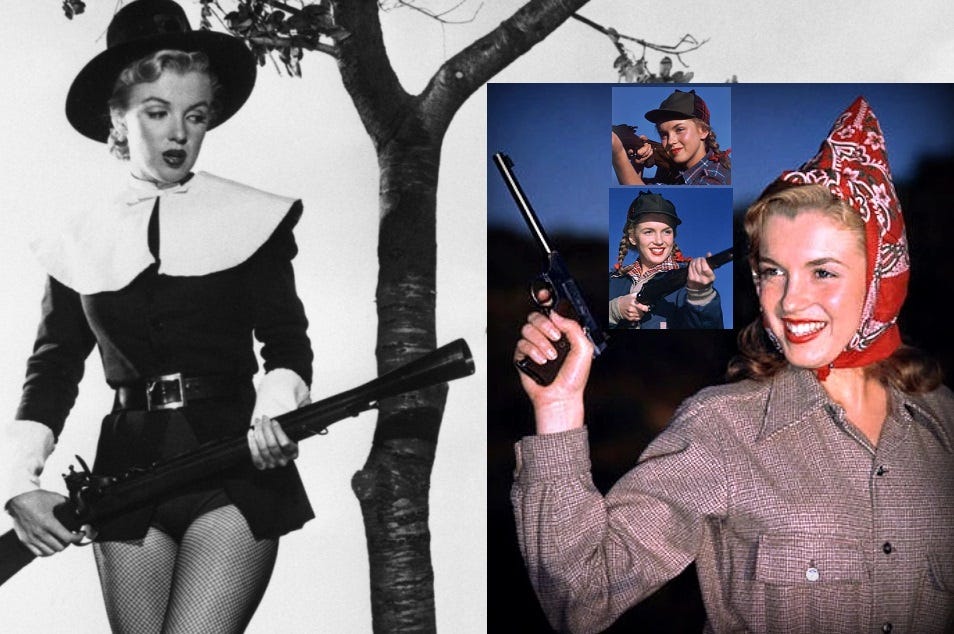
Had Marilyn Monroe lived long enough to see the seventies and live through the decade intact, we could have seen a whole new side to her screen persona. We could have seen her in a gun-toting role like a Southern belle redneck, a glamorous assassin or a vengeful pedestrian. Ironically, her real life lends itself to being interpreted as an gun-themed thriller, albeit one where other people mostly used guns. Then again, it’s possible for a person to shoot someone without the public finding out. You could kill someone in a private setting, and the blame would be placed on someone else. If you were an actress who was forced to defend herself, no-one could possibly think that it was you who pulled the trigger (especially in the old-fashioned mentality of the 1960s). By the time that it was 1962, Marilyn Monroe found herself in the crosshairs. The FBI were wary of her because of her affiliation with the mob, yet the mob were wary of her dalliances with the Kennedy brothers. She died at the age of 36.
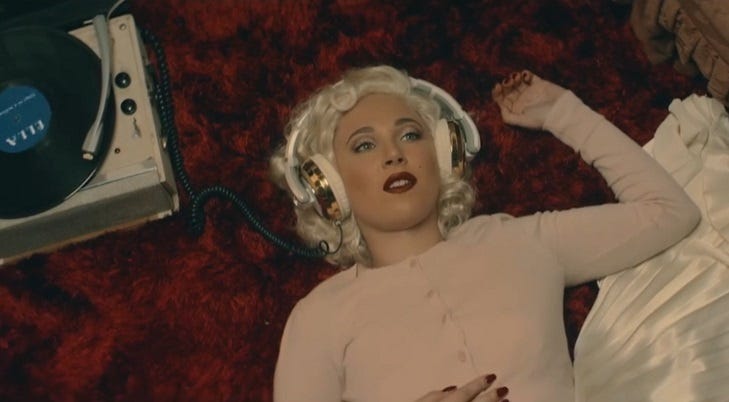
Tomorrow, Juno Temple will turn 35. Many years ago, she expressed an interest in wanting to play Marilyn Monroe in a film. There’s still enough time for her to do it. Juno is no stranger to handling firearms as can be seen in Killer Joe (2011), Little Birds (2020) and Fargo (2023). When interviewed by Rebecca Nicholson for The Guardian in May 2017, Juno simply said: “I’ve always wanted to play Marilyn Monroe, but Michelle Williams nailed that.”
When Juno was interviewed by Tessa Coates for Grazia in October 2014, she said: “I’d love to give it a shot playing Marilyn, even though Michelle Williams did it so beautifully. I've always been a huge fan of hers; her vulnerability, sexuality and comic timing on camera was unbelievable. I've read so many of the things she used to write down and the struggles she used to have. When I think about my fantasy dinner party, she would definitely be sat right next to me.”
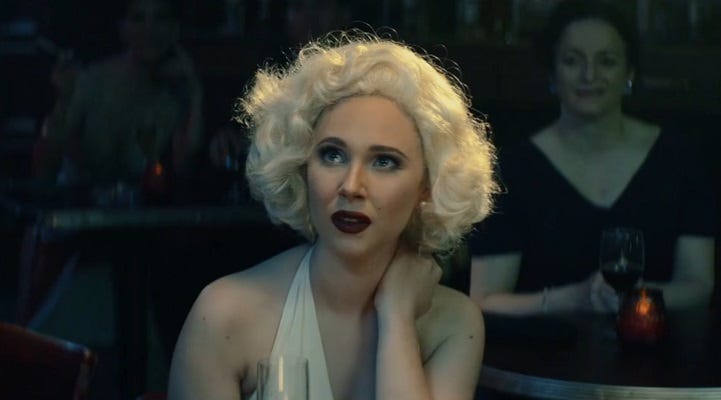
When doing a 42 minute interview to talk about Martin Scorsese’s Vinyl TV series, Juno stated in June 2016: “I have always wanted to play Marilyn Monroe in a movie, so maybe one day that will happen. I’ve always loved her. Her combination of vulnerability and sexuality is something that will baffle humans for eternity. A lot of people who say "Oh, I love Marilyn" don't realize that she had this really profound brain. If you read her notes and her writings, and her letters even, she was a really complex creature. I really love that about her. I always found her very, very inspiring. My room, since I was eleven, has always been covered in posters of her.”
As for how Juno Temple would be able to pull off the performance, she said: “I feel like there are definitely things that I relate to for sure. As I've gotten older, I'm like - ‘Damn girl, we would have been homies.’ And then there are things that we are polar opposites about. I have an incredible family that I'm so close with, that is filled with love, and that's one thing that I couldn't have more differently to her because she really did not have a great family situation, but, yeah, there are some thoughts that I can relate to with her.”
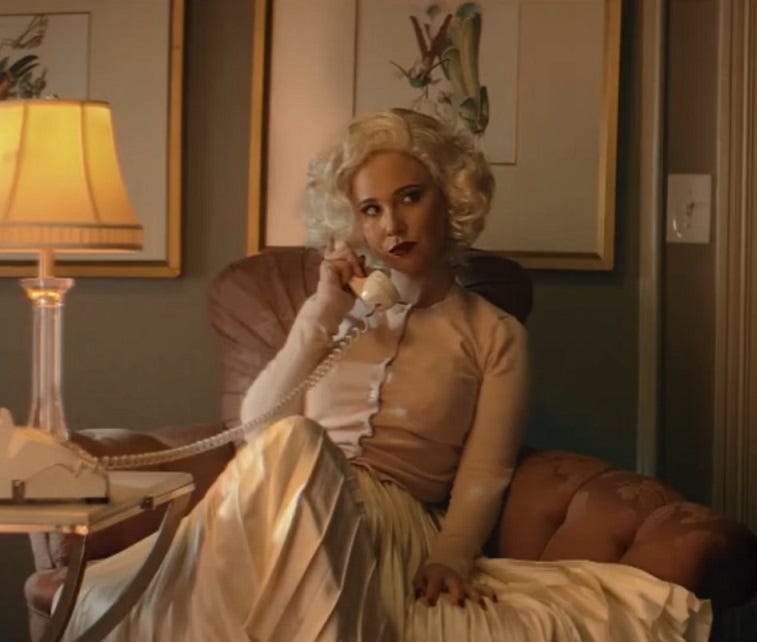
Later on in 2016, October to be precise, Juno Temple got to play Marilyn Monroe in an episode of Drunk History titled Legends. The directors who Juno would like to work with are Gus Van Sant, Paul Thomas Anderson and Quentin Tarantino. In an April 2013 interview for Complex, Juno told Tara Aquino that she wants to work with Quentin really bad. With Tarantino wanting to direct only one more film, Juno’s dream is at that make or break point. What works in her favour is that he’s no longer going to direct a story about a film critic. With Inglourious Basterds (2009) and Once Upon a Time in Hollywood (2019), QT has proven that he doesn’t mind directing alternative histories. At the same time, I can imagine Oliver Stone directing a Monroe biopic because he’s already directed biopics including one about JFK.
My idea for a Marilyn Monroe biopic would take place in the sixties. Thematically, it would be a reverse Yojimbo (1961). I don’t mean a gender-reversed remake, I mean an abstract one. When you see how this Japanese film was adapted for American screens, you either got Clint Eastwood in A Fistful of Dollars (1964) or Bruce Willis in Last Man Standing (1996). Either way, it was about a man who deliberately played off two gangs against each other. In my concept of a Monroe biopic, the FBI and the mafia take advantage of Monroe’s connection to either side. The film begins with Monroe and JFK being enamored with Frank Sinatra until JFK’s brother, Robert Kennedy, privately tells him about Frank having ties with the mafia.
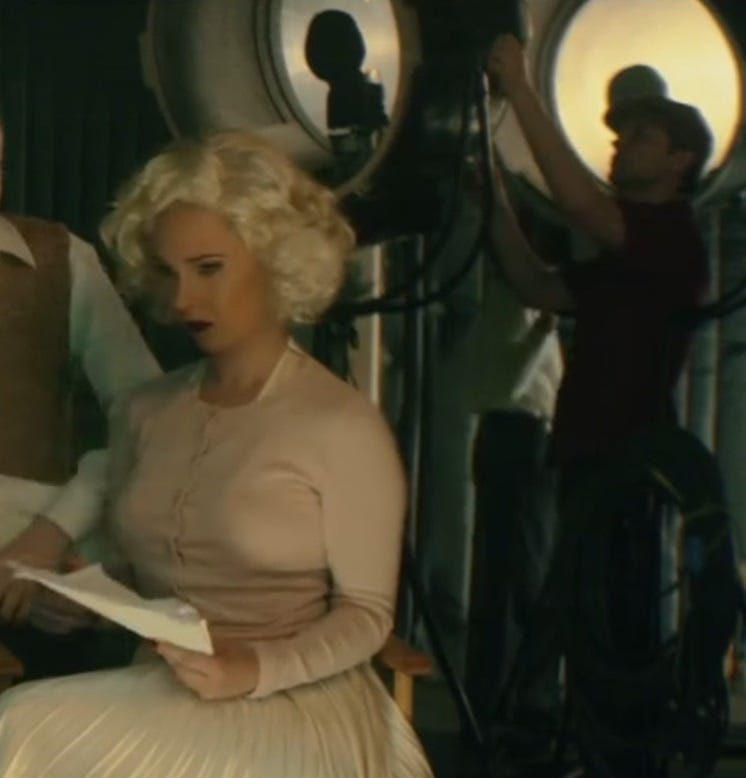
From that point onward, the structure that I have envisioned is that the first act is where Monroe doesn’t realize what’s going on since she is being spied on. The second act is when she realizes the truth but is disingenuous in order to guarantee her survival, especially since people assume that she is a blonde bimbo. The third act is when she has to rely on her skills of deception in order to have the FBI and mafia ambush each other. After all, she is an actress. Following a ruse that results in a fierce and fiery clash between both sides, Monroe lays low in Los Angeles. The downside is that her lover, JFK’s brother (Robert Kennedy), is on to her game. Jimmy Hoffa is not far behind, either.
There is a Chinese proverb that states the enemy of my enemy is my friend. Because of the collateral damage that Monroe has caused, the FBI and the mafia agree to form an alliance when Monroe threatens to expose certain people in order to guarantee her safety. Robert is a spectator to Monroe being beaten to death. The FBI agree to cover up the death so as to send a message about the harmful nature of drugs. Frank Sinatra wants revenge, so he pays a team of friends to assassinate JFK in 1963. Revenge is a dish best served cold. The trail was so cold that it never occurred to Robert that Frank wanted payback for what happened to Marilyn Monroe.
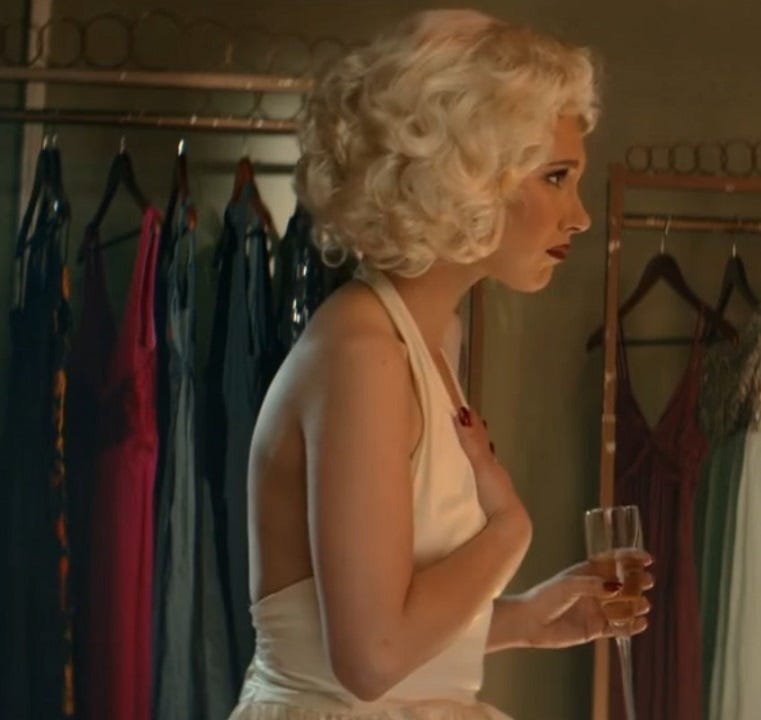
Michelle Williams playing Marilyn Monroe in My Week with Marilyn (2011) didn’t stop Ana de Armas from playing her in Andrew Dominik’s Blonde (2022). Granted, Juno Temple doesn’t look like a dead ringer of the artist formerly known as Norma Jean. But that doesn’t matter. Whenever film critic Mark Kermode talks about Anthony Hopkins playing Nixon in Oliver Stone’s film of the same name, he is quick to point out that Anthony captured the president’s essence despite not resembling him. It’s the reason why people could move on from the fact that Rami Malek replaced Sacha Baron Cohen for the role of Freddie Mercury in Bohemian Rhapsody (2018). I recommend a 2021 book about Monroe: Bombshell. I also recommend a blog called Gay Culture Land because besides the article referencing Monroe’s sexual orientation, there is confirmation from Veronica Hamel about Monroe’s house having wire taps (some of Monroe’s friends believed that she was murdered).