
Underserved and Undeserved

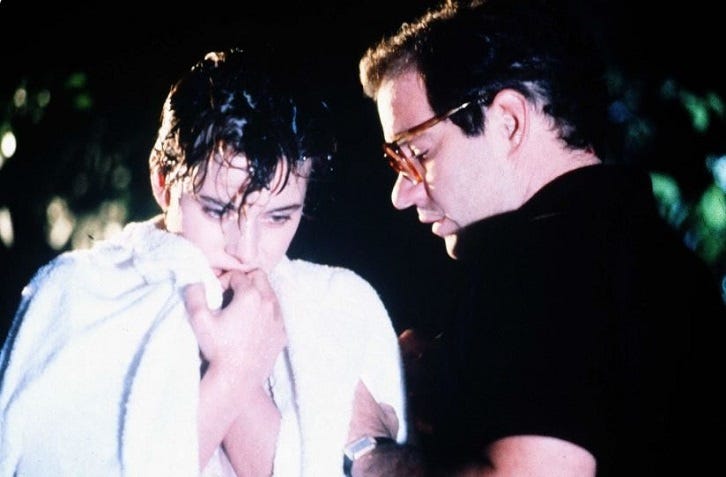
This is Nastassja Kinski with Paul Schrader during the making of Cat People (1982). Paul’s interview for Fathi Beddiar was divided across issues 171 and 172 of a French magazine called Mad Movies. These issues were published in the first two months of 2005. Among Paul’s favourite European filmmakers is Jean-Pierre Melville, whose films he introduced to Martin Scorsese. When asked by Fathi Beddiar how he had discovered Melville, Paul said: “I discovered Le Samouraï in an arthouse cinema, and it left a strong impression on me.”
When asked if it was Melville’s films that sparked his interest in urban solitude, Paul Schrader denied it by citing another French filmmaker: “It was rather the cinema of Robert Bresson, and more particularly Pickpocket, that sparked this interest. Even though I like Jean-Pierre Melville a lot, his cinema, unlike Bresson's, doesn't hold up as well today. Some of his films are now too dated, and others, like The Red Circle, are, in my opinion, very overrated.”
Fathi counteracted that even though Light Sleeper openly refers to Robert Bresson, it remains a very "Melvillian" film in both content and form. It is even very close to When You Read This Letter and Léon Morin, Priest - two films that deal with loneliness and existential crisis, but also with tragic love. Paul deflected by saying: “I couldn't answer you because, unfortunately, I haven't seen those films. There aren't many copies of French films available in the United States, and even fewer subtitled copies. The only Melville films I've seen in the United States are his best-known works, such as Le Samouraï, Bob the Gambler, The Red Circle, and The Second Breath.”
Fathi tried one more attempt to get through by asking Paul if Le Samouraï triggered his attraction to violent and depressive characters whose end is brought about by a suicidal impulse. Paul maintained a long silence before saying: “Maybe. When I was a journalist, I analyzed this thematic aspect in Sam Peckinpah's films like The Wild Bunch and Ride the High Country. Although I claim some influence from Sam on my work, the two films that have most influenced my career are Robert Bresson's Pickpocket and Bernardo Bertolucci's The Conformist. The former for its themes, the latter for its formal style.”
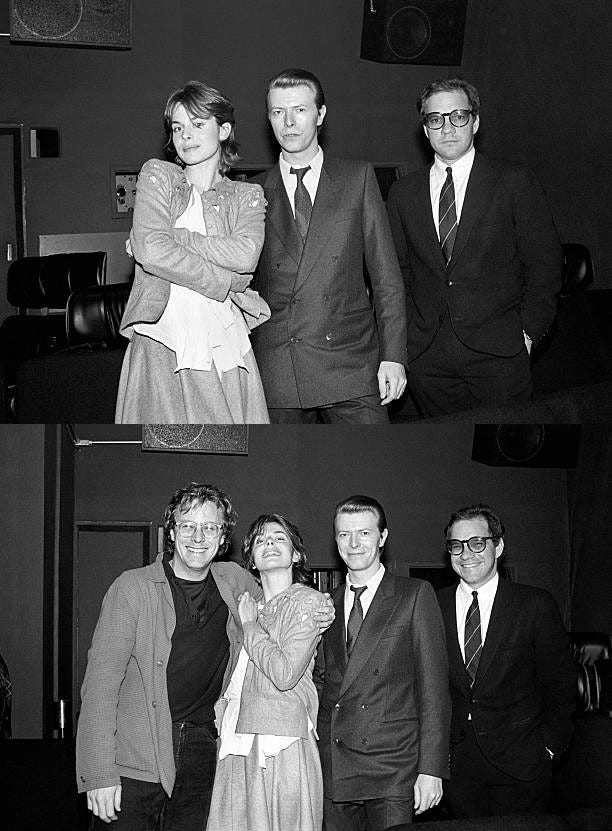
Paul Schrader’s very first screenplay, Pipeliner, wasn’t adapted. He should probably have made this instead of remaking Jacques Tourneur’s Cat People (1942), especially since Nastassja Kinski didn’t like the film. Anyway, Paul said: “Pipeliner was my trial run. It was while writing this screenplay that I really learned how to write and organize my writing work. Pipeliner told the story of a man who learns that he has very little time left to live, and who decides to give free reign to his impulses. He starts stealing, saying out loud what he thinks, and having sex with his best friend's wife. He makes the lives of those close to him a living hell, and that's when he learns there was a misdiagnosis and that he's in good health. It was a very dark script, with a treatment similar to Robert Bresson. But I don't have a great memory of it. It must have been over 30 years since I last read it.”
Among his first unadapted scripts was a gangster film titled Quebecois. Paul’s memory failed him somewhat: “This script is the only one I'm truly proud of among those I wrote during the same period. It was titled Montreal...or Quebecois, I don't remember, and the story was inspired by a true story: a gang war between the French underworld and the Italian mafia, which had bloodied Montreal in the early 1970s. The Canadian underworld, of French origin, had a stranglehold on the various trafficking and rackets in the country, until the day several La Cosa Nostra clans, from Detroit and Buffalo, decided to settle in Quebec to expand the activities of several Italian-American mafia families. This caused a horrible bloodbath. In my script, I transformed this gang war into a race war, where the French hated the Italians and the Canadians hated the Americans.”
Fathi Beddiar thought that it sounded a bit like an entry of the Ankokugai series, starring Takakura Ken and Tsuruta Koji, in which a clash between yakuza clans from Tokyo and Osaka turns into a racial conflict because one of the clans is supported by the American occupation forces. Paul’s response was: “I took part of the plot, I must admit. At that time, we used a lot of plots from foreign films to create a story. I had seen the Ankokugai series when I was in Japan with my brother Leonard. The idea for this episode was interesting, and I thought it could easily be recycled into an American gangster film.”
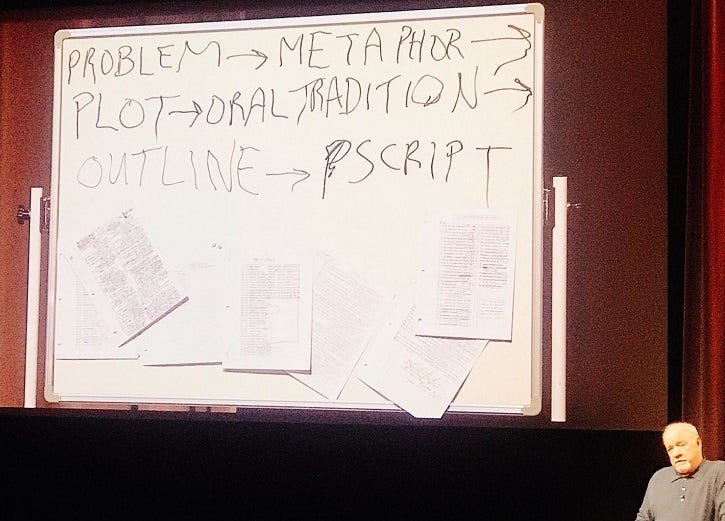
Although Paul didn’t make Quebecois, he chose to do something closer to the source material. The Schrader brothers wrote The Yakuza, albeit Paul received credit for the screenplay while Leonard retained a story credit. Fathi noticed that the ending of Sydney Pollack’s film openly referred to two yakuza films from Toei studios - Kosaku Yamashita's Kaettekita Gokudo (starring Tomisaburo Wakayama), and Teruo Ishii's Gendai Ninkyo-Shi (starring Takakura Ken). Paul was asked about these influences, to which he replied: “It's possible. My memory isn't as good, and unfortunately, I don't remember all the titles and directors anymore, because it's been a long time since I've seen any yakuza films. In any case, it's very likely that I've seen them, because I remember taking quite a few elements from several films of this genre to write down the final reckoning in The Yakuza.”
Fathi observed that The Yakuza (1974), like Paul Schrader’s Hardcore (1979), is a loose reinterpretation of John Ford's The Searchers (1956). Paul responded: “It's typical of the young screenwriter to borrow the broad outlines of the films he admires. This was also the case for Obsession, which largely borrowed from the script for Alfred Hitchcock's Vertigo. It helps you have a more concrete vision of what you're writing.”
Paul didn’t like Brian De Palma's Obsession (1976) because: “To begin with, I find the actors too cold and too distant for my taste. The rigidity of their acting doesn't invite any emotional involvement from the viewer. Then, Brian was forced to cut several parts of the script to fit his budget. And, to conclude, I think I could have improved the ending of the film. I don't know if it would have been an ideal ending, but we could have tried anyway.”
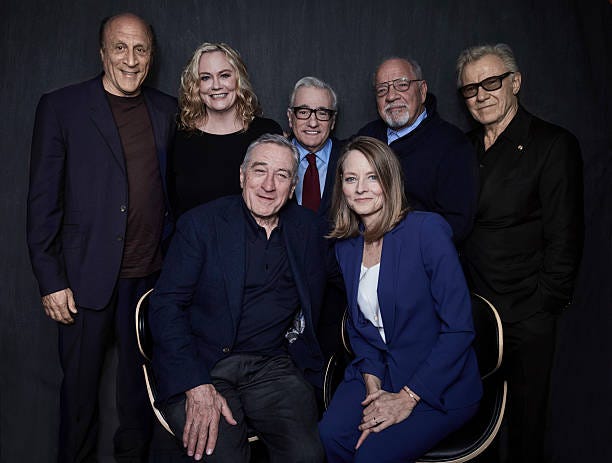
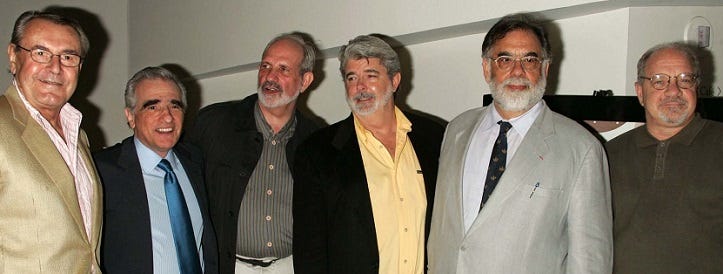
Brian De Palma is the person who introduced Paul to Martin Scorsese, who directed Paul’s screenplay for Taxi Driver (1976). While Paul liked this film, he didn’t like how his screenplay for Rolling Thunder (1977) was adapted: “Rolling Thunder was supposed to be my first film. I was supposed to direct it with Tommy Lee Jones as Major Charles Rane. But at that time, I didn't have any real control over my scripts, and it was practically stolen from me and rewritten by someone else. The original script for Rolling Thunder was a bit like Taxi Driver. The big problem with rewriting Rolling Thunder was that they wanted to make Rane likable. He was an unpleasant, racist country bumpkin who killed Mexicans because he didn't like them. That's ridiculous! That would be like making Travis Bickle's actions understood and accepted by everyone, and it would make the character's very existence illogical.”
The justification for the racist content: “The original script for Rolling Thunder focused more on the ills of America traumatized by the Vietnam conflict, while Taxi Driver focused on the ills of an American returning from Vietnam. Rolling Thunder focused more on the frustration of a Texan fascist who couldn't kill anyone in Vietnam, and who, upon returning home, began killing anyone he didn't like.”
When pressed by Fathi if he liked John Flynn’s film, Paul relented: “There might be some good moments left, but they distorted the essence of my script by making the character of Major Charles Rane sympathetic. It would be like curing Travis Bickle's psychological ills, while still sending him out on a rampage, hoping the audience would be behind him. It makes no sense. I haven't seen the movie since it came out, and I don't really want to. This risks provoking a reaction I don't want. Every time I watch one of my old films, I either say to myself: "Oh, damn... What rubbish! I thought I had some talent..." or "That's really not bad! I had a talent I didn't know I had and that I no longer have today..." (laughs)”
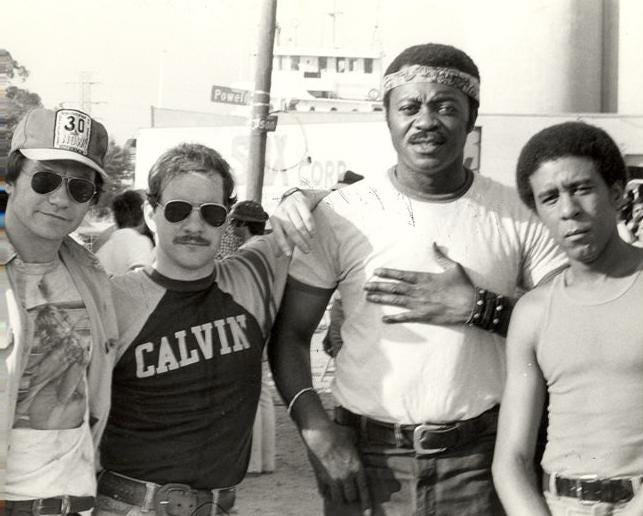
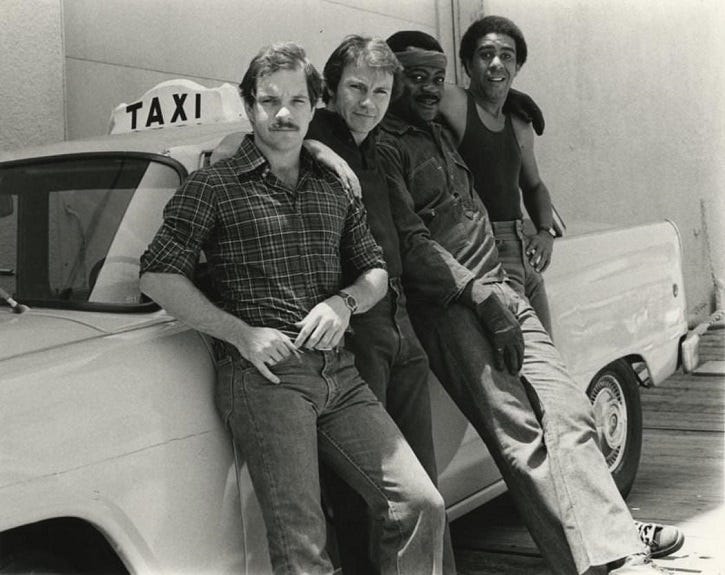
Paul Schrader’s Blue Collar (1978) was inspired by the life of Sidney Glass. Fathi Beddiar wanted to know what attracted Paul to his story. Paul explained: “Sydney Glass had come to me with an idea for a screenplay based on the life of his father, a worker in the Detroit auto industry who had committed suicide. During the conversation, I told him that with such a backdrop, it would be more interesting to tell the story of a group of workers whose bitterness and resentment would lead them to steal from their union. But Sydney Glass wasn't interested in what I proposed, and he preferred to stick with his first idea. That's when I shared my meeting with Sydney Glass with my brother Leonard, saying, "I just proposed an excellent screenplay idea to this guy that's probably going to go unheeded. Why don't you and I develop it?" This is how the screenplay for Blue Collar took shape. Later, a few weeks before the film's release, I learned that Sydney Glass had complained to the Screenwriters Guild, claiming that he had been cheated out of his story. So, to avoid a huge legal imbroglio, we decided to credit him on the story, while my brother and I retained the screenplay credit.”
Fathi detected the tone and dramatic content being reminiscent of Elia Kazan's On the Waterfront (1954). He wanted to know if Paul was influenced by the film where Marlon Brando played Terry Malloy. Paul’s response was: “Yes, in part, because both films openly deal with corruption within labor unions. In fact, it was the prospect of being able to play a character close to Terry Malloy that was the deciding factor for Richard Pryor. It wasn't the kind of role he was offered every day. (laughs)”
Fathi recognized another influence - the scene where Pryor confronts Sammy Warren echoed Jean-Luc Godard's Weekend where a North African garbage collector delivers a virulent speech to Mireille Darc on the living conditions of foreign workers. Paul remained silent for some time until he said: “That's not wrong. Thinking back, it's even quite possible that this scene in Weekend influenced me in writing Richard Pryor's monologue. I really like Godard's film. It's a film I've seen many times and would love to see again. But, unfortunately, it hasn't been released on DVD yet.”
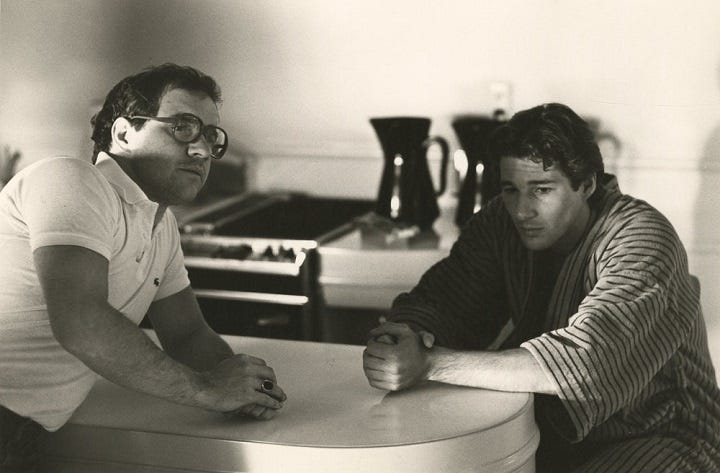
Ever the eagle eye, Fathi Beddiar couldn’t help but remark that American Gigolo (1980) was “very inspired” by Robert Bresson and Bernardo Bertolucci. Paul had no choice but to concede defeat: “You are right to mention Bernardo Bertolucci, because it was the decorative work of Last Tango in Paris that prompted me to choose art director Ferdinando Scarfiotti for American Gigolo. I wanted the same color palette and vivid tone as in Bertolucci's film. Scarfiotti possesses an incredibly rare artistic talent, and the success of American Gigolo owes a lot to him.”
It should be noted that Ferdinando was only credited as visual consultant as would later be the case with Paul’s Cat People. If you’re not a member of a Hollywood union then you’re restricted in not only credit but what you can actually do. For example, Sam Raimi wanted Ching Siu-Tung to be the stunt coordinator of Spider-Man (2001) but he could only be a consultant instead of being legally allowed to handle wires attached to actors and stuntmen. In the case of Cat People, Paul (to his credit) wanted Ferdinando Scarfiotti to receive a co-director credit since he designed the sets. Not wanting Robert Bresson to be left out, Paul mentioned him when Fathi told him about how Julian Kay’s apartment is a character in its own right: “This is a good example of Pickpocket's influence on American Gigolo. When I was a journalist, I analyzed Bresson's film as the story of a man and his apartment. I wanted to reproduce this dramatic pattern in American Gigolo and, later, in Light Sleeper.”
It should also be noted that Jerry Bruckheimer produced American Gigolo and Cat People. Fathi picked up on another similarity - both American Gigolo and Light Sleeper used the ending of Pickpocket. Paul laughed and said: “Actually, I used Pickpocket's ending in American Gigolo for purely superficial reasons, whereas for Light Sleeper, it was the appropriate ending. I remember that writing the latter was quite tedious, and I stalled when it came to finishing the story. It was while thinking about the ending of Pickpocket that I said to myself, "Damn! I should have saved that for Light Sleeper..." (laughs).”
Fathi saw that American Gigolo inspired the aesthetic of TV shows like Miami Vice, and other films produced by Jerry Bruckheimer such as Thief of Hearts (which Ferdinando Scarfiotti was hired on). Paul laughed and said: “Yes, I'm aware of that. I know Michael Mann well, and he admitted to me that he took a lot of things from American Gigolo for Miami Vice. He wanted the aesthetic of his series to juxtapose with that of my film. (laughs) Jerry Bruckheimer, for his part, continued to be influenced by the work of Ferdinando Scarfiotti after American Gigolo, but in a way that was a little too vulgar.”
The problem with Ferdinando Scarfiotti was that almost every American film that he worked on had involved the hiring of Edward Richardson as an art director, which dwarfed the recognition of his contributions. This includes Brian De Palma’s Scarface (1983), which featured an actor who starred in Thief of Hearts (Steven Bauer). When Ferdinando was hired to be the production designer of a Robin Williams film called Toys (1992), Edward was still there as an art director. Ferdinando died three months after his last collaboration with Edward - Love Affair. Fittingly, Edward’s film career ended soon after.