
Triple Threat


Emma Stone has starred in three films that were rated Category III in China. These films are Poor Things (2023), Kinds of Kindness (2024) and Bugonia (2025). In 1999, a journalist named Clarence Tsui wrote a March 19 article where he made a bold statement about entertainers whose careers experience a lull. In the article titled Leung’s Golden Silence, Clarence claimed that there are two methods involving the number three - participate in a Category III film or partake in a love triangle. As for the Leung in the title, Edmond Leung Hon-Man had a third way of opting out of his quagmire: he went into a three month hiatus. Lily Chow Lui experienced a longer hiatus. It was bad enough that she appeared in a massive flop - Donnie Yen’s Ballistic Kiss (1998) - but something else had threatened to derail her career.
On February 21 in 1999, Apple Daily had reported that Lily had violated immigration regulations by providing false information. As a result, she was potentially facing a prison sentence that could last for half a year. On top of that was a possible $10,000 fine. The exact details of her offence were not specified, but I’ve figured it out. Lily was underaged when she starred in an erotic film that went from being rated Category III to II-B. Lost Control was released in October 1997 - two months before she turned 18. Lily was allowed a suspended sentence whose duration was two years. Not only that but she was deported to Mainland China. Joe Hau Wing-Choi, who directed her in 97’ Lan Kwai Fong and Lost Control, reunited with her in Thailand for a horror film called Long Way From Home (2000).
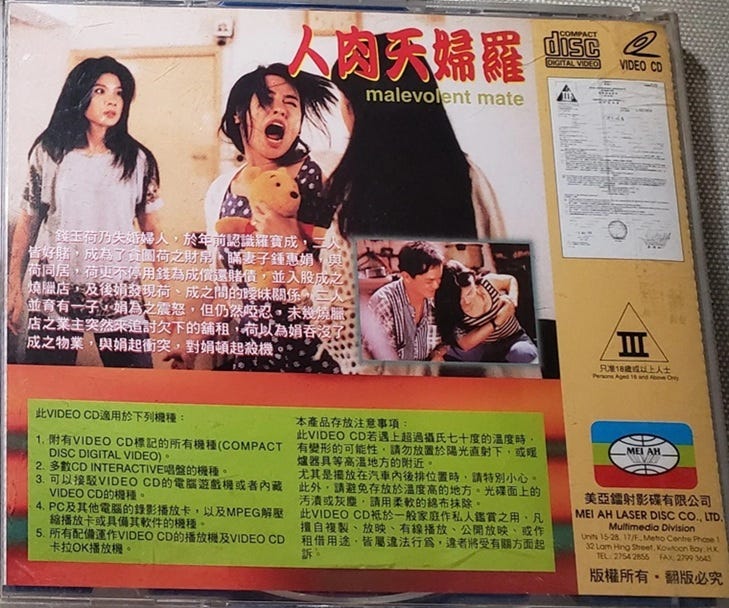
On February 24 in 1999, Oriental Daily had reported that Lily Chow had been bailed out and may still have been in Hong Kong. It was revealed that Joe Hau Wing-Choi was her manager, and that he was currently in Taiwan. He said: “I haven’t seen her in an entire year. Last time, our movie, Fall in Love with Versace, was considering a release and she wanted to come to help with its promotion. However, her documents were held out and she could not come. Now I don’t plan on releasing that movie.”
Except it did get released on VCD. Joe Hau did not seem worried about Lily at all because her family ran a business in Shanghai. It’s a wonder that she reunited with him since they had different interests. She was going to focus on the Mainland market whereas he was still clinging onto the Taiwanese market. Had it not been for the mishap, Joe would have cast her in Crazy - a June 1999 release about a serial killer targeting gay guys. In early March, he was going to begin production on a film called Taiwan Spice Girls. This ended up being City of Angel (2000). It is a Triad movie that was rated II-B. Miki Lee was singled out in the article, which makes me think that Lily would have played her character in more favourable circumstances.
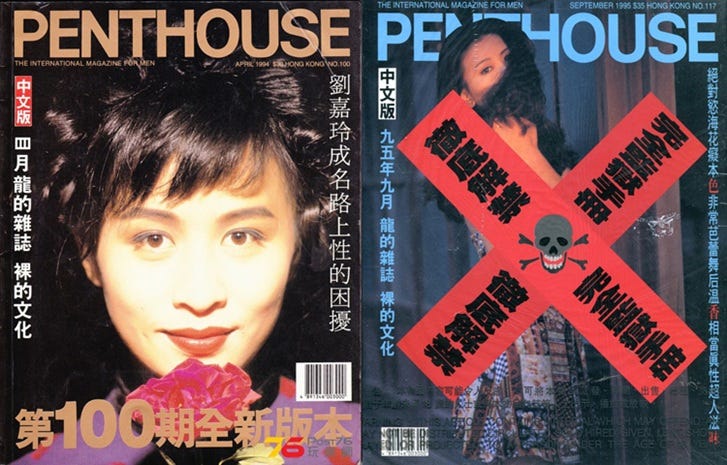
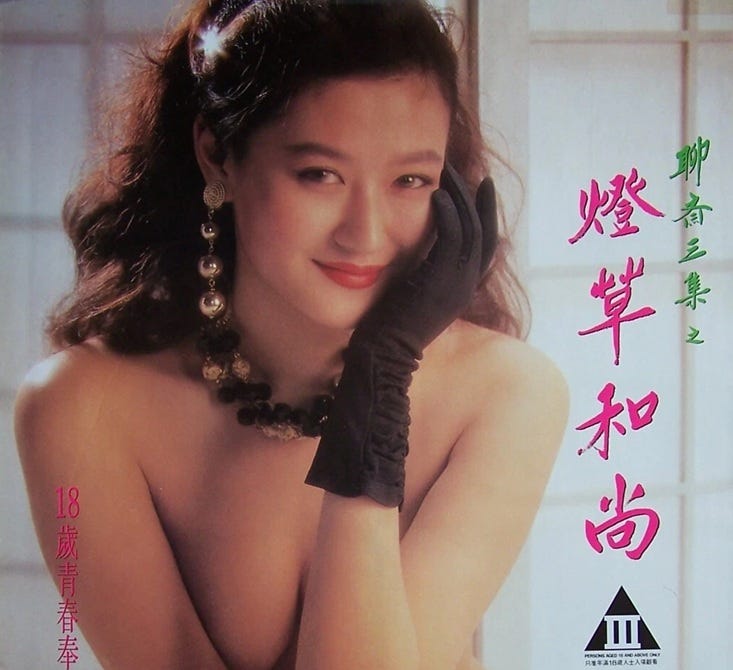
In the Usenet era of the nineties, alt.asian-movies was far more comprehensive in Hong Kong film discussion than IMDB was. The following news reports are a combination of what was reported by Sing Tao Daily, Ming Pao, Apple Daily and Ta Kung Pao. On November 5 in 1997, there was an article about a Category III actress named Lee Yi-Ching. As luck would have it, Beauty of the Haunted House (1998) would end up being her only film. Then again, the same thing could be said about the Japanese actresses who got their freak on - Yuko Amuro and Issei Miyake. There was a legal fiasco that engendered a change in the Chinese title from Three Residences, One Life to Fierce House Rouge.
The Chinese character for Fierce has an X in it, which could symbolize an X-rated film and someone who is negated. As for why the title was changed, Lee Yi-Ching claimed in February 1997 that she was forced to perform nude scenes then fled to the police. Lee held a press conference where she proceeded to process her ordeal in tears. Since the Chinese authorities still hadn’t found the film’s owners by November, the matter was put on hold. When it came to selling the film in ads, the company refused to reveal their name or even those of the cast and crew. The finished product shows Lee Yi-Ching in more than one nude scene, which begs the question as to when she decided to make a run for it.
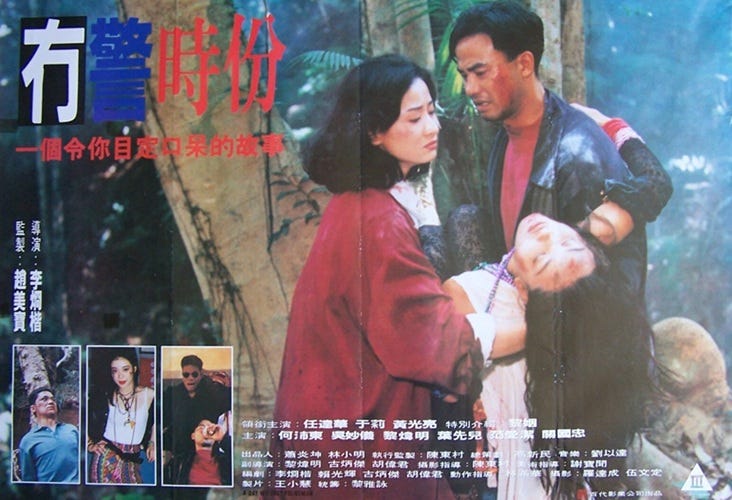
There is being stripped of your clothes against your own will, and then there’s being stripped of your beauty pageant crown. On February 3 in 1999, this was reported in regards to Joey Chan Ying-Lai - a Malaysian model. There are two reasons why she was robbed of her Miss Chinese International 1997 crown. First, she let loose (if not completely bared all) in the Chinese edition of Penthouse. Secondly, she showed too much skin in Trust Me U Die. This was a January 1999 release. Joey’s Category III career move had enraged EVA Productions - the organizer of Malaysia’s Miss Chinese. I’m not sure if stripping Joey of her title would actually affect her net worth. EVA considered Joey’s provocation as a violation of pageant rules.
A spokesperson for the organization said: “The jobs we have arranged for her are television program-hosting and commercials. None were low-class but she turned them down anyway. Perhaps she wanted to save the 30% commission and decided to privately field offers from outside. She even signed a five year contract with a certain Hong Kong company. At first, we didn’t plan to take action against her. Then, one day, this year’s Miss Chinese from Malaysia suggested to us that she would like to follow Chan Ying-Lai’s footsteps and we realized the seriousness of the matter. Chan Ying-Lai’s daring actions in Hong Kong has already affected Malaysia’s Miss Chinese image. If she used her own name to make Category III films, it would have been no big deal, but she used the title of Miss Chinese Malaysia and has harmed the image of the crown.”
On January 18 in 1999, a month before her demotion was advertised, Sing Tao Daily reported that Joey Chan had filmed a hot love scene with Mark Cheng Ho-Nam that nearly earned the film a Category III rating. Not only does this make it ironic that Joey was dethroned, so to speak, but the irony is that there was a pirated VCD which proclaimed her as a Malaysian Category III star. After spending Christmas in Malaysia, she returned to Hong Kong to promote Trust Me U Die and her very own pictorial book. Everything happened so quickly since the film had finished filming in December 1998.
Joey’s fate was sealed because the Chinese title of the film was New Doctor Lamb. It didn’t help that the director truncated the film in general to avoid being rated Category III like the original Dr. Lamb (1992). Her film career was ruined, even more so when Baroness (2000) made a figure of five digits at the Hong Kong box office despite being directed by a famous actor (Anthony Lau Wing appeared in four of Bruce Lee’s martial arts movies). Not only that, but Baroness starred Chin Ka-Lok and Anthony Wong. Joey’s next and final Hong Kong film was a 2011 release titled I Love Wing Chun. Despite starring Yuen Wah and Yuen Qiu, it was too late to cash in on the success of Kung Fu Hustle (2004).
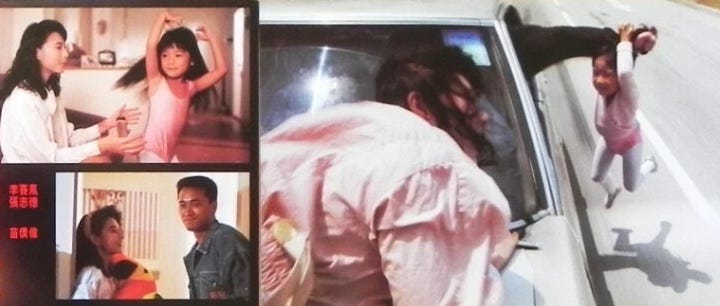
On August 7 in 1999, Chan Yik-Lung of Apple Daily raged that the Hong Kong film industry had sunk to a new low while trying to attract dwindling audiences. Chan decried that they were resorting to depicting ch!ld abuse, but I could easily make the claim for the traumatizing scene where a little girl is hanging outside a car door window during a chase scene in an action movie titled Fatal Termination (1990). This movie, starring Moon Lee, wasn’t rated Category III; so perhaps the title should have been Fatal Determination. There are a surprising number of Hong Kong films called Fatal Love, including two Category III films, so someone should have come up with Fatalistic Loving. Generally, there are scenes in Hong Kong movies which depict children being subjected to fates that will remind you of John Carpenter’s Assault on Precinct 13 (1976).
Back to film critic Chan Yik-Lung, the source of his ire were two films - A Lamb in Despair and The Kingdom of Mob. Going by the dates of when these films were released to the general public, Chan must have attended preview screenings (these are known affectionately among H.K. film aficionados as the midnight screenings). It seems to be veritable because only A Lamb in Despair was rated Category III, but this makes sense because it was based on a serial killer named Charles Ng Chi-Tat. In Hong Kong, advance screenings are different from America’s test screenings because the film studios don’t bother with surveys. Director, writer and producer Leung Hung-Wa responded: “We didn’t oversell the process of the murders, and don’t understand why a Category III film would still require editing.”
In A Lamb in Despair, the serial killer imprisons and kills a kid. As for The Kingdom of Mob, Chan Yik-Lung took issue with a scene where Fujimi Takajo tortured a boy’s nether regions with a clamp. The producer, Peter Cheung Wing-Yiu, defended the clamp scene: “In that scene, the clamp didn’t really clamp down on him, it was just the idea and reaction.”
Mrs. Leung Ka-Kui, of the Hong Kong Children Protection Association, said: “Movies with children should show more of the human side, not to express violent messages. They are worse for children who participate in the productions. If we receive any complaint when the movies are released, we will follow up with action!”
However, film director Gordon Chan (as the vice chairman of the Hong Kong Film Directors Guild) was forced to take one for the team: “The law states that those above 18 can watch Category III films! However I feel that the press treats twisted ch!ld abuse as arousal!”
This brings to my mind two films that depicted ch!ld abuse in films about Peking Opera - Painted Faces (1988) and Farewell My Concubine (1993). The former was rated IIA whereas the latter was just rated II. Painted Faces was released on the same day that the Category III came into effect: November 10.
On March 30 in 1997, there was an article about the producer for Web of Deception. This film wrapped on the second, but it was released in November. The producer was a man named Suen Ging-On. He produced the most infamous Hong Kong film about r*pe i.e. Red to Kill (1994). Suen was going to produce a new r*pe film that was to begin filming in either April or May of 1998, but the recent “Nightspot Butchers” shocked the city. In fact, there was a victim whose husband happened to be a friend of Suen. Francoise Yip, a Canadian actress, was set to play a police officer in the new film. At the same time, a friend introduced Suen to a Taiwanese girl who wanted to enter the film business. She looked like Ann Bridgewater. The film did not get made. In 1997, Suen married an actress who appeared in many of his movies. This woman, Money Lo Man-Yee, appeared in Jackie Chan’s Police Story (1985). One of the actors in this movie, Clarence Fok, would later direct a film produced by Suen i.e. an October 2001 release titled Stowaway.