
Triangulating the Signal

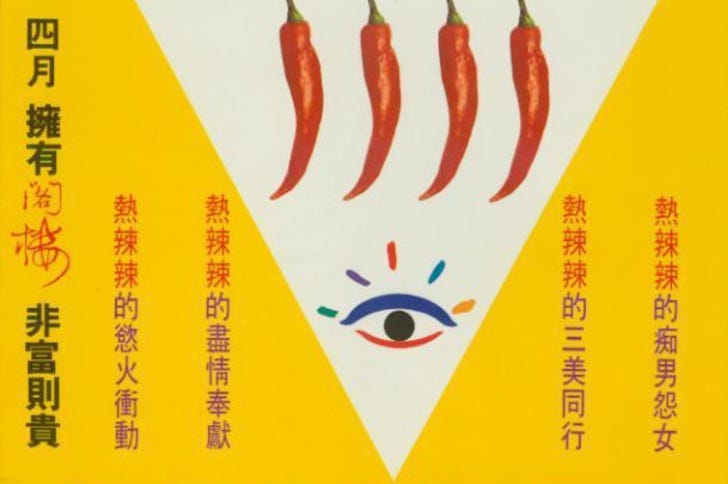
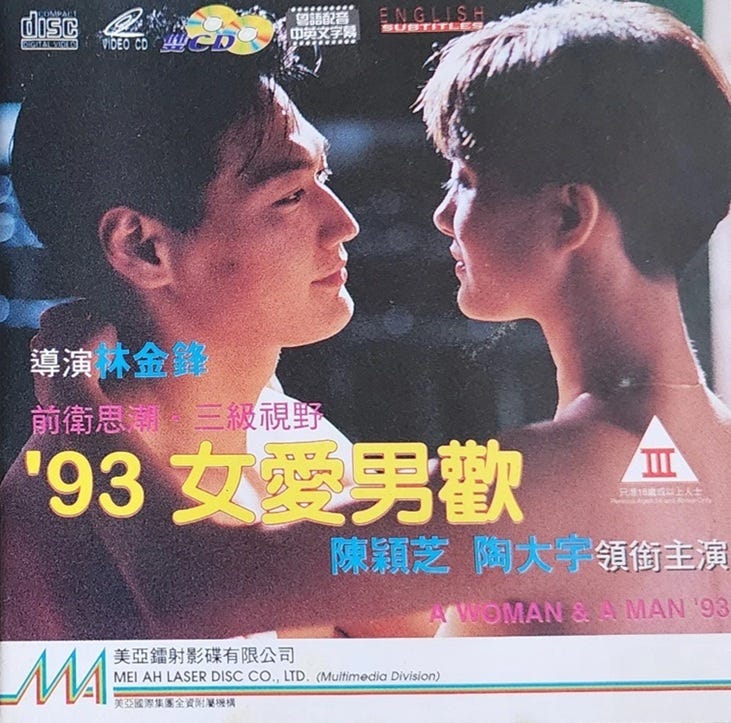
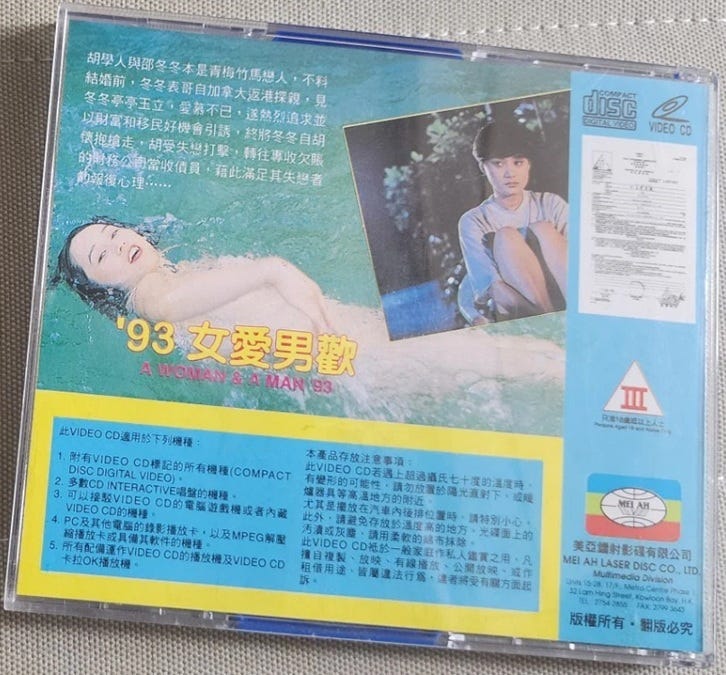
The cover references the Category III symbol, albeit upside down. The Cat III symbol symbolizes a bed rail and jail bars. I’ve been browsing Usenet to find old articles on the alt.asian-movies newsgroup. soc.culture.hongkong.entertainment is another group where you can read English translations of Chinese periodicals. Most of what was translated originally came from the following newspapers: Ming Pao, Sing Tao Daily, Apple Daily and Ta Kung Pao. The most dominant of the Category III filmmakers is a director named Wong Jing, although he only wrote and produced (the third sequel to R*ped by an Angel wasn’t really directed by him). One actress who avoided being in a Category III film was someone who Jing had worked with i.e. Winnie Lau in Legend of the Liquid Sword (1993) and Future Cops (1993). The latter was her final film until she appeared in Eric Kot’s Dragon Heat (2000).
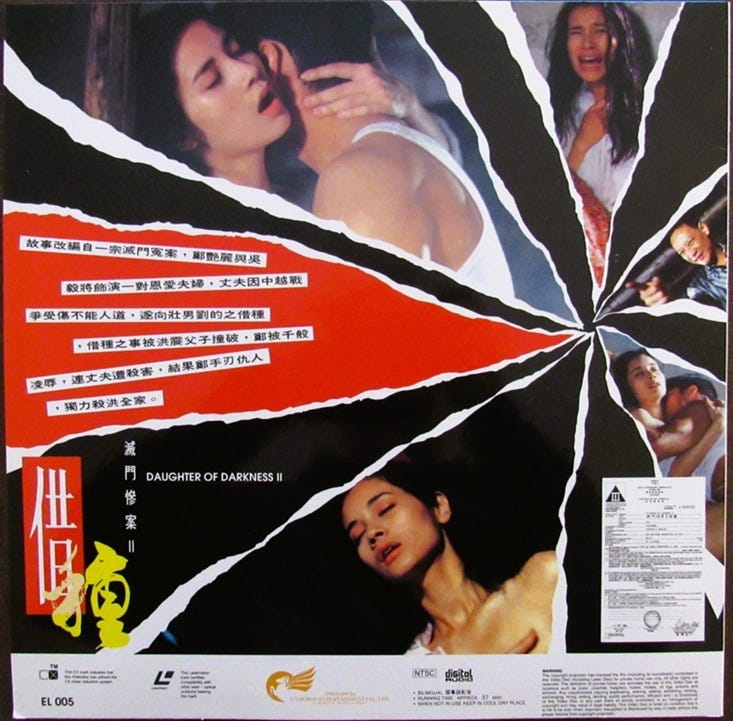
On July 23 in 1997, it was reported that there was an adult video star who was being advertised as the Japanese Winnie Lau. Madoka Ozawa was going to have a Chinese stage name (Siu Chak-Yuen). She began filming Otto Chan’s Don’t Tell My Partner in September. Her manager asked for U.S.$200,000. The Hong Kong film company, Heart Lover Entertainment, felt that she was worth every dollar. However, the lead actress was a former Penthouse model: Rebecca Tong Tak-Wai. This was Ozawa’s final H.K. film. During a publicity tour in Taiwan, she was groped. Rebecca didn’t last long. She did two more films before deciding to leave Hong Kong cinema for Taiwanese TV in 1999.
On October 29 in 1997, Wong Jing was working on Sex & Zen III. The previous sequel, a 1996 release, starred Loletta Lee Lai-Chun. As such, Wong Jing hyped up Jessica Chung Chun as the second Lee Lai-Chun. Born on January 27 in 1979, Jessica wasn’t even 18 when she went to Hong Kong in 1997. She was spotted by Wong Jing, who signed her to a six film contract whose duration was two years. In October 1997, Jessica appeared on the cover of Hong Kong Playboy. Going by her page on the Hong Kong Movie Database, she only did five films for Wong Jing unless you count Anna Magdalena where she was credited under a different name. Perhaps Jessica agreed to split the difference with Jing regarding how she was paid on that film. Sadly, she stepped away from films. Like Rebecca Tong, Jessica hedged her bets on Taiwanese television.
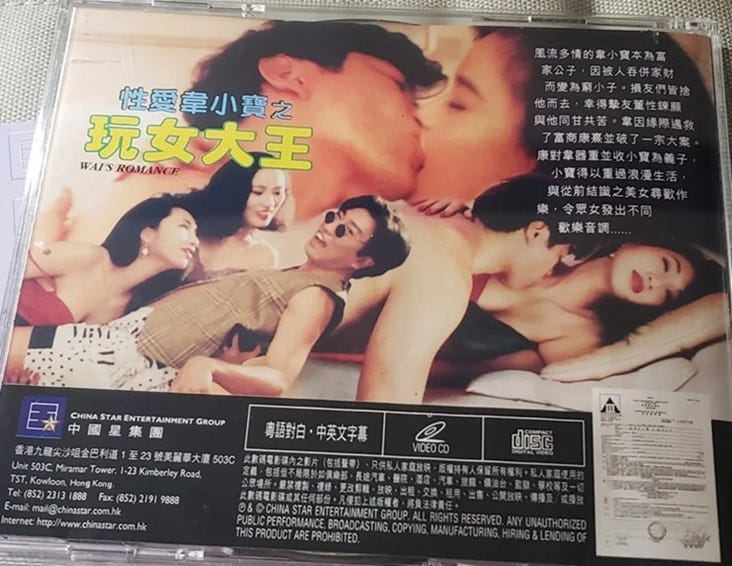
On February 25 in 1998, two months before the release of Anna Magdalena, there was an article about Jessica Chung Chun “easing out of Category III” but there was no reference to the film made by Kenneth Yee. This inspires pause for the most brooding of thoughts because it earned several nominations in the following year’s Hong Kong Film Awards (#18). Wong Jing was quoted as saying that she will reduce her nude performances, but it seemed like her film career was the one that was reduced as can be deduced from the following fact: the last time that cinema audiences were seduced by her was June 1998 - the release of Dick Cho’s Chinese Erotic Ghost Story. Referencing Vivian Hsu Jo-Hsuan, Jing said: “After these few films’ sexy scenes, it’s time for Chung Chun to stop. In the future, she will walk the innocent young girl road of Tsui Yuek-Suen and will try to reduce nude scenes. Of course that will depend on audience reaction and the actress herself! Not everyone will be like Hsu Chi who insists on not performing sexy scenes. If she encounters a good role, Chung Chun might perform again.”
On January 28 in 1998, it was reported that Bat Leung-Gum declined a Category III film offer on Lunar New Year’s Day. This is a man whose name is primarily known to Western H.K. film fans as Bobby Yip King-Sang. His popularity began to rise on multiple forms of media because of his unusual face which makes him look like a mixture of Lo Mang and N!xau. I’m not saying that Bobby is half black but his dark face in Tsui Hark’s The Blade (1995) made him look darker than a Chinese actor named Blackie Ko. Bobby Yip has the face of a goofy sex offender, which is why producers wanted to cast him in Category III films. Referring to 1996, he said: “Wong Jing asked me to guest star in Sex and Zen II, in a love-making scene with a ghost. At the time, I couldn’t accept; now there is even less of a chance.”
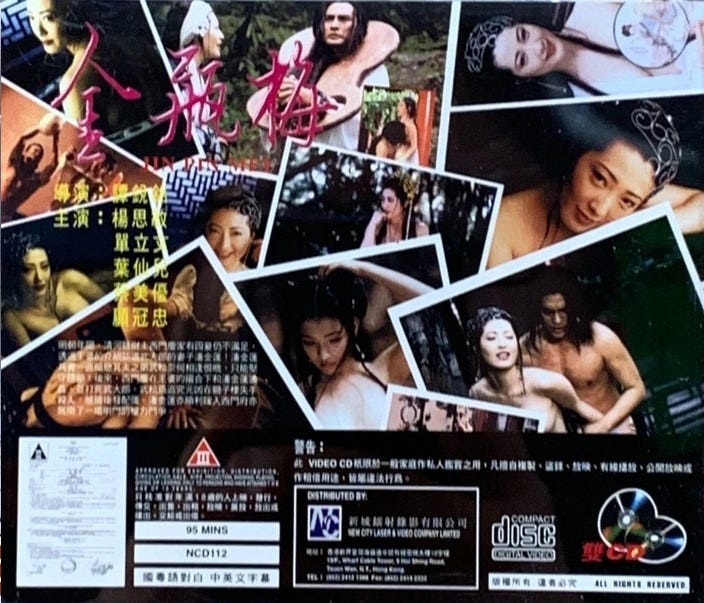
Bringing us back to 1998, bat-sh!t crazy “Bat Leung-Gum” said: “I can’t believe on the first day of the Year of the Tiger that someone offered me a movie role in a Category III film. The role required me to take off my clothes. Just look at me. I have no physique either, why should I follow others and make erotic scenes, so I turned it down! Then he said I can have a body double for those scenes, but I really couldn’t get past myself. On the second day, another film company made a Category III offer; of course I didn’t take that either. Two things I definitely wouldn’t do - one is a Category III film, the other is a r*pe scene. I am afraid I might be too gross.”
On April 15 in 1998, during the second week of Anna Magdalena being screened in H.K. cinemas, there was an attempt to find a new Category III film star in the form of an old star. Not elderly old but old enough to make you do a double take. Bonnie Ngai Chau-Wah was several months away from turning the big four oh. Joe Ma Wai-Ho was going to direct her in a film about young people’s attitudes toward love and sex. Because the film was going to be about the life of a nightclub hostess, Joe was going to conduct research at nightclubs. One member of the cast had been confirmed to be Liz Kong Hei-Man. Joe Ma said: “Kong Hei-Man in this film will be more extreme than her previous films. As for a daring performance, the negotiation will have to wait until after she reads the script.”
In the long run, Joe Ma only produced and co-wrote what is known as PR Girls (1998). Bonnie Ngai didn’t appear in the film. Her previous film was Michelle Yeoh’s Ah Kam (1996) but her next film was a Taiwanese production - Going Online at Midnight (2005). The film didn’t have an official English title, so I translated it. Joe Ma had an idea for a film that didn’t get made. Cheung Chi-Sing, the director of Love and Sex Among the Ruins (1996), was going to direct a romance between a student and a teacher played by Francis Ng. The age limit for the student was going to be 19 - an age that is safe enough for film professionals to be romantically entangled with. In 1978, Charles Heung fell in love with a 19-year-old Tiffany Chen. Hsu Chi was also 19 when she began filming Sex & Zen II. Like Tiffany, she was a model from Taiwan.
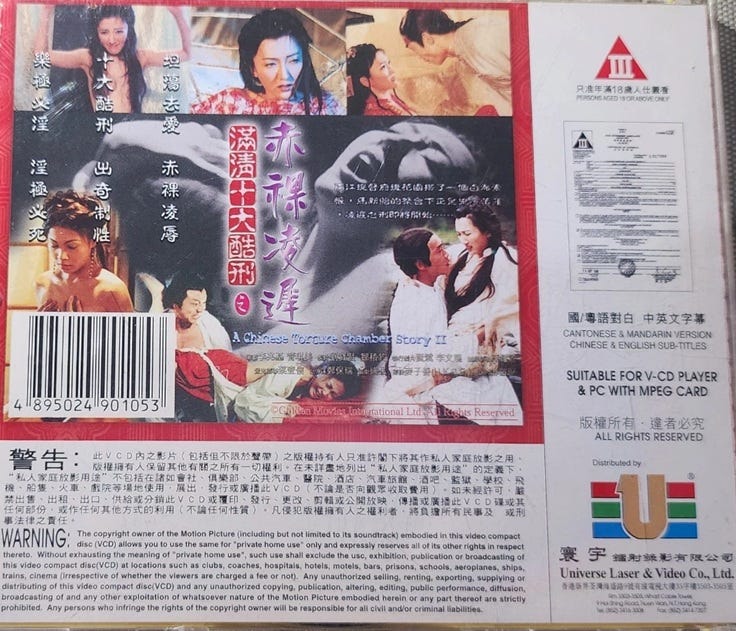
As Chingmy Yau told Wong Jing, the writing was on the wall because not only was Sharla Cheung the same age when Jimmy Heung discovered her in 1986 but Chingmy was 19 when Jing discovered her in 1987. On April 15 in 1998, it was reported that Yolinda Yan had been approached by Jing to co-star in a Category III film. This turned out to be Dick Cho’s A Chinese Torture Chamber Story II (1998). Yolinda’s previous film was Powerful Four (1992), so you have to wonder who was desperate here. David Lam Tuk-Lok’s Powerful Four saw her reunite with Simon Yam and Waise Lee since they had last worked together on John Woo’s Bullet in the Head (1990). She was 18 when filming began in 1989. As for A Chinese Torture Chamber Story II, Wong Jing was asked about what her salary was going to be. He said: “Now the situation is different, I won’t offer a high salary to a star for a nude performance!”
Jing claimed that he had already discussed salary with her and described the figure as reasonable. After the Jing-produced Gigolo of Chinese Hollywood (1999), Yolinda’s next film for him would also be her final one in general. It was appropriately titled Don't Look Back... Or You'll Be Sorry!! (2000). Bearing in mind that she was also a singer whose final album was released in 1993. On May 27 in 1998, it was reported that Yolinda’s reasonable figure was in the six digits. Apple Daily flew to Taiwan to interview her on the set. Since her nude scene was going to be one of the important selling points of A Chinese Torture Chamber Story II, the set was cleared constantly during production (not a standard practice for Hong Kong cinema). Here is what can be gleaned from the interview: Not that he brought it up with her, but the reporter heard that her hiatus was due to dating a jockey. Yolinda didn’t want to talk about her love life.
People in the West like to joke about how small that a jockey is, hence that 2000 episode of The Simpsons, but that joke is amplified when you have Westerners who like to joke about how small that Chinese people are. According to Yolinda Yan, her hiatus resulted in her being happy for being able to have more time to travel. Alas, she was unhappy because she felt like a wastrel. Yolinda denied that her return to cinema was to do with a financial problem; she just wanted a sense of purpose. She justified her acceptance of the period erotica by saying: “Although it’s a Category III film, it doesn’t just sell sex. The character I play is someone who has to die yet wants revenge. I thought about it for a long time and finally agreed. I am only 20-something now, I really don’t want to be aimless for the rest of my life.”
The salary was not close to a million but it was definitely six digits. It was considered a high fee. Yolinda was disaffected about whether doing a Category III film would effect her chances of returning to music because she wanted to focus on two other markets besides Hong Kong i.e. Taiwan and Mainland China. Yolinda doesn’t have too many relatives, so she discussed everything with her godsister - Carina Lau. The latter advised her to focus on working without any afterthoughts. By the way, the director of Don’t Look Back... Or You’ll Be Sorry!! had appeared in Carina’s first film - a 1986 movie produced by Jackie Chan i.e. Wellson Chin’s Naughty Boys. Clarence Fok and Carina also appeared in another 1986 JC production - Armour of God - before reuniting in JC’s Project A II (1987). However, Clarence’s first appearance in a JC movie was Police Story (1985). Carina Lau’s final performance in a JC production was Centre Stage (1992).