
Through the Hooking Glass

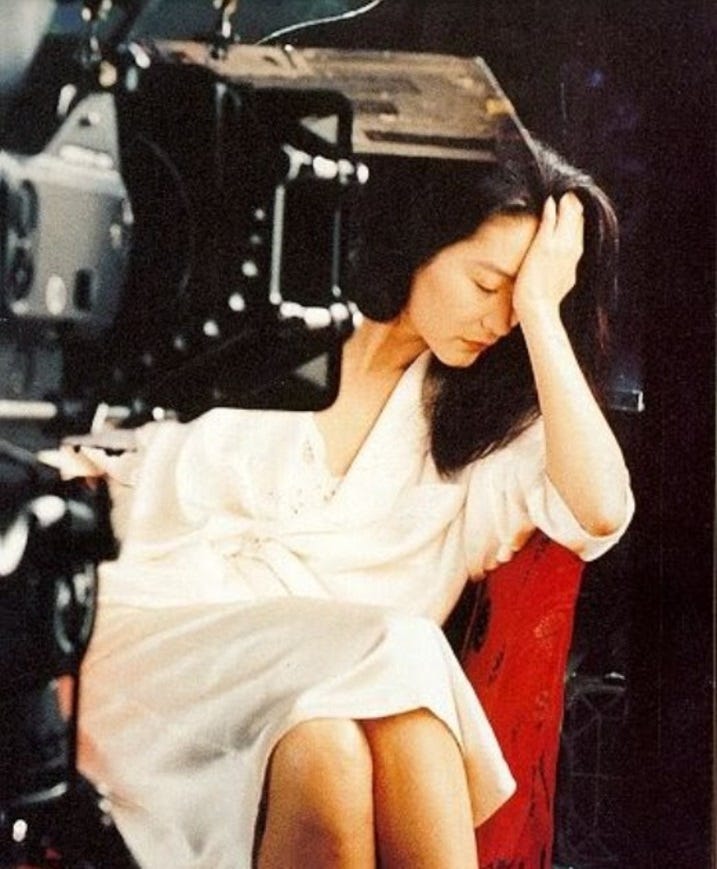
The difference between a mirror and a camera is that the camera can immortalize an image whereas the image in the looking glass is fleeting. There is a Chinese proverb about paying respect to the well that you drink water from. There is a 2012 Tang Zhenzhao (汤祯兆) book called The Night and Fog in Hong Kong Movies (香港电影夜与雾) where I first learned that Brigitte Lin had a 2011 memoir. In an article about Wong Jing’s 2011 memoir, Tang wrote: “The proportion of autobiographies published by filmmakers in Hong Kong can be described as rare. The importance of film is definitely far beyond writing. Therefore, when time is limited, writing must be arranged at the end of their career. So we can see Rene Liu and Brigitte Lin talking freely and trying to build a literary identity that matches their personal performing arts image. The former has always been a talented actress, and the latter has long retired from the film industry, so she can write calmly. In addition, Taiwan's literary and artistic atmosphere has always been heavier than Hong Kong. This is why Hone Kong did not produce Rene Liu's Incomplete Me or Brigitte Lin's Inside and Outside the Window, but Sandra Ng's Blood and Tears of Weight Loss.”
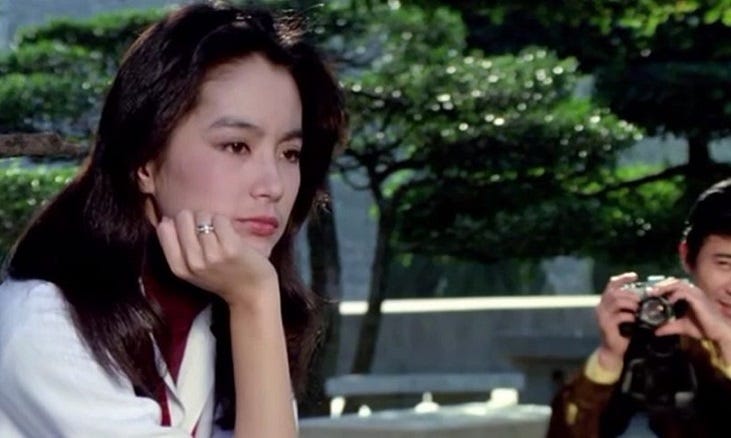
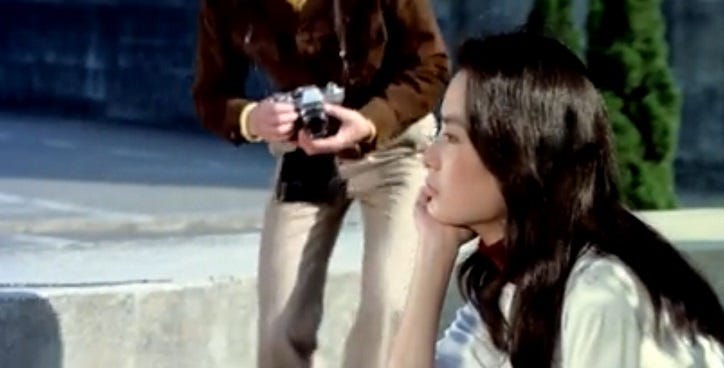
Brigitte speaks of an aphorism: “People say that those who watch the theater are fools and those who film the theater are lunatics.”
About art director William Chang Suk-Ping: “Zu: Warriors from the Magic Mountain was the second film that I collaborated with him on. The first was Love Massacre, which was filmed in Los Angeles in 1980. In the eight years before that, I did all the hair, costumes and make-up for the literary films I had shot. Love Massacre is the first time that I had an art director. The first thing he did when he remodeled me was to cut my long hair to shoulder length, which made me look fresh and acceptable. The second thing was to paint my lips big and red. When I looked in the mirror, I was shocked. It looked bloody! The third thing was to ask me to go on camera without wearing a bra. It was unacceptable. He insisted, and so did I. In the end, he couldn't resist me, so he took two photos with a polaroid camera before and after wearing them, and showed them to me, asking me to choose. I was wearing a bright red silk dress. The material lay lightly on my body, and when I put on the bra, it looked rather stiff. The one without a bra looks very feminine and mysterious. He taught me that I had to be impressed by his aesthetics.”
All the Wrong Spies (1983): “On the first day of filming, I did a costume fitting on the set. Makeup is ordered first, then hair style. I need to use hairspray to fix my hair into a wavy shape, close to my scalp, and then attach silver beading leaves to my hair one by one. Finally, I put on a black lace transparent vest dress and a black feather shawl. It took twelve hours from 4pm to 4am. Both of my big dark circles appeared. The makeup artist had to cover the dark circles with concealer. They waited until I was almost dead from exhaustion to take the first shot. When I see myself in the mirror, even though I am tired, I am still happy. Another six hours of styling were spent before filming the next day. On the third day, after putting on makeup, I put on pink pajamas, a pink transparent flowing robe with pink feathers on the outside, and tied a big knot tightly with pink satin on my head, which made me dizzy. Four hours later, he nodded with satisfaction. I lay weakly on the table and couldn't get up for a long time. The assistant director invited me into the set. I raised my head with tears on my face. When I stood in front of the camera, the photographer said my eyes were red and swollen. The director had no choice but to call it a day.”
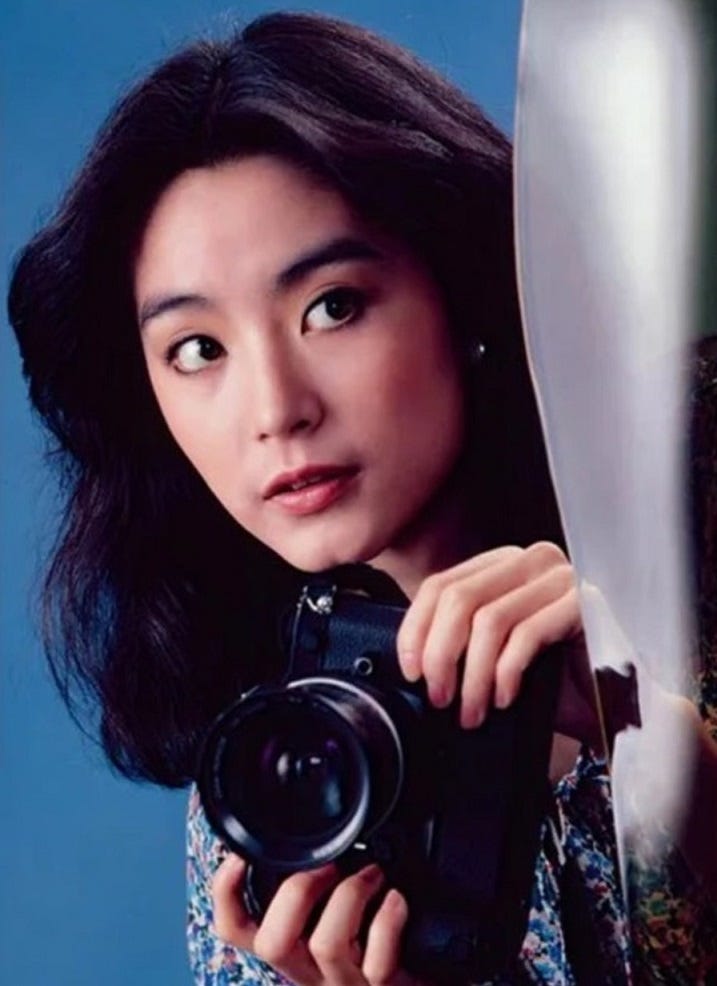
She either has a good memory or a diary: “Because of the pressure brought by fame and the long-term physical exhaustion, I was like a string that was about to break, and finally I couldn't bear it anymore. On December 29, 1979, I left the film world and went to California, USA, to further my studies and enjoy the freedom of controlling my own time. During my fifteen months in the United States, I filmed Love Massacre directed by Patrick Tam. This drama is a very sophisticated romance with a bit of blood. In order to express a cold feeling, the director shot the entire drama in Los Angeles and San Francisco. The background of the drama is mainly blue and red. This is the first time I have an art director (William Chang). Starting from this drama, I entered another stage of film and life. When I returned to Taipei in March 1983, the film industry had undergone a major shift, and artistic films were no longer popular. In the 1980s, martial law was lifted in Taiwan, censorship standards were relaxed, and film types were diversified. I tried various types of movies, but none of them were aesthetic romantic movies, and the roles of parents no longer appeared in the movies. Maybe times have changed, and relationships with self-feeling have begun to be valued. At first, the film producers had reservations about me, until I filmed the humorous comedy Seven Black Heroines directed by Kevin Chu Yen-Ping, which achieved another great success at the box office. From then on, my acting career started again, even in Hong Kong.”
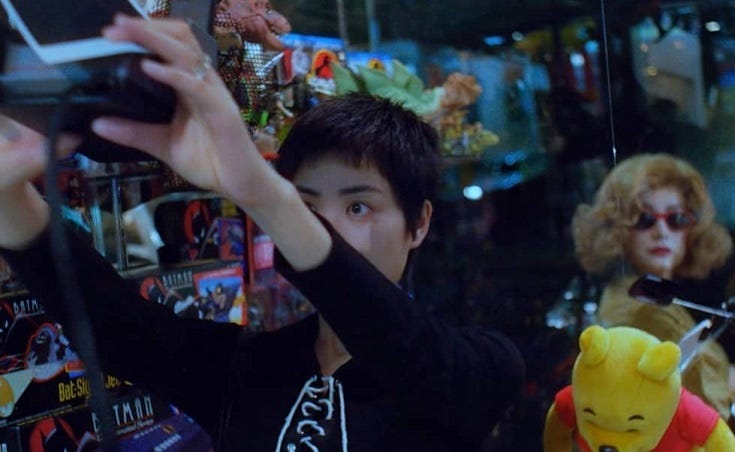
A subtle reference to Taiwanese Triads: “In the 1970s, there was drama in and outside the theater, and often, under the pressure of favor, I took on many roles that I didn't want to take. In the 1980s, there was a lot of drama in and outside the films, and people took on many roles they didn't want to take even though they couldn't help themselves.”
From being potentially pulled in by the underworld to being potentially pulled under water: “In 1976, Taiwan's Central Motion Picture Corporation prepared to film Eight Hundred Heroes. In the film, one of the characters was Chinese girl guide Yang Huimin, who rushed through the British Concession under Japanese artillery fire, swam desperately across the Suzhou River, and dedicated the national flag to the four defenders. Many female stars wanted to win the role of Yang Huimin. The director's requirement was that the heroine must be able to swim, so I practiced swimming every day. One day the director came to see me in the swimming pool and decided on the spot that I would play the role. A scene of swimming across the Suzhou River was shot in many locations, and then the scenes shot in the river, ditches and underwater studios were edited together to complete the scene. I was 20 years old, young and courageous.”
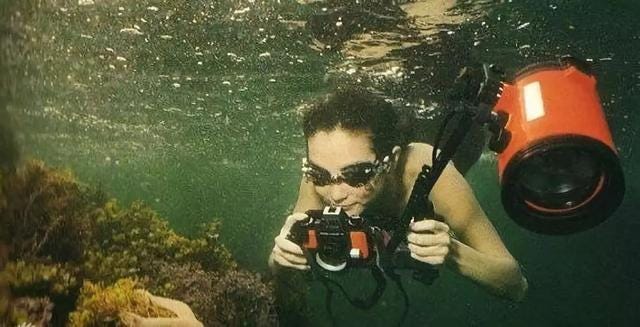
A peril to rival what Meryl Streep went through in The River Wild (1994): “The director asked me to jump from the bottom of the bridge into the river. I jumped down with a splash, but the director broke into a cold sweat. There is a large ditch that has been blocked for many years at the Central Film Studio. The stench is so strong that I usually don’t pay attention to the existence of such a ditch. When I went to the studio that day, the production manager took a long bamboo pole and happily told me: “I will be filming you from now on. Swim ashore here, I’ve cleaned up the ditch, don’t worry.” I got into the ditch without thinking too much (actually it was useless to think about it, the director on the set was the biggest, and I had to do whatever he said). Fortunately, it didn’t happen. Why is it NG? When I got ashore, I said it seemed like I just saw a snake. The make-up artist and staff pursed their lips and smiled and said that they had seen it too, but they didn't dare to tell me because they were afraid that I would not go on.”
Undertow: “Finally, we took some shots in the underwater photography swimming pool. A cold wave came that day, and the temperature was between 6 and 8 degrees Celsius. Everyone was wearing thick coats, and white air came out of their mouths when they talked. The director said we had to shoot that day because the water would be released the next day. I wore a khaki scout uniform, a green scarf tied around my neck, and jumped into the cold swimming pool with my schoolbag on my back. After filming for a while, I lay down by the pool and waited for the next shot. My whole face was shrunk from the cold. The assistant director felt sorry for me and asked me to come up. He gave me a sip of wine and asked me to roast it by the fire. Unexpectedly, the wine and the contrast between hot and cold made me immediately fall to the ground trembling all over, as if I was suffocating. I screamed so loudly that it shook the earth. I just remember a lot of people carrying me to the office while shouting. I kept shaking, and I couldn't take off the wet clothes on my body. During the rush, I vaguely saw a big syringe pricking me. When I woke up, my mother and brother were beside me. Because of Eight Hundred Heroes, I won the Best Actress Award at the 1976 Asian Film Festival.”
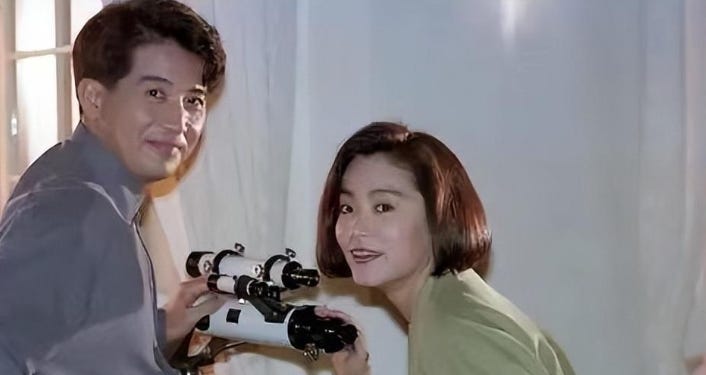
The director whose name is also Yonfan: “Yang Fan is very discerning. He can always hire actors before they become famous. When those actors become big stars, he will find new ones. In 1985, he made Rose with Chow Yun-Fat and Maggie Cheung as the male and female protagonists. When the movie was released, Chow Yun-Fat and I were filming Dream Lovers. Chow happily reported to me that Rose was a box office hit. It was very good. At that time, he was dubbed "box office poison". Yang Fan used Rose to help him detoxify. Now he is a big star in Hollywood, and Maggie Cheung, who played Rose, was also promoted to the Cannes Best Actress. I remember that in 1998, when Yang Fan was preparing for Bishonen, he showed us a photo of a young man in a police uniform on the mahjong table. I was so shocked that I asked him to hire him immediately. That boy is the current big star Daniel Wu.”
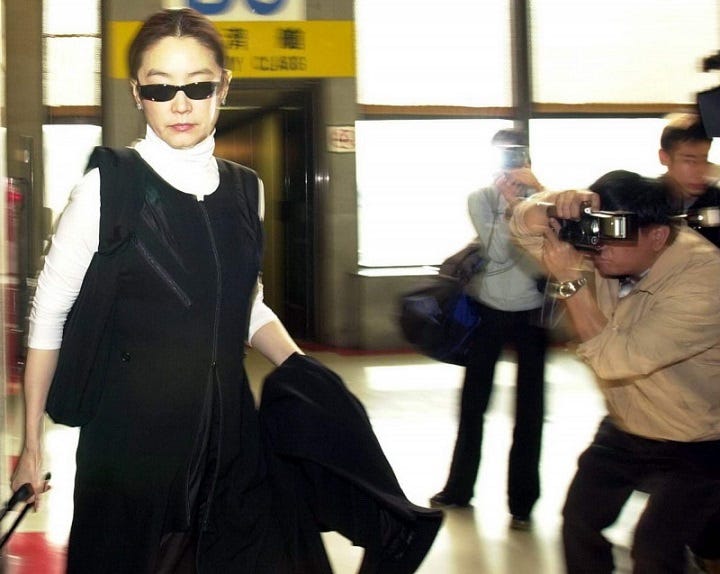
Another example of a hooking glass: “On the day I got married, my good friend Nansun Shi carefully warned me in my ear - When you have children, you must learn to use computers so that you can have good communication with them in the future.”