
The Internal Mirror Reflects

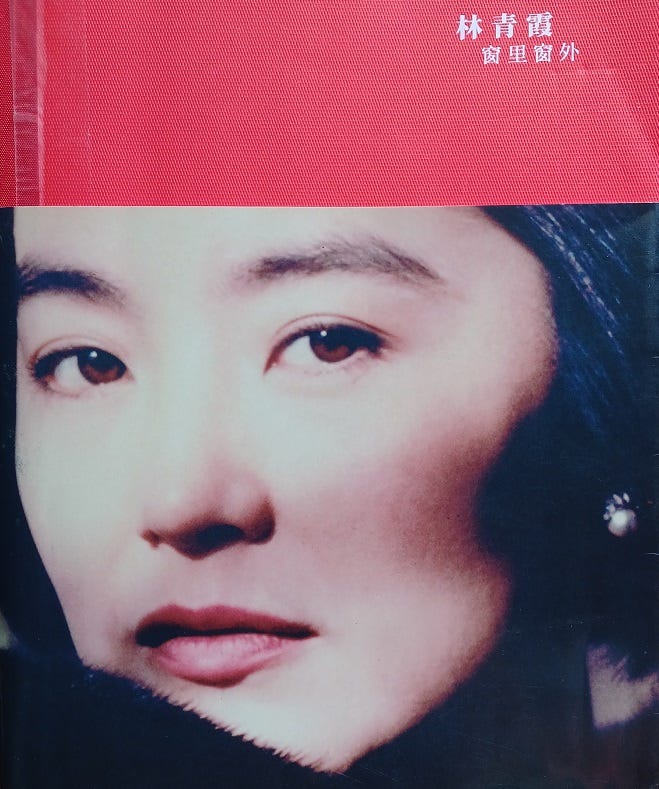
The title of Brigitte Lin’s 2011 memoir, Inside and Outside the Window, references her first film: Outside the Window (1973). Brigitte said that before the age of 40, she had no time to read because she was too busy filming. After the age of 40, she fell in love with reading and would write in her free time before locking the writings in her drawer. It’s not a coincidence that the book is a compilation of forty articles which were originally published for a newspaper. I will let the autobiographer speak…
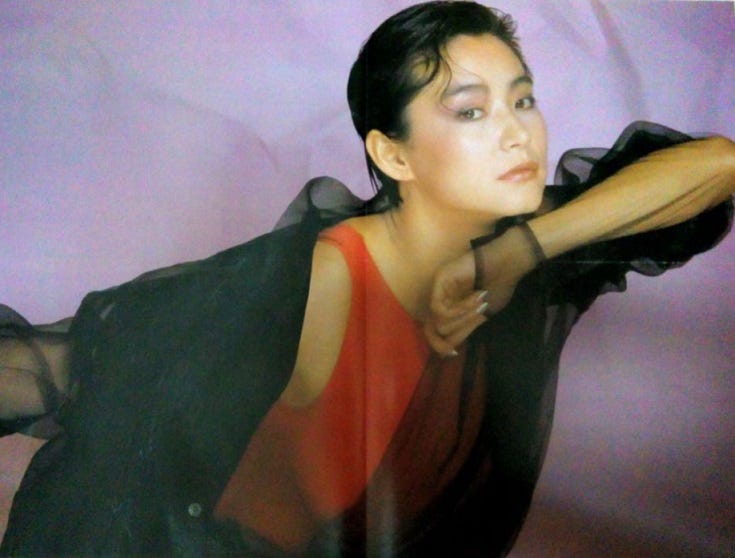
Analogy: “I was thinking that my article is a film, the pen is my camera, and my brain is the director. My writing process is just another form of acting.”
Introspection: “Once I came home from dinner and passed by the dressing table. I suddenly thought of something. I was afraid that I would forget it in a while, so I immediately leaned on the table to write. Unknowingly, I sat there for several hours and realized that it was dawn when I heard the chirping of birds outside the window. I looked at myself in the mirror and couldn't help but laugh. It turned out that the makeup on my face had not been removed, and the diamond earrings on my ears were dangling. When I lowered my head, I saw a blue silk pleated skirt and high boots on my feet. The clock pointed to half past six, which was when my daughter got up to have breakfast. I hurried downstairs to accompany my daughter. When my two daughters saw me, they were not surprised at all. They just said calmly: Mom, are you writing an article again?”
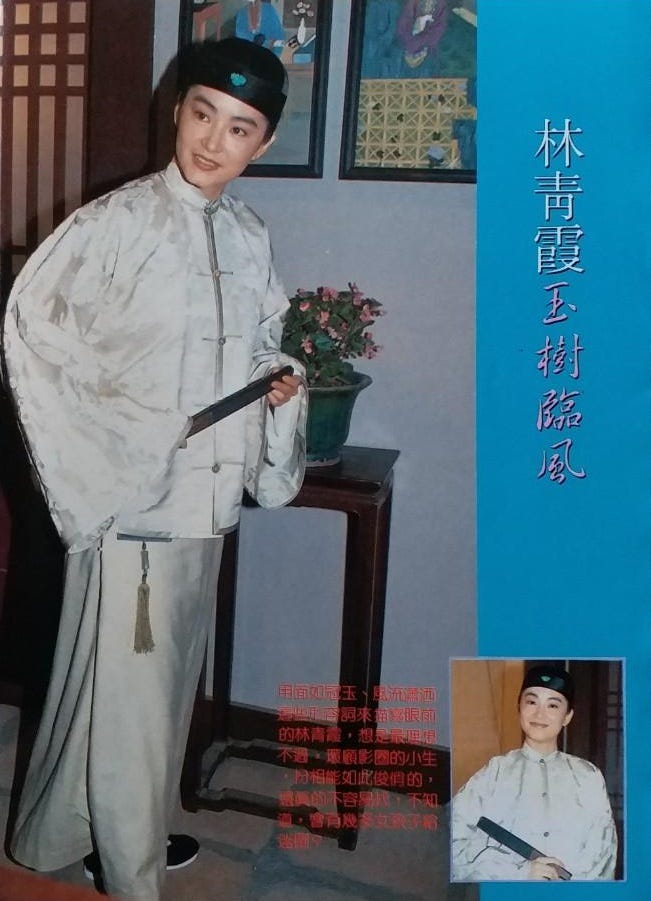
A familiar story for many actors in the West: “Our family is a traditional Shandong family and have never been exposed to the film industry. My father, mother, and brother all opposed it, but only my sister supported me. In order to protect me, my parents were determined not to let their daughter enter the complicated film industry. I was full of curiosity about making movies and refused to give up. My mother tried her best to dissuade me, and even used the most popular actresses Linda Lin Dai and Betty Loh Ti as examples. She said: "The most popular stars also end up committing suicide in the end, so why bother?" After meeting a fellow villager who was very close to me, and my repeated assurance that I would be clean and self-disciplined when I entered the entertainment industry, my mother reluctantly agreed to accompany me to the film company to meet the director. I remember that day, my mother took the script and marked all the kissing scenes, the director said, "You can borrow my seat." My mother asked for the addresses of Tsao Chien and Chin Liu, who played my parents in Outside the Window. I went straight to their house and rang the doorbell. Because they didn't know us, the servant said they were not at home. My mother and I waited at the door from afternoon until dusk. The couple were moved by our sincerity and opened the door. After they repeatedly assured my mother that Director Sung Tsun-Shou was a well-known good man in the film industry, my mother felt free to take me home.”
Wang Manling was a female reporter who worked for a paper called The Star: “It was the summer of 1973, the first time I left home, the first time I took a plane from Taiwan to Hong Kong to promote my first movie Outside the Window. This phone call was also the first call I received from a reporter in my life, but it was like two friends chatting. Ah Wang has this ability. After coming to Hong Kong, I would see her at many press conferences, movie opening ceremonies, and closing wines. After many years in the journalistic industry, she has become more sophisticated, more practical, and has almost become the boss of reporters. In the impression that most people have when reporters are present, she always stands in the middle position and is often responsible for asking questions. It’s still those big watery eyes, but they have become more mature and sharp. Through the glass lenses of my myopia glasses, they are like two small searchlights shining everywhere. If they stay on you, you should be happy. That means you have value. She never hides her realistic side, which is also her cuteness. I am a very protective person, and it is difficult for me to make close friends, especially reporters, but I like her sincerity and refreshing nature. During this period of filming in Hong Kong, we became friends and often met for dinner and chat in our spare time. Sometimes she would come to my small apartment and chat until midnight.”
Don’t forget that Brigitte would later act with Jackie Chan in Fantasy Mission Force (1983) and Police Story (1985): “In 1978, Taiwan and Hong Kong organized a group to go to Thailand for a benefit performance. It was a huge event, including Jackie Chan (who had just appeared in Drunken Master), Hsu Feng, Chin Han, Charlie Chin and Eva Lin I-Wa. Wang Manling was the reporter accompanying the group, and she was very happy talking and laughing along the way. One day we went to Pattaya Beach as a group. I was wearing a red bikini, a red shirt and red shorts. I refused to take off my shirt and shorts just because I was afraid that she would take pictures. I rode a jet ski with my clothes on and went up in the air balloon. I was so brave at that time. I remember Jackie Chan fell from the balloon and everyone was very nervous because he couldn't swim. Many people rushed to save him. I thought I was a good swimmer, so I was ready to take off my shirt and join in the fun. I said to Ah Wang: "I'm going to take off my shirt, don't take pictures of me!" Ah Wang was wearing shorts and holding a small camera in her hand. Her little fat finger pointed at me: "As long as you take off your shirt, I will definitely take the picture." I had no choice but to give up.”
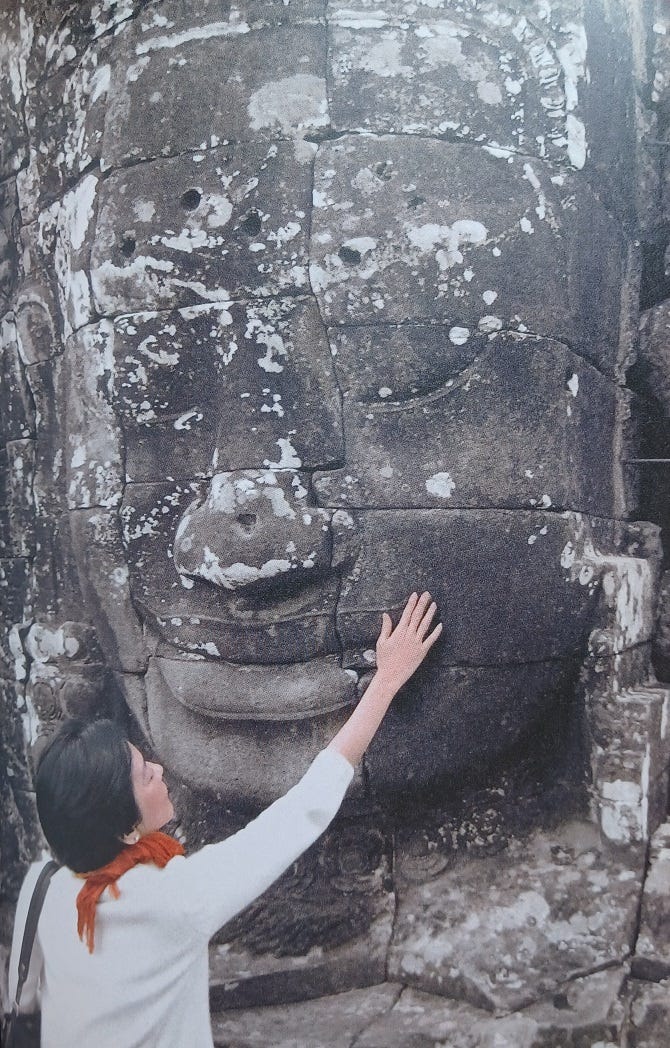
Lady reporter Wang Manling resurfaces again: “After Swordsman II was released in 1992, my salary was very high and I had constant film appointments. I just want to cherish my feathers and choose a good show. She is more pragmatic. She said that at the age of 38, I can earn as much as I want. Once I earn enough, I can go ashore. So I listened to her advice and earned tens of millions in landing bonus that year. Those two years were very hard. They were all in period martial arts films, wearing wigs, raised eyebrows, and layers of period costumes, fighting and killing. It was extremely hot in the summer and extremely cold in the winter. She helped me pick up the film, recommend the film, and schedule the film. The two of us were very busy, and finally we landed. The fate between us has also come to an end. I haven't sat with her for fourteen years. When I saw her again, she became more calm and capable.”
The moment that she pledged her allegiance to Hong Kong cinema at the expense of Taiwanese cinema: “At that time, the Taiwanese film industry was dominated by the underworld. In 1984, director Ringo Lam asked me to come to Hong Kong to shoot The Other Side of Gentleman, so I took the opportunity to work with Hong Kong films. This ended my Taiwanese film career. I moved to Hong Kong to film in 1984 and got married in Hong Kong in 1994. In my heart, I have never left Taiwan, and Taiwan has never abandoned me. To me, Taiwan is like my natal family, and Hong Kong is like my husband’s family.”
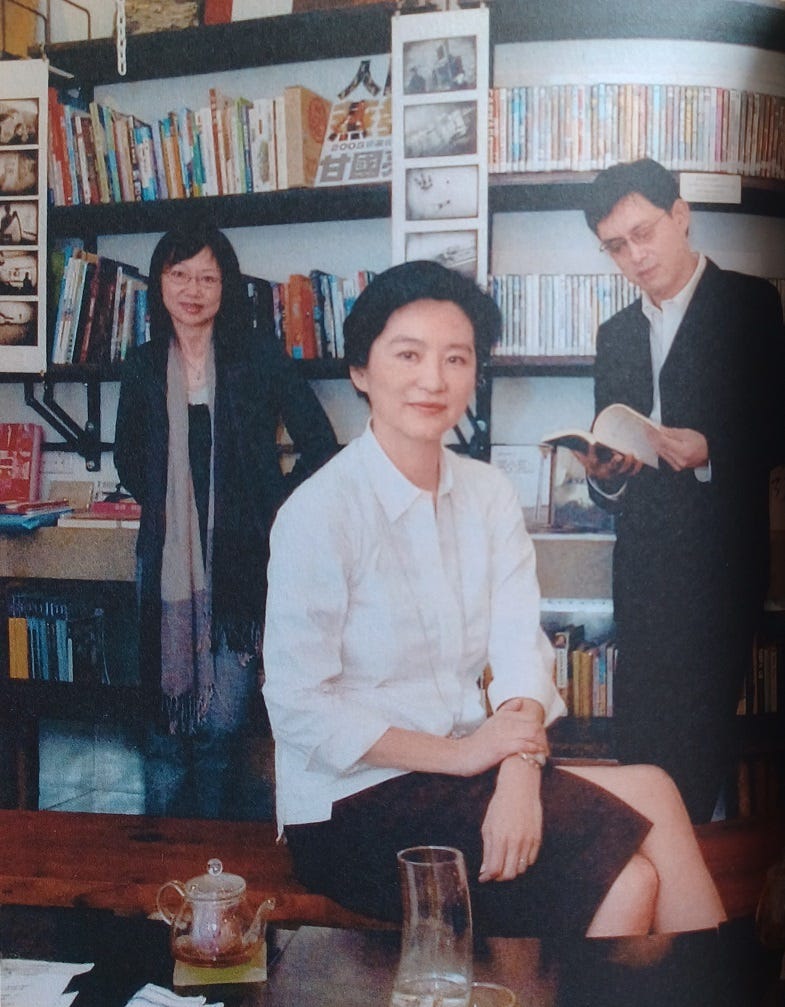
Brigitte turned 30 on November 3, 1984 and stopped being 30 on November 2, 1985: “I was thirty that year. On a sunny afternoon, my girlfriend and I had not changed out of our pajamas, and we were lazily reclining in her small apartment in New York. I was holding an eyebrow pencil and teaching her how to draw eyebrows when I suddenly heard something outside the window. There was the sound of noisy gongs and drums, and before I could change my clothes, I stuffed my pajamas into my skirt, added a windbreaker, and ran out. We joined in the fun with the crowd. After the parade had left, my friend and I walked to Central Park and leaned on a long wooden chair. I squinted my eyes and enjoyed the breeze passing by my face, blowing my hair, and lifting the hair. I felt the hem of my skirt. Several Chinese people passed by in front of me. I was about to sit up straight, but I found that they didn’t pay attention to Brigitte Lin, who was casually lounging on the wooden chair without makeup. In an instant, I enjoyed the kind of freedom that no one is paying attention. It turns out that happiness can be so simple, without fancy clothes or jewelry.”
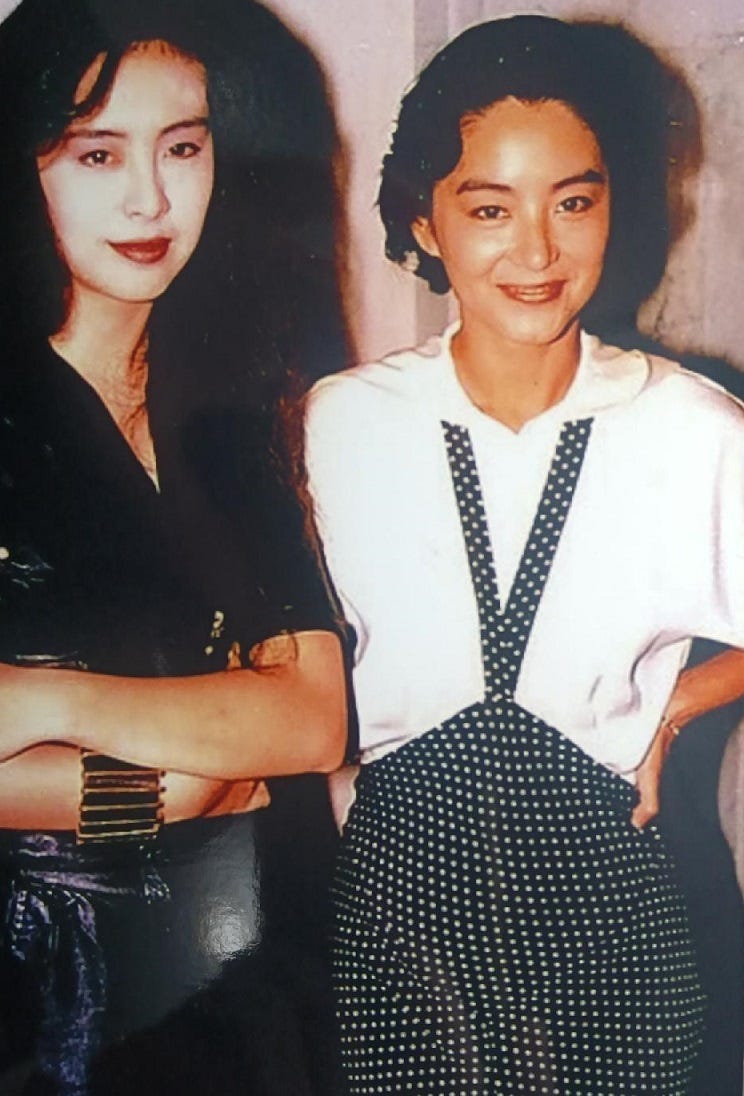
John Woo’s Once a Thief was made in France in the same year: “In the summer of 1990, Teresa Teng and I met for a vacation in the south of France. We enjoyed a warm sunbath on the beach at Cannes. Many French women took off their bikini tops and welcomed the sunshine without any fuss or strange looks from anyone around them. No one there knows who is Brigitte Lin and who is Teresa Teng. I lowered my guard and disarmed myself. Like the French women, I took off my shirt and sunglasses and lay on the beach chair to welcome nature. Teresa Teng circled around me and murmured to herself, "I will never do it! I will never do it. I won't do this! I absolutely..." The tone of her voice gradually became softer and softer from a firm and affirmative tone. Not long after, I hooked my index finger on the maroon bikini top and rushed into the sea with her. She finally couldn't hold on and was liberated. We smiled proudly in the embrace of nature, facing the crowd calmly between the blue sea and sky. In an instant, I remembered that happy afternoon in New York, my soul was liberated from the invisible shackles! At that time, I thought, she must have the same feeling as me. Teresa Teng and I don't see each other often, but we are connected in a certain corner of our hearts. Since we were teenagers, we have grown up under the spotlight and the eyes of everyone. We each stick to our own positions and do our best to play the roles assigned to us. The characters have very few moments when they can be themselves. That afternoon on the sunny beach in the south of France is particularly precious to us. At that time, I was me, she was her, and we all acted like ourselves.”
An autobiographer referencing a biographer in April 2008: “How many decades can there be in a person's life? Japanese writer Akiko Tetsuya spent the most precious ten years of her life to fulfill her dream and write a book about "Brigitte Lin". In the past ten years, she traveled to Los Angeles, Hong Kong and Taiwan countless times, fighting alone. I believe that everyone who interviewed her and provided information to her, including directors, photographers, art directors, and my good friends, were moved by her persistence and sincerity. The first time I met her ten years ago, the weather was very hot. She was sweating profusely and had a silly smile on her face. She came to my house with a lot of old posters, magazines, discs, photos, etc. that I didn't even own. She was very nervous, excited, and felt flattered, but she was also curious to know why I, who rarely accepted interviews, was willing to meet her. I said it was because I was moved by her perseverance. At the same time, my motto in life is "Where there's a will, there's a way", so I met her. In this way, a Japanese, a Chinese, a tape recorder, and two people who were not good at English started talking.”
Akiko’s book is known in shorthand English as The Last Star of the East (2005). Anyway, Brigitte said: “In the first two years, she kept traveling back and forth between Los Angeles and Hong Kong, and asked to meet me again and again. This was not what I wanted, and at the same time I felt that this method of communication and the whole thing would not work, so I stopped meeting her. When I gradually forgot about this matter, my friend Lu Yuqing told me that Block Publishing House is about to release Forever Brigitte Lin. I can't imagine what it will be like to translate this book from Japanese to English and then from English to Chinese. But I can't bear to stop her. Later I thought about it, if she spent ten years working on it and I only spent ten days helping her revise it, what would it mean? When I read her manuscript, saw me in the eyes of my friends, and saw the long-forgotten life in the film industry and bits and pieces of the old days, it felt like a world away. When I feel vague about my past, when I look at the old "Brigitte Lin" again, I feel like I am watching another person's story like the reader. I am looking back on these ten years and thinking about Tetsuya who lives in another country. What was her story like in those ten years? Here, I hope that in the next few decades, she can put down "Brigitte Lin" and pick up "Iron House Akiko" to work hard for her own life, tomorrow and the future. I would like to sincerely thank her for everything she has done for me and send her my most sincere blessings.”
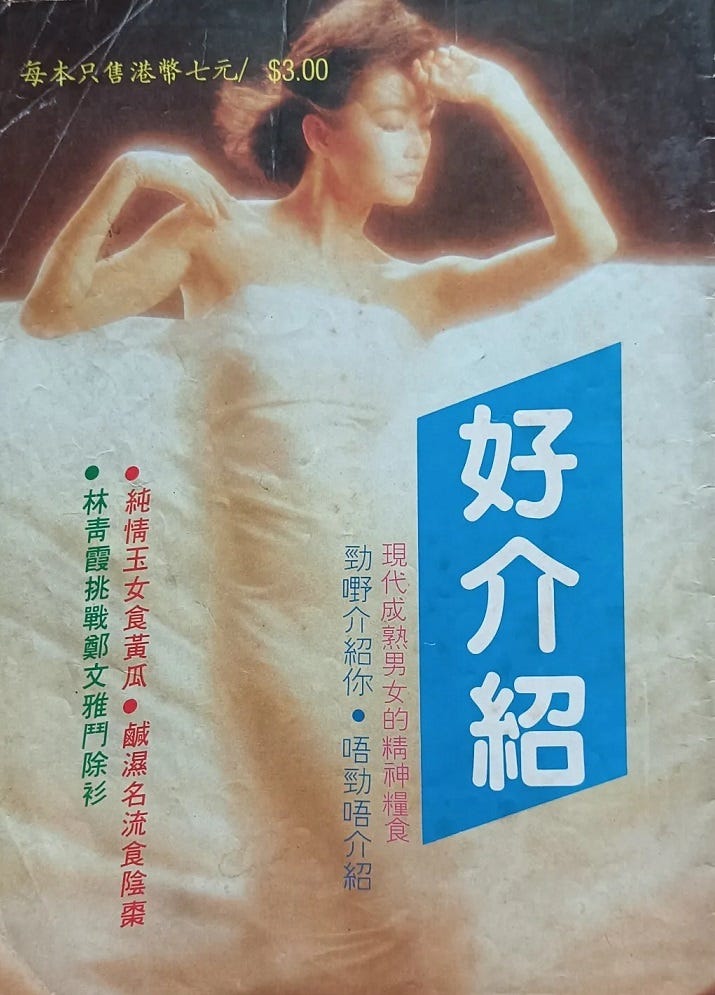
Psychological awareness: “Because of Hsu Feng, I met Professor Li Cheng. He has a pair of firm and sharp eyes, and his bright eyes can be felt even behind the lenses. He had a smile on his face and seemed to be able to see through everyone he was talking to. He has a knack for making you talk naturally in front of him. I have a friend. More than ten years ago, in the early stages of her illness, I had already noticed that she had a tendency to suffer from bipolar disorder. She kept talking, there was no pause between words, you couldn't even think of interjecting a word within an hour, and sometimes she would stand up and make big moves when she got excited. Later I heard that she suffered from severe depression. In the past ten years, I have occasionally met her several times. Almost every time I saw her, my friend was worried, as if she might explode at any time. The last few times I saw her, she seemed to be a completely different person. The muscles on her face changed from tense to relaxed now, and her eyes changed from murderous before to soft now. Her whole personality was calm, and her friends were with her. It is also comfortable and natural together. I heard it was because she took the medicine that Professor Li helped her prepare. After reading several books about emotional illness and the free magazine "Information News" given to me by Professor Li, I realized that emotional illness is not just divided into depression and bipolar disorder, but also includes panic disorder, frequent anxiety disorder, social phobia and obsessive-compulsive disorder.”
Spiritual awakening: “On August 16, 2000, I returned to Taiwan with my daughter Ailin, hoping to find a wise master to give me a lesson and guide me on how to let go of my attachments and face the world's emotions and events with a peaceful mind. At noon on the 17th, I went to a restaurant near my home with my father, mother, and Ailin for lunch. As soon as I sat down, someone called me from behind. It was Sung Lai Wah, the wife of stunt master Blackie Ko. Because I knew that she was a devout Buddhist, I told her my feelings. She said that her master, Master Sheng Yen, had just returned to Taiwan after teaching Zen in New York. She happened to have a booklet on Zen in her bag, so she gave it to me. I originally thought that "Zen" was a profound knowledge. After reading it, I was surprised to find that "Zen" is not difficult to understand and has so many benefits for people, so I asked to see the master.”
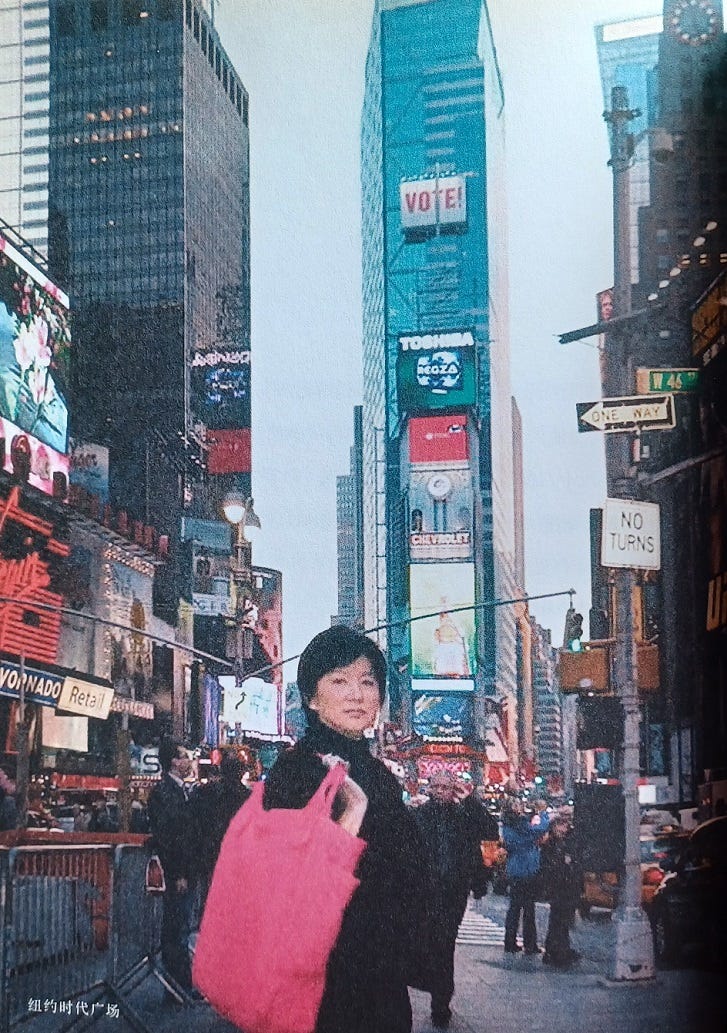
This photo is perfect because I’m reminded of two Hong Kong film sites based in New York - A View from the Brooklyn Bridge and Bullets Over Chinatown.