
Ternary Terence

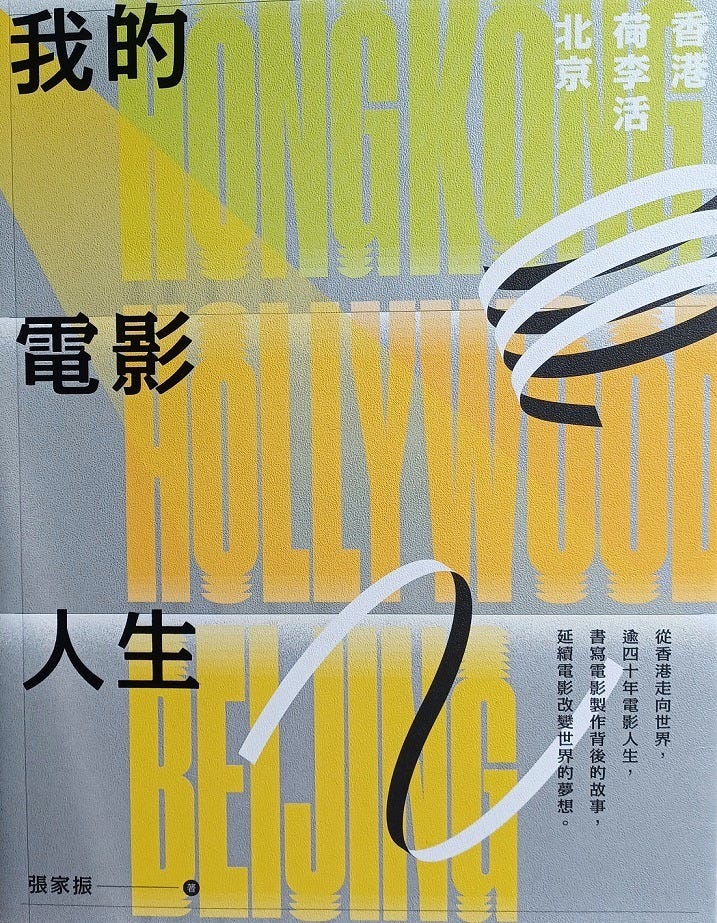
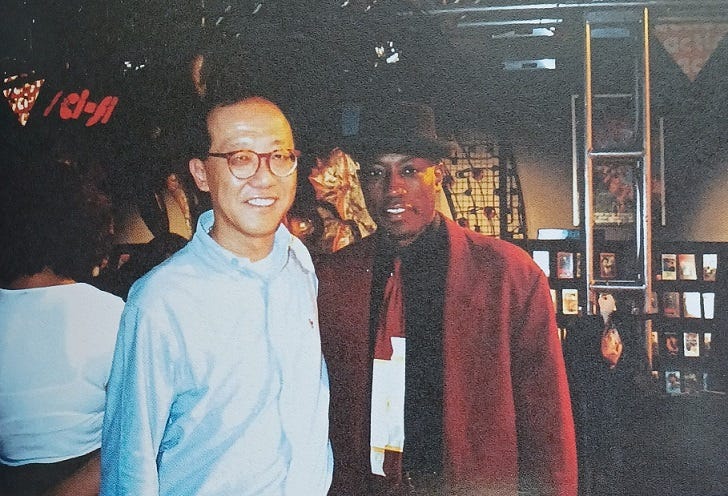
Last year on July 5, Terence Chang (a.k.a. John Woo’s business partner) published a memoir titled My Film Life: Hong Kong, Hollywood, Beijing (i.e. 我的電影人生:香港、荷李活、北京). This book is responsible for the four below articles about John Woo’s A Better Tomorrow series, the rest of Woo’s H.K. oeuvre, and Woo’s Hollywood output. The below photo of Terence with Wesley Snipes was taken on a Toronto set during the making of Kirk Wong’s The Big Hit in September 1997. Ironically, Kirk Wong’s action comedy was more suited to the likes of Wong Jing. Kirk Wong was well-known in Hong Kong for his gritty crime dramas.
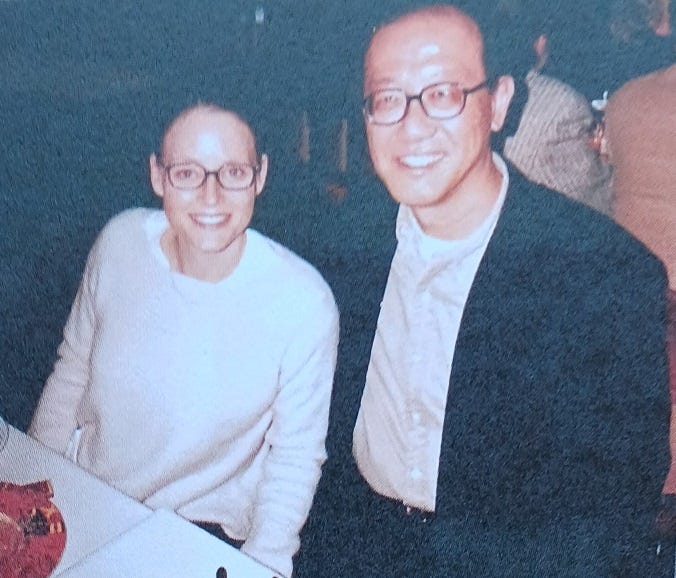
The below photo with Jodie Foster was taken in Beverly Hills on January 28, 1999. She starred alongside Chow Yun-Fat in Anna and the King (1999), which Terence Chang had worked on as an executive producer. In his book, he reviewed the film: “It was not bad, but the heroine was wrongly chosen. At this time, my wife proposed to use Meg Ryan. I thought it was a good suggestion, but Fox objected. Lawrence Bender suggested Jodie Foster because she won an Oscar and was a box office hit. I like Jodie very much and her acting skills are very good, but I think she is not suitable to play Anna because she has a tough appearance and will not make people feel pity for her. Jodie is a very dedicated actor and has no airs. I remember once I had an appointment with her for dinner in Beverly Hills. She drove to the appointment alone, without any makeup or assistant. This was her confidence in herself. Unlike some actresses in the Mainland, who would be full of panache after a TV series became popular and were all accompanied by more than a dozen people.”
The below photo with Michelle Yeoh was taken in the same year that Crouching Tiger, Hidden Dragon was made in: 1999. Filming began in August - a couple of months after Chow Yun-Fat had finished acting in Andy Tennant’s Anna and the King. Beijing was one of the locations used for Ang Lee’s film. I will let Terence take care of the rest: “After Michelle Yeoh finished starring in Tomorrow Never Dies, unexpectedly she did not receive many film offers. So I found a screenwriter to tailor a script for her. One day Michelle Yeoh and Ang Lee were both in Los Angeles, and I introduced them to each other. Later, I organized a retrospective of Michelle Yeoh's films in New York, and there was a cocktail party afterwards, and I invited Ang Lee to attend. Ang was probably already thinking about the script of Crouching Tiger, Hidden Dragon at that time. He came to the reception, meeting his future heroine again. Ang Lee's producer Zheng Quan-Gang told me that Ang was planning to shoot a martial arts film with the goal of showing it in more than 2,000 movie theaters in the United States. At that time, I really doubted whether it could be achieved. Michelle Yeoh was chosen as the heroine first, but she couldn't read Chinese.”
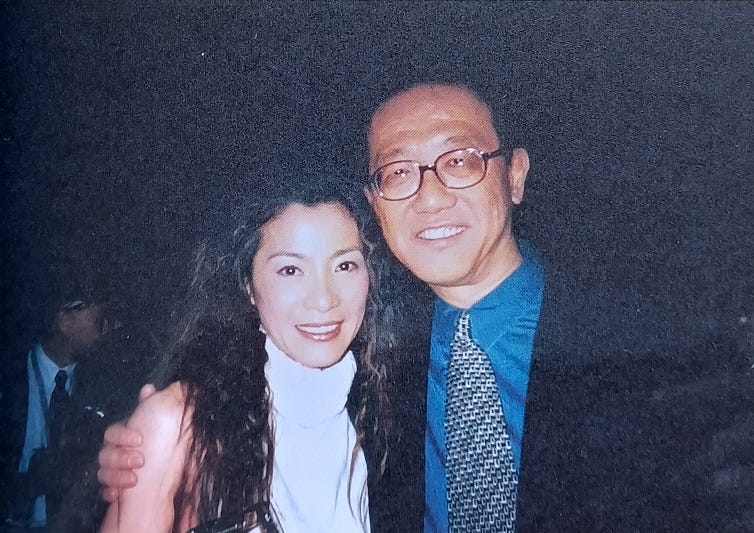
Terence Chang was also responsible for her being in a 1997 James Bond movie as he says: “She has a great advantage, that is, she is fluent in English, generous and decent, and she will never be silent in meetings. Everyone who meets her will be attracted by her beauty and temperament. One of them was Jeff Kleeman, the vice president of United Artists. At that time, they were planning a 007 movie - Tomorrow Never Dies - in which an important character is a Chinese general. After meeting Michelle Yeoh, Kleeman had an idea. How about making the role heavier and changing it to a female? After meeting Michelle, Pierce Brosnan and producer Barbara Broccoli were all fascinated by her temperament and wisdom, so they decided to change the script. Michelle’s performance in the film was so outstanding that they later reshot the ending and changed it to a scene where she was tied up and 007 dealt with the bad guys alone to show a hero saving the beauty. After the film was completed and released in December 1997, I took the opportunity to look for other scripts for her and plan a U.S. film that would allow her to take on her own role.”
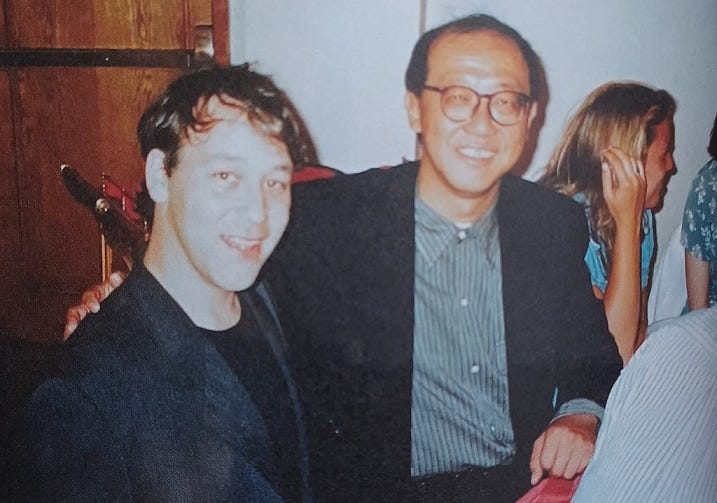
The above photo with Sam Raimi was taken in Los Angeles circa 1995. The below photo with Chow Yun-Fat and John Woo was taken in Terence’s Los Angeles home on March 23, 2000. Back to Terence talking about Ang Lee’s Oscar-winning martial arts film: “The original choice for the role of Li Mu-Bai was Jet Li, and many people know this. I was Chow Yun-Fat's manager at the time, so of course I had to promote his performance. Some people doubt whether he is suitable for acting in ancient costumes. In fact, he has also acted in ancient costumes on TVB. The story of Crouching Tiger, Hidden Dragon took place in the Qing Dynasty, so I found a video tape of Peace Hotel and asked someone to give it to Ang Lee. I don't know if he saw it, because in that movie Chow Yun-Fat had a bald head. Of course, after Chow Yun-Fat agreed to perform, Li Mu-Bai's role also increased.”
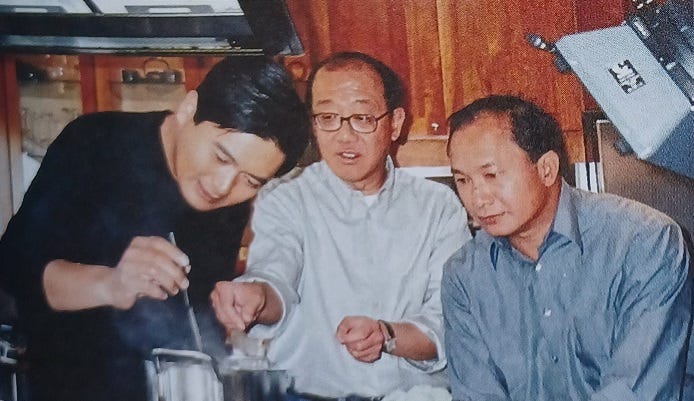
Ronny Yu used to live in Australia, so it’s fitting that he would visit Terence Chang and John Woo during the pre-production of Mission: Impossible II on March 7, 1999. With Ronny being a specialist in the horror genre, perhaps Tom Cruise could have hired him to turn the third film into a spy horror. As a producer, Terence could have assisted Ronny like he did with directors John Woo and Kirk Wong. Ronny once complained in an interview that he didn’t have the luck that Woo had by having a Hong Kong producer like Terence by his side during his Hollywood years. It’s especially poignant since Terence worked for the same company that Ronny Yu did when the latter was directing Brandon Lee in Legacy of Rage circa 1986. This company was D&B, and it just so happens that Michelle Yeoh’s film career took off because of this company around the same time.
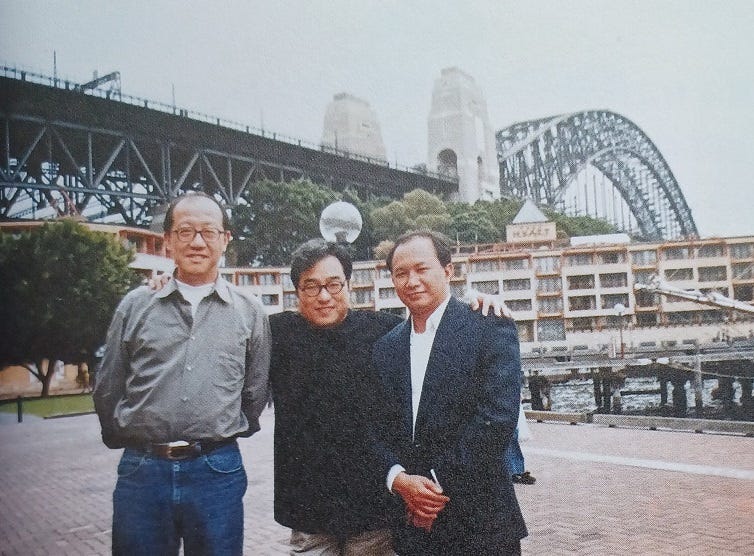
As Terence noted in his memoir, he sowed the seed of her initial international popularity: “I also sold Michelle Yeoh’s Yes, Madam and Magnificent Warriors in Cannes, but I have no choice but to credit her as Michelle Khan since she was already established with that name due to ease of pronunciation for Western buyers. Yes, Madam was re-edited and packaged by me. It suddenly became more action-driven, and Michelle’s hard-working performance was emphasized more. Dickson Poon had high hopes for the Japanese market and hoped that Michelle would also become popular in Japan, so he invited Hiroyuki Sanada to play the male lead in Royal Warriors in the hope of entering Japan. However, the environment in Japan is relatively close-minded. The top three most popular Hong Kong stars over there are all male - Bruce Lee, Michael Hui and Jackie Chan. Toei, the company that released Royal Warriors, finally released the film as a double feature and gave Michelle Yeoh a new name, Michelle King!”
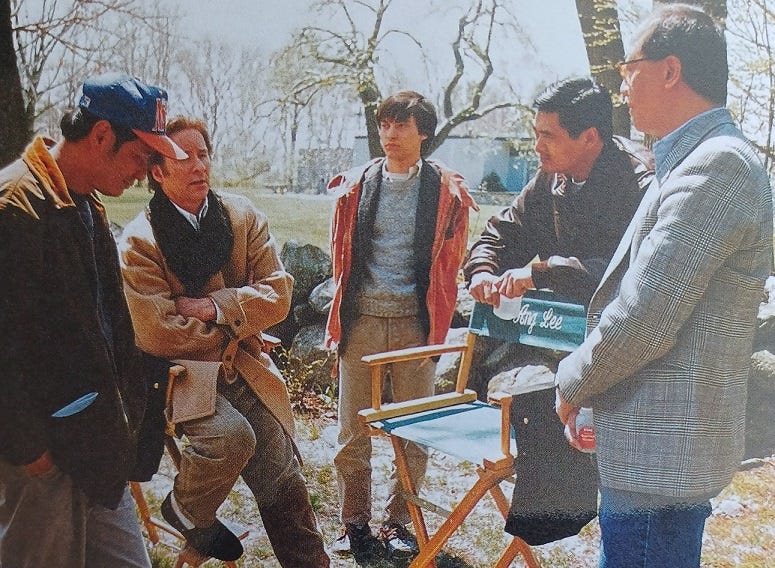
From left to right in the above photo taken during the making of The Ice Storm in 1996: Ang Lee, Kevin Kline, Tobey Maguire, Chow Yun-Fat and Terence Chang. Speaking of whom, he wrote in his book: “After John Woo filmed Broken Arrow and gained a firm foothold in Hollywood, King Hu asked him for help to see how he could promote The History of Chinese Workers. John Woo then asked me if I could help Director Hu with this, and of course I would be happy to do so. So for a long time, Director Hu and I met frequently, mostly at his favorite Hunan restaurant "Xiang Yuan" in Los Angeles. I said to his two producers: You must find the leading actor first, then financing will be easier. This movie has two male protagonists, one Chinese and one Western. I first gave the script to Chow Yun-Fat to read, and he agreed immediately. The two producers next approached Kevin Kline, who had just finished starring in Ang Lee's The Ice Storm, and he readily agreed. With two male leads, the rest was easier. Britain's Goldcrest Films was willing to invest $9 million, half of the cost. Seeing that the filming was finally going to start, Director Hu said that he would go to Taipei to check his health first to make preparations, but who knew that he would never return.”