
Skirting the Line


Sexuality is an umbrella term in Hollywood. A question that often comes up is why certain actresses don’t do as much screen acting as they used to do, or why they stopped acting. For some actresses, screen work was just a way to beef up the bank account so that they can afford to do what they love. It’s why you will sometimes see theatre actresses play a TV role once in a blue moon, albeit not mooning the camera in a blue movie. For some actresses, acting was just a means to an end (e.g. a college fund). For most actresses, the competition is only one reason. The other reason is being objectified. Being asked to strip during an audition was often justified with the excuse being the need to know if an actress needs a body double. For all intents and purposes, Hollywood is short-hand for the Los Angeles entertainment community. No matter what type of entertainment, sex sells. The line may get blurry when you see how sleazy that female pop singers can be, but you will never see an adult entertainer become a pop star to the point of becoming a household name.

Despite how many crossovers that have transpired between the worlds of films, TV and music, there was no starlet from Vivid Entertainment in the 20th century that stood a chance of achieving a high standing on a Billboard chart. In spite of this, men in Hollywood still find ways to blur the line. One example of this is a made-for-TV movie series called Butterscotch. It’s about an invisible man. In one movie, Power Flower, the writer/director knew that a threesome with an invisible man would be the best way to get two actresses to do a pseudo-lesbian scene. Crossing the line proved fatal for a British model turned actress named Mary Millington. In July 1979, Queen of the Blues was released in select British cinemas due to the nature of the material. She didn’t exactly help her case by playing a stripper named Mary (i.e. Queen Mary). It also didn’t further her cause that she had a reputation for sleeping with politicians, both foreign and domestic. In August 1979, Mary died supposedly from mixing alcohol with pills. However, those closest to her claimed that she detested the smell of alcohol.
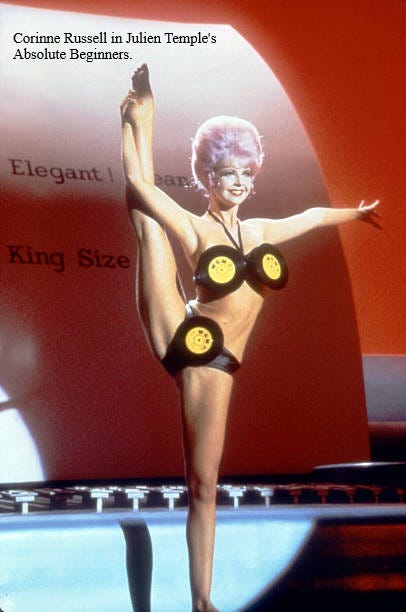
Mary was 33 years old when she died. This was four days before Keith Moon’s 32nd birthday in late August 1979. I mention this because he died in September with 32 pills in his system. Mary Millington’s final film, released in 1980, was The Great Rock ‘n’ Roll Swindle. Director Julien Temple would eventually father a daughter, Juno Temple, who became known for her sexpot roles (including a 2016 HBO TV series called Vinyl). I’m not saying that he groomed her, but I can’t help but think there were actresses who were abused by their fathers when they were child stars. I struggle and shudder to think of any known father who was a suitcase pimp. Having a romantic partner who is a suitcase pimp would be one reason why some women had quit acting after the lockdown was lifted, but another reason would be the presence of organized crime (as alluded to in a mutually felt interview that Jim Breuer did for Theo Von’s podcast). The parasocial aspect of celebrities being on social media means that there needed to be discouragement of people who thought that they could influence their way into being in actual films and TV shows.
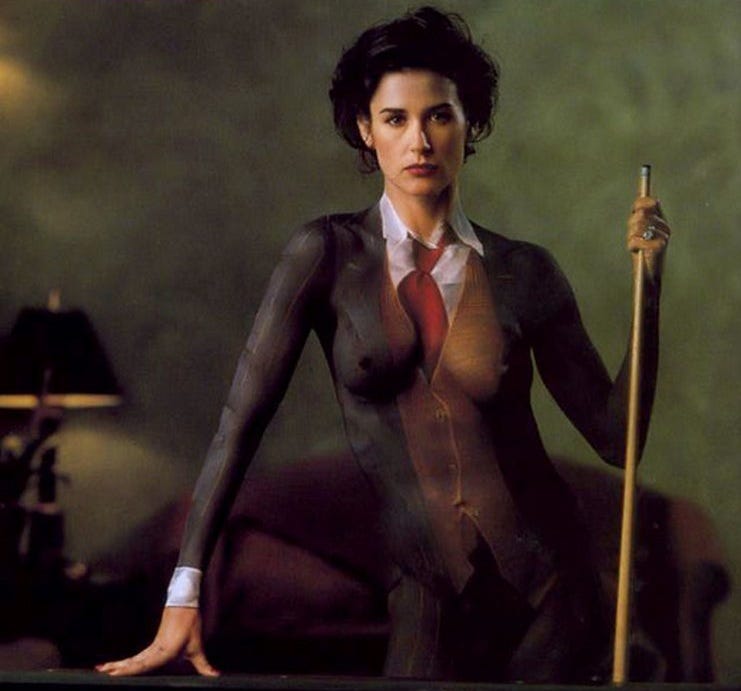
Unlike Annie Leibovitz succeeding in blurring the line with Demi Moore’s birthday suit (as seen below), there are gatekeepers in the industry who do not want people to think that they can skip the go-betweens i.e. acting coaches. Regardless of whether you believe in Covid or not, the pandemic was used as a smokescreen for something else. For example, the IMDB message boards were closed down eight months before the Me Too movement took off in October 2017. After it began, there was no immediate age verification process for 18+ sites. It would have been symbolic had this happened in 2018. Why did it only happen in 2025? This happened two years after the couple of strikes put many SAG performers out of work i.e. Writers Guild of America (early May to late September 2023) and SAG-AFTRA (mid-July to early November 2023). The latter was the longest actor’s strike but the former was second to the 1988 WGA strike. That strike went from March 7 to August 7, 1988. The symmetry is no coincidence.
It was only after the 1988 strike that the Category III rating was implemented in Hong Kong circa November 1988. Following this came the NC-17 rating supplanting the X rating in the U.S. circa 1990. Money is more transactional when you consider transatlantic relations. Why did 1988 have to be the year when things kicked off? In 1988, there was a sexual horror film being made called Society. It’s basically a sexualized version of John Carpenter’s The Thing (1982), but with social commentary on the lustful nature of California. It didn’t get released in the U.S. until 1992 - the same year when Madonna was working on her Sex book, her Erotica album and her Body of Evidence film. Back to the pair of strikes in 2023, they conveniently happened well after the quarantine period had died down (the Covid mandate being lifted was announced on the first day of the WGA strike - May 2, 2023). When you consider the implementation of intimacy coordinators in 2018, you have to entertain the notion of how many Covid tests were actually HIV tests in disguise. The regular actor wouldn’t have been able to tell the difference, and Hollywood has long been known as being a place that invites promiscuity.
In February 2017, Scarlett Johansson went on record as saying that she doesn’t believe in monogamy. This was the same month when the IMDB forum was taken down. In October 1983, Hal Freeman became the first director to be arrested in California because of the anti-pimp law. This law was approved in 1982, although it didn’t rid Hollywood of prostitution. Freeman was arrested on set, but that didn’t stop some directors from thinking they were beyond reproach. Freeman lived up to his surname when he was acquitted in August 1988 - the same month when the WGA strike ended. Screenwriter Ted Newsom described how things usually went down in California for all things prostitution - a woman would get arrested, give a fake name when booked, her pimp would bail her out then she’d change her name or leave town...but the hooker population didn’t decline. Translucent becomes transparent when a performer becomes a hooker or vice-versa. Let’s not forget that there have been some actresses who made money from being strippers.
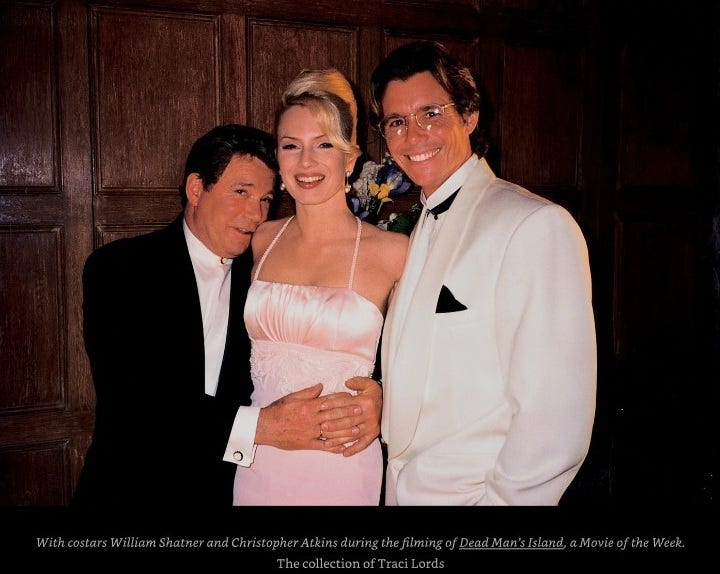
It’s amazing that Traci Lords got away with being an underage exhibitionist for as long as she did. Marta Kober had her naughty footage removed from Friday the 13th Part II (1981) when it was revealed that she was 16 years old. For contrast, Mario Van Peebles was 14 when he had his sex scene in Sweet Sweetback’s Baadasssss Song (1971). Brooke Shields was seen in the buff without the sex when she starred in Pretty Baby (1978) as a prepubescent. As a teenager during the making of The Blue Lagoon (1980), more controversy surrounded her but the legal defence was the employment of a body double. It’s eerie to think that Jennifer Jason Leigh disliked her father for refusing her to be cast in The Blue Lagoon. Not only did she become the more acclaimed actress but she gained a reputation for baring more than her soul on a frequent basis. In today’s world, minors could shoot their own kinky exploits regardless of whether it’s put online or not. There is one search term that is so illegal that I have to spell it out here as Low Lita.
One of the actors in Blood Frenzy (1987), John Clark, was a respected stage director who somehow found himself renting his house to Ron Jeremy for a rumpy-pumpy movie. Bearing in mind that John was married to Lynn Redgrave - a highly esteemed English actress. Their marriage had lasted from 1967 to 2000. Unless their marriage had as many ups and downs as a hanky-panky session, Lynn was probably more sexually adventurous than the impression that she gave. Being sexually active has as much to do with voyeurism as promiscuity. It’s difficult for some people to imagine somebody highly valued as her being so lowly as to condone her home being used for a chute shoot, but look at Prince Andrew - a royal who is not that noble. Anyway, Blood Frenzy was advertised on video as being shot on 35mm film. Hal Freeman’s past ventures were shot on 16mm. This got me thinking about something - when people talk about a film looking cheap, it’s usually more to do with the cameras and film stock than the actual visual components in front of the camera.
When a film is shot on digital video, it feels like we’re watching a behind the scenes featurette. The past decade was a culture shock - some TV shows emulated films of the past whereas most films emulated most TV shows. The small screen won out, which is ironic because it was seen as a threat to the big screen in the golden age of cinema. It’s why TV, for a long time, was not allowed to catch up with the big leagues. However, audiences demanded more from TV. Otherwise, the internet would have eliminated TV earlier on. Another reason why we see less actors and actresses starting out is because contemporary cinema rarely captures the textured painting aura of the vintage classics. Even an obscure ‘80s film sent straight to video has more of an atmosphere than what you will usually find on a streaming service these days. The dignity of an actor is preserved by having the size of the screen reflect the content. It’s the difference between a billboard and an A2 size poster.
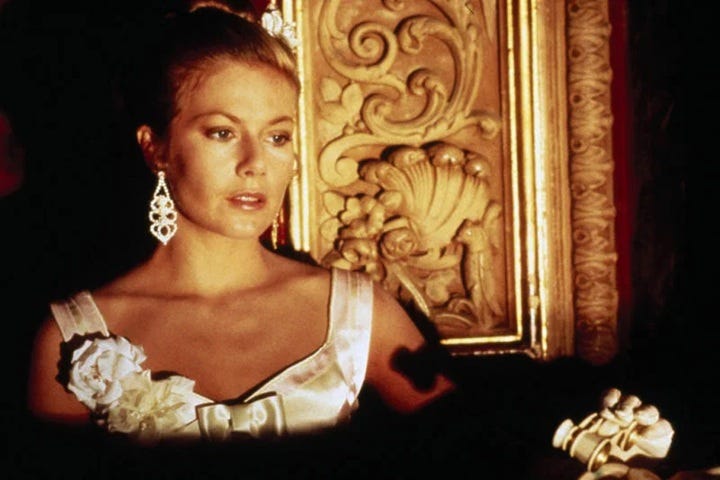
That said, being a dignified actor means nothing when you look at what happened to Sarah Maur Thorp. She was tricked into getting a supporting role in Edge of Sanity (1989) on the grounds of Anthony Perkins and Glynis Barber starring. When you look at the above still (where Glynis resembles Ahna Capri from Bruce Lee’s Enter the Dragon), you would be forgiven for thinking that it was a classy film. The pendulum swing explains the luck of the draw for Timothy Elwell. He is an actor who attended the University of Wisconsin with the intention of being a director but he ended up working in adult movies. Jerry Butler initially began as a “proper” actor but he eventually denounced “real” acting work because he refused to sleep with men in order to get parts. Timothy had the same refusal. Having a Jewish father didn’t pay dividends for Jerry.
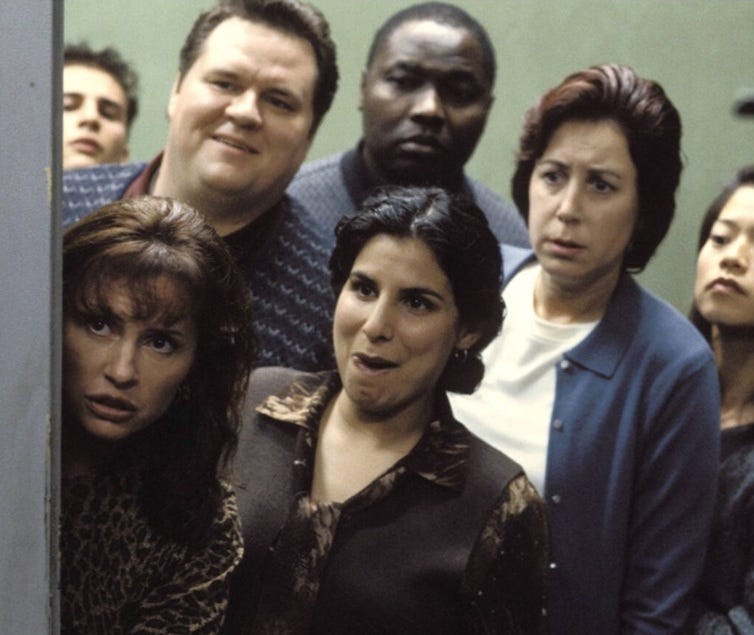
While mainstream and arthouse cinema had forced hardcore entertainment to be not filmed for theatrical consumption, smut peddlers compensated by shooting softcore. By showing more restraint, these soft productions could be televised and displayed in regular video stores. When England’s Channel 5 began airing in 1997, they were crazy about showing softcore movies (as was the U.K. Bravo channel). The female body parts which come in twos - breasts, buttocks and soles - are the most arousing of them all, so you don’t need to see the most private of parts in order for the sex to be arousing. The softcore genre perfected what was seen in mainstream movies because there were B-grade actresses who didn’t need body doubles. Naturally, there were A-list actresses who were jealous. Some A-list actresses are willing to bare all (and bear all) because there is a vanity aspect in wanting to beat the competition, especially in today’s world where you don’t need to be age-verified to access the AZNude site (which features a catalogue of sex scenes from films and television).
The surprise factor of seeing a legitimate actress being so intimate is akin to watching a mainstream movie where familiar actors are seen doing the sort of martial arts action that you would associate with the straight-to-video crowd, including the films from Hong Kong that were originally released in cinemas. I’m reminded of an actress who played a doctor in Jet Li’s The One (2001). Kimberly Ashlyn McKarny was one smart cookie. She was Ashlyn Gere in the world of hoist and moist, Kimberly Patton in the world of mainstream, and Kim McKamy in the world of B. In today’s culture, an actress can’t be that much of a chameleon because (online gossip notwithstanding) all it takes is a reverse image search or Google showing you similar images. Across the horizon of horizontal bop performers, Kimberly Parker (she is married to Layne Parker) was the most respected. In the above still for Willard (2003) starring Crispin Glover, she can be seen on the bottom left.

When people talk about TV, HBO is the epitome of what separated cable from network. Some cynics have written off HBO as high-class prostitution. When you look at films like Stanley Kubrick’s Eyes Wide Shut (1999) and Damien Chazelle’s Babylon (2022), it’s not unfathomable to perceive Hollywood as a covert sex cult. What people call “slap and tickle” should be called wrap and tackle. In Hong Kong, “fist and pillow” referred to martial arts and erotica. A movie that combines both could be called black and blue. The world of American sexuality played a big part in Bruce Lee’s final film and Jackie Chan’s first American film. Respectively, Robert Clouse’s Game of Death (filmed in 1977) co-starred Colleen Camp because she had just played a playmate in Francis Ford Coppola’s Apocalypse Now (filming finished in 1977) whereas Rob Clouse’s The Big Brawl (1980) co-starred Kristine DeBell - the star of a 1976 movie called Alice in Wonderland (which should have been called Alice in Wanderlust).
Perhaps a slasher movie could be called knife and mattress. After all, it’s quite common for a kink actress to call herself a mattress actress. Debbie Rochon was satirical enough to allude to this with the above photo on the left. As for the woman on the right, Manon Kelley’s advertisement for a CD-rom makes me wonder why not a single soul in Hollywood had thought about making a film called Seedy Rom-Com. Because of the sexploitation nature of horror films, especially slashers, there are X producers like Nick Marino who crossed over. With slashers in particular, the logic is that the agony has to be counterbalanced with the ecstasy i.e. gore and whore. Nick’s father was a hitman for the New York mafia, whose presence in his career brings to light how criminal involvement is abound in both the worlds of X and B movies. Like the Triads, the mafia’s interest in film isn’t exempt from money laundering and tax evasion. Come at it from another angle - why would a mafioso not want to get involved with Italian cinema?
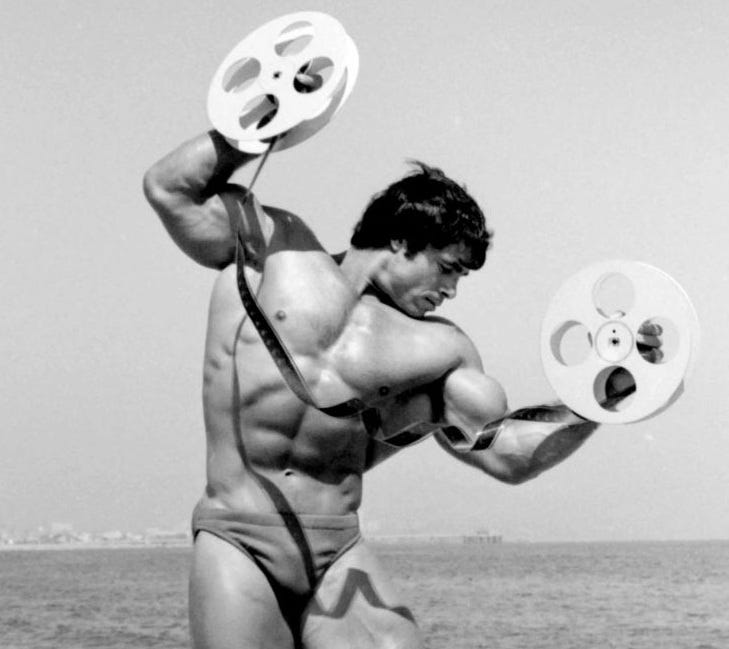
David DeCoteau is a gay director who emerged in the world of bump and grind movies by primarily directing MLM - man love movies. For quite some time now, he has worked as a TV director having worked with actors of a respectably visible nature. Ironically, he knew someone who couldn’t rise to the occasion of being a mainstream player - Nick Marino. They should have teamed up to make a gay comedy called Jock Strapped for Cash. It could have featured a cameo from someone like Franco Columbu (above). If done tactfully, the cameo could have been a subtle joke about how the bodybuilding world was perceived as gay. By subtle, I mean that the scene itself wouldn’t have been gay but everything else around it would have been. For a jock who wants to get into movies, being a director allows for more control and respect than being a jostling actor. It’s kind of a cliché but it became common for first-time directors to secure financing from dentists and doctors in general.
This naturally concludes with why L.A. taxes are so high. Besides ensuring that the local showbiz industries have more prominence, it’s also a way to discourage quick cash grab opportunists in the film and TV industries. Certain locations would lose their value if overexposed such as the area of the Hollywood sign. Hollywood may be Hell incarnate but not even the California wildfires can scare away the horny. The aforementioned Jackie Chan was in a 1997 Hollywood film called Burn Hollywood Burn. It came out during a time when many film professionals from Hong Kong were trying their luck West. Some Hollywood xenophobes decried it (“they took our jobs”), but now AI is the real threat. In an interview for Michael Rosenbaum’s podcast, Bobby Lee told him that Hollywood is dead. Personally, I think that Atlanta looks set to be the new Hollywood because of the logo that you often see in the closing credits of newer productions. In terms of carnal desire, Atlanta does for black men what Oregon keeps doing for hippies, and what San Francisco did for hipsters.