
Renaissance

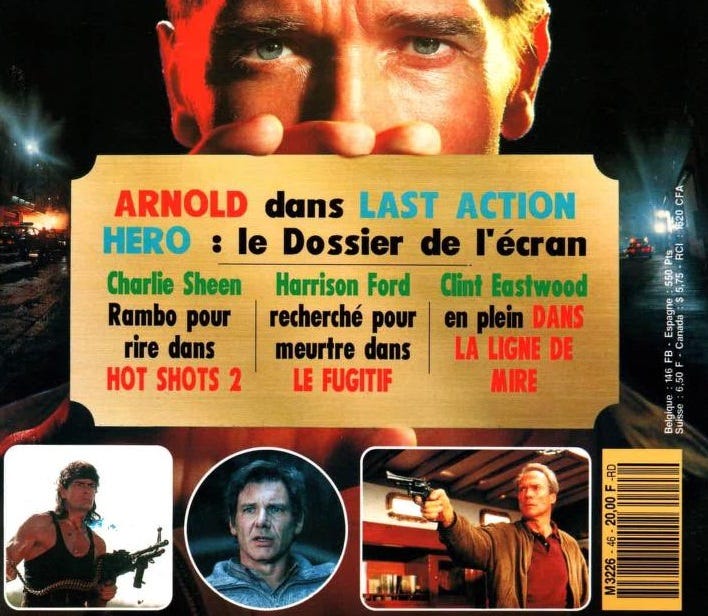
Neither Mad Movies nor the French Impact magazine were entirely focused on fringe cinema unless you count the X video review column that ceased after February 1991 (Playboy stopped their version of that much earlier). Unlike the British Impact clone that began publishing in January 1992, French Impact partially started off as the French equivalent to Fangoria until a decision was made to make it more palatable for sensitive tastes. Like British Impact (and the similarly-themed Jade Screen), French Impact sometimes divided an interview across more than one issue. French cinema doesn’t feature as commonly as you would think since the emphasis was on American blockbuster fare that usually wasn’t family-friendly (not including the closing Pin-Up section in later years). This article is about how French Impact gave the best inside scoop for action blockbusters (British Impact was literally the poor man’s version since they got exclusive interviews primarily from the B-movie world). There’s a French kiss then there’s the chef’s kiss.
In issue 46 (August 1993), Arnold Schwarzenegger was asked about reuniting with director John McTiernan for Last Action Hero after the reported tensions during the making of Predator (1987): “Yes, but I learned to respect him. Having worked with him before saves you all the nonsense of a first collaboration. We know each other very well. After a take, he immediately lets me know if I was good or not. There is no procrastination, no questioning yourself for hours on end about the quality of your acting. If the take suits him, he immediately gets down to the next one. If it is not the case, he simply announces "Let's do it again." In addition, John McTiernan is a guy full of humor, but a cold humor. Of course, during the first meetings, one can wonder if there is really anything funny in this guy. But even by keeping silent, he manages to be hilarious! In addition, the shooting of Last Action Hero was easy. The operations went perfectly, without any tension. This is unique on a project of this scale.”
The film’s reception: “I unfortunately think that the American public is not receptive to such a sophisticated film. Moreover, many people, starting with all those who populate Hollywood, do not appreciate it when their hero is scratched - when the strings, the schemes, the clichés, in short everything that goes on behind the scenes, are revealed. Hollywood has not forgiven us for having given the public its manufacturing secrets.”
Literally setting the tone: “John McTiernan has done an impressive job of highlighting the differences between the two worlds. Reality is New York, a dark, rainy, stressful city, full of sinister-looking people. Fiction is Los Angeles, a city that is always sunny, with palm trees everywhere, an incredibly blue ocean as far as the eye can see and where all the girls are hotties. It simply shows the image that New Yorkers have of Los Angeles and that of Californians of New York.”
Arnie talked about future plans - both true and false: “Parody does not mean that I am abandoning action cinema. I will make films closer to Twins than to Terminator, but the reverse is also true. For the moment, the public is tired of violence so I am moving towards more family productions, a mix of comedy and action. This will soon be the case for James Cameron's True Lies. I also have Conan 3 which I could well direct. The chances that I will do it are high. As for the movies that I'm rumored to star in - Superman V, Star Trek: The Next Generation, or Judge Dredd - these are completely unfounded rumors. It seems that their producers are looking for a bit of free publicity or, perhaps, a source of funding. But instead of spreading this information, why don't they send their scripts to see if I'm interested? Anyway, all this amuses me more than anything else.”
In issue 47 (October 1993), Sylvester Stallone said: “In the future, I'm going to devote myself entirely to action cinema, trying to add what it currently lacks: more developed female roles, more passion, intelligence - all these qualities can be found, for example, in The Killer by John Woo, a film that I worship. In The Killer, a man who lives only through violence sees his destiny turned upside down. He suddenly knows the inestimable value of love, friendship, the torments of guilt. This is what I want to shoot now, violent but also complex thrillers. To evolve qualitatively, the action film must acquire additional depth. The time of sequels where the bidding war prevailed over the human side is now over.”
When asked if he wanted to star in a remake: “I would love to. I even discussed it with John Woo. We met up again recently about it. For the moment, it's fifty-fifty. The hero of The Killer is a fascinating, complex, ambivalent character. He doesn't correspond to anything I've done up until now. I've always played monolithic characters, carved out of granite. Gabe Walker, from Cliffhanger, is thus simple, not very sophisticated, but also strong, natural, in perfect communion with the environment in which he evolves. The universe of Rambo was war. For him, it's the mountain. Besides, the finale of Cliffhanger doesn't really show him as the victor; it's the summits that have conquered evil.”
In issue 43 (February 1993), director Walter Hill said: “I dropped The Killer. I had a falling out with the producers; they wanted a very conventional film, very far from John Woo's original work. Rather than do something wrong, I preferred to withdraw from the project. As for the remake of The Getaway, I have nothing to do with it, even if my name is in the credits. Roger Donaldson, the director, only took the script that I had written for Sam Peckinpah. A screenwriter, Amy Jones, is currently reworking it; I hope she will keep my ending.”
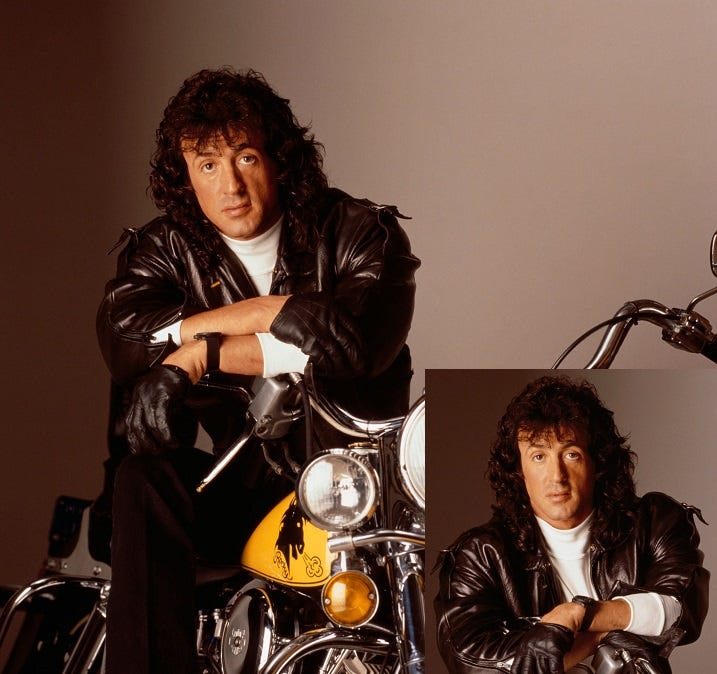
In issue 49 (February 1994), the director of Marco Brambilla gave an interview where he talked about Demolition Man longer than he did anywhere else…if at all. Referring to Joel Silver, Marco explained why he was hired: “The commercials I made for Ridley Scott's production company were always futuristic or very surreal. In any case, my universe is always extremely visual and full of special effects. When he saw my commercials, Joel probably thought that I was the right person for this film. One thing is certain, he did not take the decision lightly. We met several times before we trusted each other and he gave me enough credit to give me the film. Even after we signed the contract, we saw each other a lot. We started the script from scratch, we reworked it. The first meeting we had together was not about Demolition Man but about another project - Richie Rich. I worked on it for four months before production stopped due to the defection of the lead actor, Macaulay Culkin.”
In an interview for the Mad Movies magazine, editor Stuart Baird mentioned that Marco Brambilla was more of a chief technician than a director. Marco said: “I don't agree. A film as important as Demolition Man is certainly the result of collaboration, but I worked hard to impose a specific, personal tone and vision of the story. This goes beyond the sole use of technique, even if Demolition Man is a very technical film that was not without its difficulties. The biggest one was the lack of time. Eight weeks of filming is miserable for a film like this. Demolition Man was supposed to be released on October 8 in the U.S. and filming was interrupted several times. First because of an injury that Stallone had sustained to his arm on a stunt. When we resumed, Sly could no longer do the action sequences, his convalescing arm was still causing him too much pain. Then, we had to stop to wait for Wesley Snipes, who was busy with another film. Two months of waiting. As a result, the editing was done in a very short time. This is the part of the film that suffered the most from the lack of time. I would have liked to have refined certain things.”
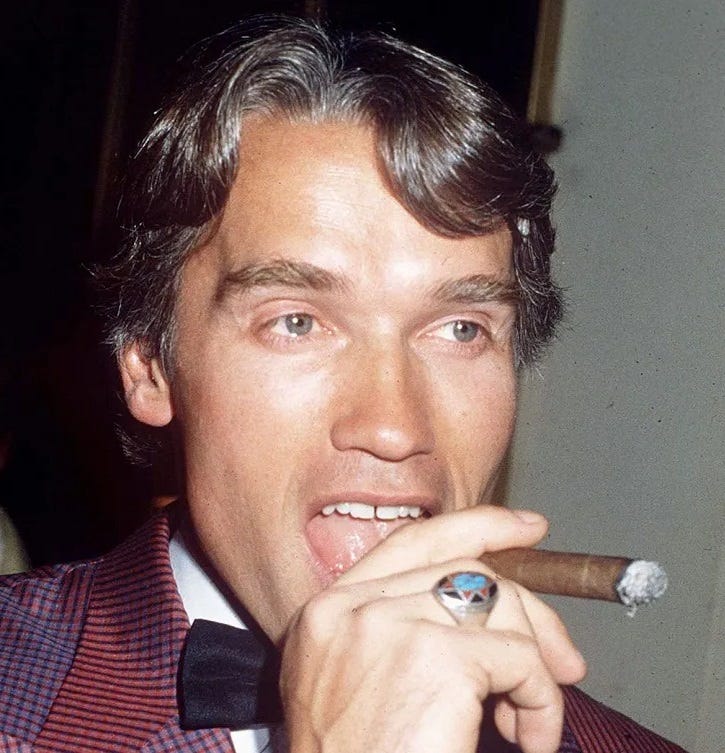
The June 1996 issue (No. 63) covered Arnold Schwarzenegger’s Eraser. Director Chuck Russell was interviewed: “Arnold Schwarzenegger and I started by working on a remake of Captain Blood, a great classic with Errol Flynn. After a few months of work, we realized that the competition was tough. There was Cutthroat Island in the works and a few other pirate movies that remained in the script stage. So we abandoned Captain Blood. Arnold and I promised each other to collaborate as soon as possible. So we started looking for a script. Arnold was looking for a very contemporary story. As for me, I didn't particularly want to get involved in something as crazy as Mask, but rather something based on real events. Usually, you have a script and you look for the star who suits him best. Here, I had the star, but no script. The one for Eraser corresponded to our mutual wishes.”
Another Arnold is referenced: “Believe me, I enjoyed shooting Eraser, even if it is not strictly speaking an auteur film! In Hollywood, you have to take into account the producer first. The producer of Eraser, Arnold Kopelson, is an old-school producer, a sort of contemporary Louis B. Mayer. He builds a project by buying the rights to a script, bringing together the actors and the director he considers suitable, then selling the film to a studio that takes charge of financing it. Arnold Kopelson makes the overwhelming Hollywood machine work for him. A fascinating guy.”
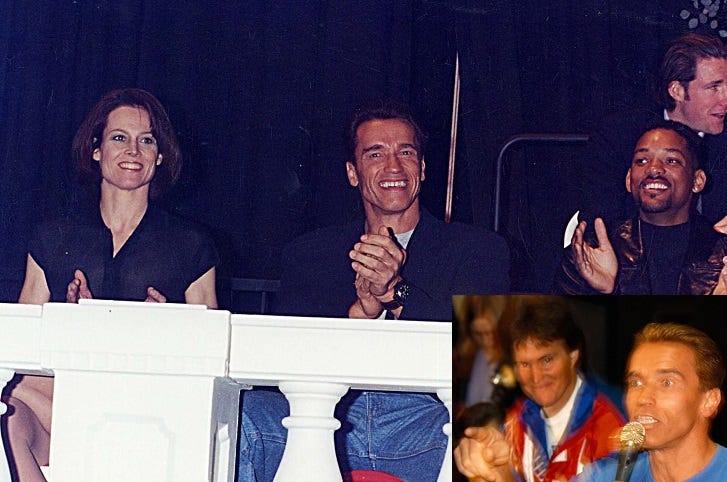
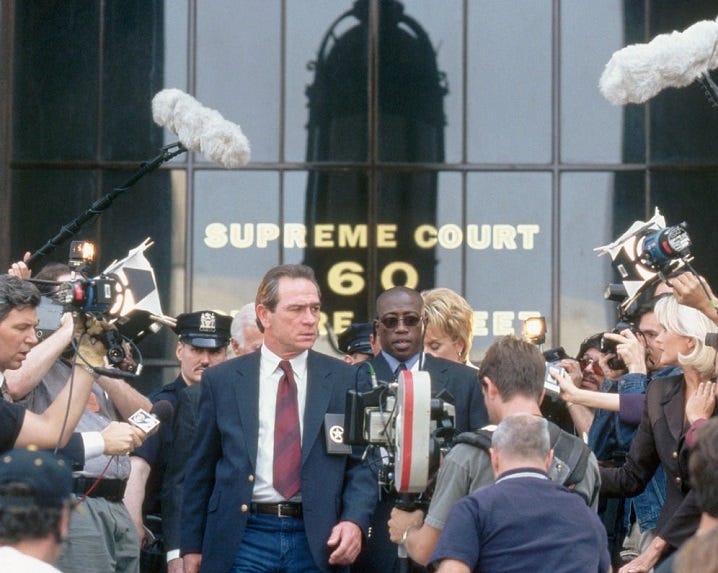
Director Stuart Baird also references this other Arnold in the April 1998 issue (No. 73) where he talked about a Warner Bros. film called U.S. Marshals (starring Tommy Lee Jones): “I had a contract with Warner and they wanted me to direct this sequel. Same for Arnold Kopelson, for whom I edited a good number of films. I was a little apprehensive about following up on something as acclaimed as The Fugitive. But I met Tommy Lee Jones, in my opinion one of the best American actors, then Joe Pantoliano, an old friend, and then Wesley Snipes... So I reconsidered the proposition. I had to do this film!”
The perks of the editorial life in film: “I was physically involved in the editing of Executive Decision, as I was in the editing of U.S. Marshals. I worked closely with the inestimable Terry Rawlings. The post-production deadlines were very short, so we had to make quick decisions that left no room for any sense of competition. In the past, when I came on a project as a film doctor, it happened that the editor was still working and we worked together. My relationships of trust with the producers meant that they gave me a lot of room to maneuver. I had real creative control, like a second director. They would call me when the film failed with the test screening audiences. I felt as responsible as the writer or the director.”
Respecting the 1993 predecessor: “I admire The Fugitive for its energy. Andy Davis made abundant use of the moving camera, giving this uninterrupted feeling of urgency, of escape. I based myself on his principle. I used cranes, dollys, and especially the steadycam. We had this wonderful steady operator, Jim Muro, working with the cinematographer Andrzej Bartkowiak.”
Andrzej would later direct Jet Li in Romeo Must Die (2000). Stuart says more about Andrzej: “He is capable of anything, adapts to all genres. He works very quickly and uses the lightweight cameras. Given the number of filming locations, we arrived, built the sets and shot immediately. No time for the cinematographer to prepare. We needed a lot of shots per day and the studio wouldn't allow any extensions. Hence the need for a guy who knows how to work in a hurry. Andrzej is perfect for that and he has the ideal temperament. I like to be surrounded by the most competent technical team, and here I was served, as well for the cinematographer, the cameraman, the set designer, the editor...”
An important lesson: “We had ninety-five days of shooting and half as much for editing. It sometimes takes longer to edit a sequence than to film it.”
Deleted footage: “When Wesley Snipes follows the bag through town with which he hopes to clear his name, there was talk of including a radio transmitter. Already seen! I thought that a spy of his caliber could use a radioactive isotope. So we saw him steal the isotope from a hospital, inject it into a mailman and follow him using an electronic device. It's the same way he then followed the bag to the cemetery. Interesting, but the audience was completely lost. So I cut the hospital and mailman sequences. We then assume that he succeeds in following the bag because the Marshals team succeeds in following him too. We lost in credibility what we gained in readability.”
His final word on editing: “I've edited a good number of films where the main ambition was to make it bigger, more explosive, faster, from which I had difficulty extracting sequences that were even slightly engaging. I've had a few clashes with directors because I didn't understand a thing about what was happening in their action scenes! It's the very nature of chaos, war, battle. But it's not a battle. It's a film! There's nothing worse than a confused audience. If you guide them clearly, without being demonstrative, and give them elements of involvement, they will have fun.”
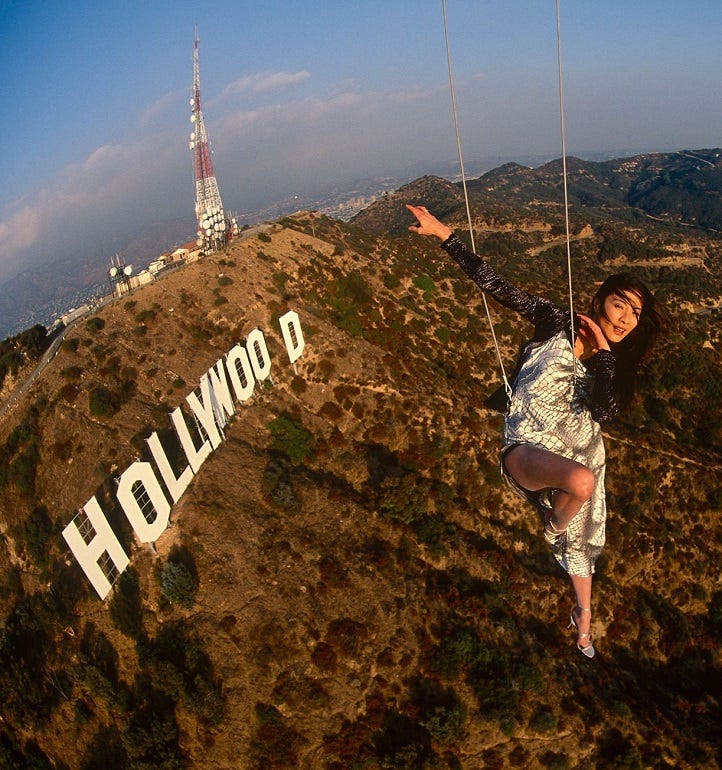
In the December 1997 issue (No. 71) of Impact, director Roger Spottiswoode talked about Tomorrow Never Dies (a.k.a. 007 #18): “It was my nephew who introduced me to Michelle Yeoh. I had never heard of her before I saw a few of her Chinese films. She impressed me. I auditioned about thirty other Asian actresses before I came back to her. In my opinion, through her courage, her self-confidence and her guts, Michelle Yeoh is more than an actress. In Tomorrow Never Dies, she is truly Wai Lin.”
Michelle talked about the name of her wily character: “Wai Lin was originally called Lin Pow. In Chinese, Pau means literally little treat. It was not to my taste to bear such a typical James Bond name as Pussy Galore and Xenia Onatopp. After a evening with a couple of friends at Hong Kong, I had the idea to propose Wai which translates to patriot. A choice that clearly defines the role.”