
Pièce de Résistance

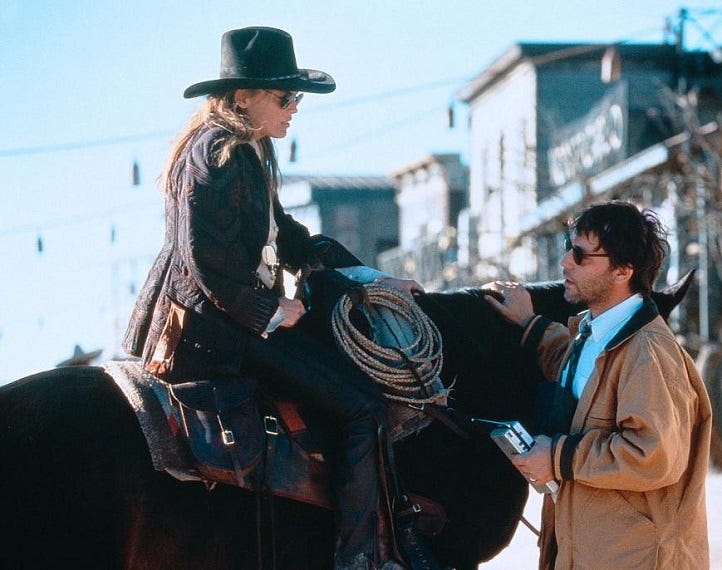
Even flops can be influential. Like how Army of Darkness could be called The Medieval Dead (1992), The Quick and the Dead (1995) could have been called The Quick and the Evil Dead. Although he had directed a pseudo-adaptation of a comic book in 1989 (an unofficial adaptation of The Shadow called Darkman), it was this 1995 Western that proved that Sam Raimi had what it took to direct a big budget action film with the right amount of flair. It was also this film that successfully convinced Hollywood that a mainstream actress could be convinced to be the leading action heroine and actually manage to convince as well, hence Barb Wire (1996) and The Long Kiss Goodnight (1996). Even when a film flops, it can be redeemed with video sales and TV ratings (hence why actors make money through residuals). Ironically, it took time for The Quick and the Dead to be released. Filming began in late 1993 but the film got released in early 1995. Contrast this with the similarly-themed Western, Bad Girls, which began filming slightly earlier but still got released in early 1994. A point could be made that Bad Girls was necessary to facilitate the release of Raimi’s film so that people wouldn’t be alienated by the strange concept of a female-driven Western.
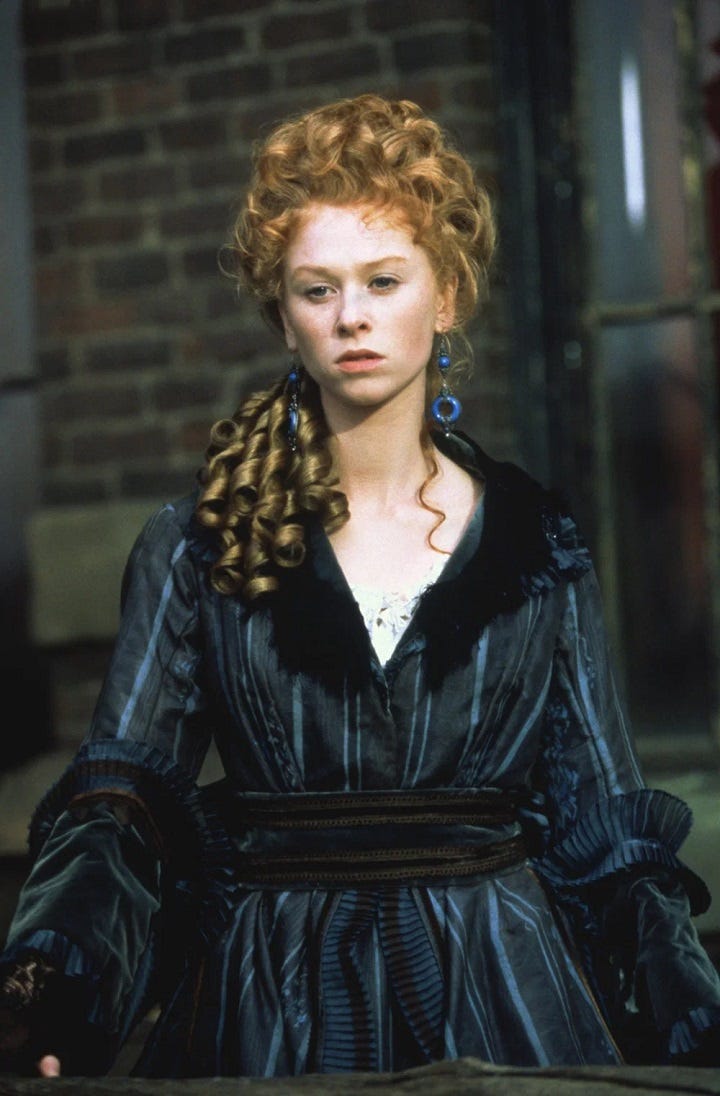
It helped that Sharon Stone was established as a literally strong woman in Arnold Schwarzenegger’s Total Recall (1990). It also helped that Raimi’s Western was released shortly after Sylvester Stallone’s The Specialist (1994), although the latter was made shortly before the former. It was on the strength of Raimi’s Western that Xena: The Warrior Princess was greenlit, which in turn led to Buffy the Vampire Slayer and a whole wave of female-driven action shows that led to more female-driven action movies. The niche stream became the mainstream. Raimi’s Western was the missing piece of the puzzle for the commercial acceptance of action heroines having as much popularity in the West as they did previously in the East. Back to 1993, Terence Chang mentioned in his Chinese-only memoir that was published twenty years later: “Sharon Stone met with me again and wanted John Woo to direct the Western film The Quick and the Dead starring her. In addition to herself, she hired three big-name actors: Gene Hackman, Leonardo DiCaprio and Russell Crowe! But for some reason, John Woo declined, and it turned out that Sam Raimi, who had helped him before, became the director of this film.”
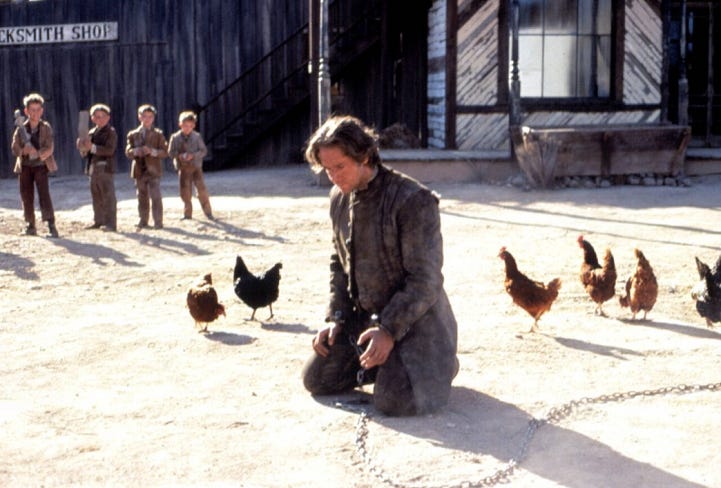
This is a pity considering what Raimi said when interviewed for the April 1995 issue (No. 56) of the French Impact magazine: “Sharon and I didn't agree on anything. But our disagreements turned out to be very healthy, very constructive. In fact, she was the boss on the film. She was the one who hired me. She had obtained from the studio a real right of review on the choice of director. I won't hide the fact that we sometimes clashed. One day, Sharon told me: "You know, your cinematographer is not good at all. Let's get rid of her!" Not easy to take. In turn, I had to fire her costume designer. However, we jointly found the best way to work with each other. All our conflicts, our exchanges of points of view came from valid problems. Sharon affirmed, among other things, that a certain sequence shot brought nothing to the film and that it had to be excluded from the final cut. In the end, she was always right.”
A Western duel should have suspence like a horror movie: “When the confrontation between Ellen and Cort occurs, we wanted the spectators to wonder about the outcome of the duel, for clues to point them in one of the two directions. So, we balanced the scene, the frame between the two protagonists. Depending on the belligerents, the tension, we varied the approaches as much as possible.”
An alternate vision that suggests something more akin to horror than action: “I had planned duels even more excessive than those filmed. Scenes even crazier, more delirious, than the one where you see the winner through the enormous hole caused by the bullet that goes through the head of one of the participants. Unfortunately, the studio managers were not very receptive to this way of filming. However, from the start, it was accepted that the sun's rays would pass through the wounds. The production did not appreciate my excesses too much, but did not ask me to delete them after having noted that these images left no passive spectator. After all, if they hired me, it was not for myself to give in to academism, sobriety.”
An equally alternative approach to rewriting: “At no time did I intervene on the script, although it is very unusual for me to work on a manuscript that I did not write myself. I "compensated" by questioning Simon Moore relentlessly. In order to better understand the dialogues. We remained cloistered for three weeks, dissecting the script. The behaviors, the motivations, the different facets of all the personalities staged. I had to understand them perfectly, intimately. This process took me time, but the transfer of Simon Moore's knowledge into my work as an illustrator was a necessity so that I would not betray his intentions.”
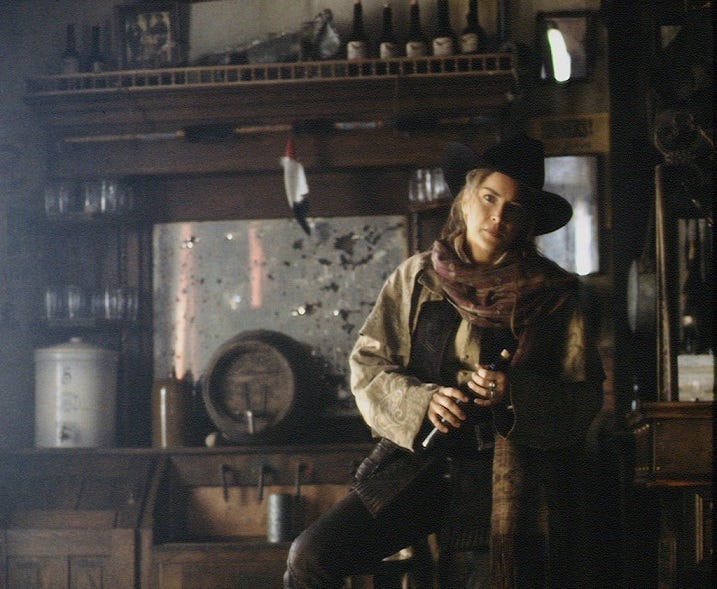
The June 1995 issue (No. 57) continued the Sam Raimi interview. He explained how Sharon Stone came to him to direct when usually it’s the director who contacts the actor: “I don't know exactly why because I was always afraid to ask her. It was an Englishman, Simon Moore, who wrote the screenplay for The Quick and the Dead. He sent it to Hollywood producers who in turn offered it to Sharon Stone. She replied to them “I would be happy to take on the project on condition that Sam Raimi directs the film.” I couldn't believe it. I was convinced that a star of her stature didn't even suspect I existed! I had only made small genre films, fantastique films. And Sharon is evolving in another world. I obviously felt very flattered, telling myself nevertheless that it was too good to be true, that something was going to go wrong. That I would hate the screenplay for example. Not even that, it was really excellent. Or, that I would see Sharon as a degenerate madwoman, a megalomaniac star. Not at all. Although I was very intimidated when our first meeting in Vancouver, Sharon seemed to me to be a reasonable woman, very strong, very intelligent. The script, for example, she barely touched it and only to improve her character. To preserve part of Ellen's mystery, she asked that the dialogues not lift the veil too much on her painful past, that the tragedy was not gradually discovered. Under this leadership, we also modified the character of Cort, making him a bandit who became a priest haunted by the temptation to take up arms again.”
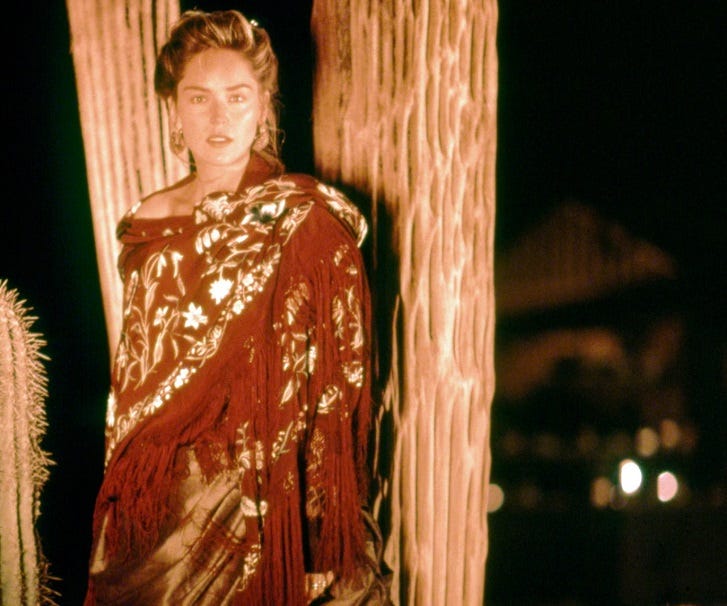
An unacknowledged remake of High Plains Drifter (1973): “Absolutely. But the credit of the references, to the Italian western essentially, is due above all to the screenwriter, Simon Moore. In writing The Quick and the Dead, he had in mind not only the films of Sergio Leone but also Clint Eastwood's High Plains Drifter. We have many elements in common: the theme of revenge, the small town planted in the middle of nowhere... In Clint's film, it's called Hell. In ours, it's called Redemption! Both are directly influenced by Italian westerns.”
Spaghetti Westerns: “I don't think they took the genre lightly, in a systematically parodic way, but it's because they sometimes took themselves very seriously that the films are so funny. But their humor is often not intentional! The Italians wanted to go further, to adapt the Western to the very demanding public of the 70s, this public who demanded something other than the eternal Hollywood clichés. As a result, they reinvigorated the genre. At my small level, I also tried to dust it off, to inject new blood into it. I enjoy a Western like Wyatt Earp with Kevin Costner, while having the feeling that this film dates back forty years! With The Quick and the Dead, I wanted to shoot a Western from the ‘90s. So I naturally took its concept as the Italians had left it, to compress it even more, to exaggerate the adventures even more, all while adopting modern techniques and even sometimes visual ideas from Hong Kong action films.”
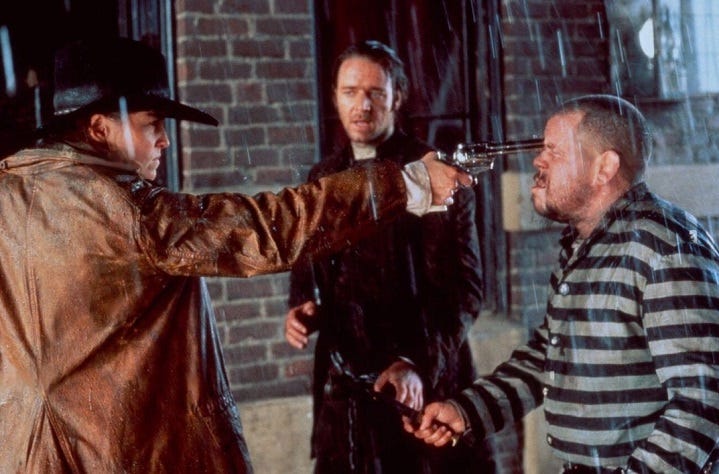
The French magazine staff expected a Western with a more playful tone from Raimi i.e. almost a parody: “The Quick and the Dead is a real Western, serious even if it contains a certain amount of humor. The duels do not lend themselves to hilarity; we wanted them to be ceremonial, tragic. However, I will not hold it against you if you laugh at certain extreme situations. The film sometimes goes very far! Some viewers can't stand it. But it is also my job to push people to the end of what they can accept, so that they can travel even further in the next film.”
The iconic bullet hole in the head shot: “This isn't really a reference to Evil Dead. This image comes from the cover of a Frank Miller comic - Hard Boiled. Take it more as an homage than a throwback!”
Raimi was asked if his CV might have pushed him to give the film a fantastique dimension, to which he said: “Probably. Firstly because I personally remain very anchored in the fantastique, and especially because we wanted to transform a traditional Western town into a place unreal, a kind of city whose foundations are located in Hell. The decor should not contain living elements. Just dead wood, dried plants, bloodless cacti. No children on the road that crosses Redemption. Few colors except that of blood. The rays of the sun are the only source of light, a pale light that illuminates a livid landscape. Nothing flatters the eye in Redemption. It is a city already dead, a ghost town.”
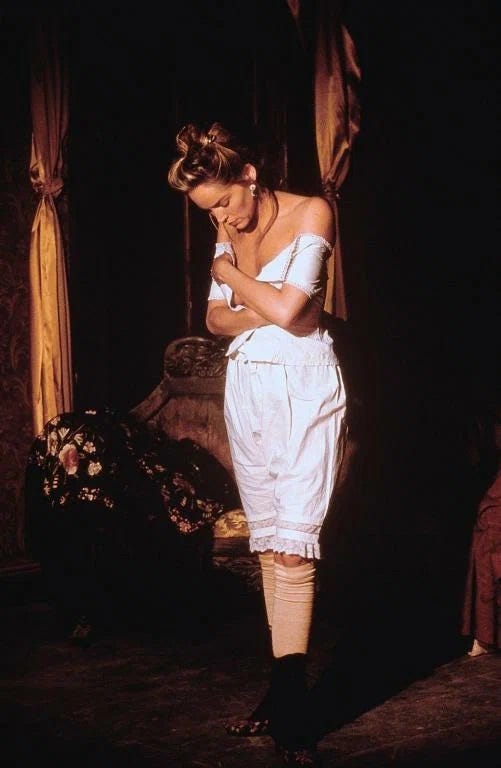
The Redemption town set: “We shot in Mescal, Arizona, a town about sixty kilometers from Tucson. The set, at least in part, already existed. It was built gradually, over the course of several films. The first, Monte Walsh in 1968, only required a sheriff's station. The second required the construction of a stable, the third - a house, a grocery store. When we got there, we had a complete town, a town to which we also made our contribution, a saloon, Herod's home that already partially existed. Well-known for her period reconstructions, Patrizia Von Brandenstein added her personal touch, something morbid, which makes Herod similar to Redemption. In fact, our set symbolizes a little the evolution of the Western. This town is the perfect illustration of how the genre is constantly enriching itself. Myths build on each other, each Western is influenced by the previous ones.”
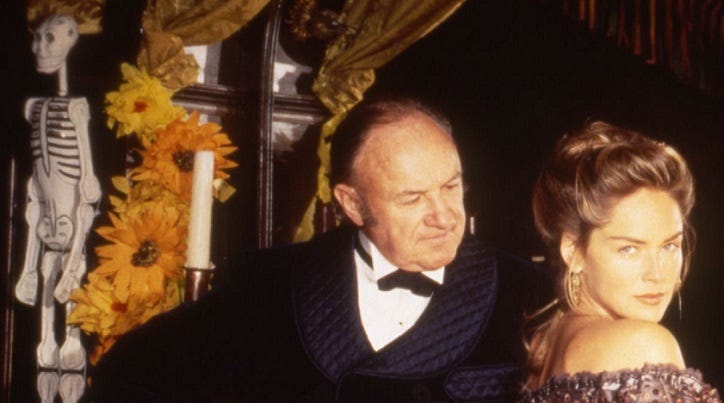
There’s casting against type then writing against type: “The villain, Herod, is also very far from stereotypes. Gene Hackman took on a real challenge through him: by taking the option of humanizing him as much as possible. Paradoxically, Herod becomes more terrifying. He arouses all the more fear, dread. He is of great intelligence, so intelligent that he pushes his former accomplice, Cort, to perjure himself.”
Raimi sacrificed part of his fee to make the film that he expected: “It was also true for Army of Darkness. On that one, I dipped into my salary so that we could hire Leonardo DiCaprio. The studio refused to give us an extra budget and since we wanted to benefit from his presence, we dug into our pockets. It was also thanks to Sharon Stone's selflessness that we were able to get Russell Crowe. She really wanted this film!”