
Outsider Looking In

Kong Fz is a Chinese website where you can find books, magazines, newspapers, lobby cards, stills, autographs and other kinds of memorabilia (along with DVDs as well as VCDs). To my surprise, Chinese magazines are usually smaller than the standard A4 format. Because of this excellent site, I have found a 1992 statement that director Ronny Yu had said to the Chinese media about Hollywood. In issue 348 (August 6-19) of City Entertainment, he said: “My previous dream was to make some movies and hit Hollywood. However, since I came to the United States last year to meet Oliver Stone and listened to his words, I knew that this was very embarrassing and would never happen. He said, "Ronny, I appreciate you, but if you want to be in Hollywood, you can forget it." He even said "If you want to come and grab food, you can only play the Monkey Game." What is Monkey Game? It refers to a Kung Fu movie. At that time, I was preparing to shoot a Monkey Game, so I thought, why did the studio over there keep asking me to shoot this kind of movie, while John Woo went to Hollywood to shoot his kind of movie?”
That’s not the end of it, Ronny Yu also said: “We came to the conclusion that the United States is the most racist nation in the world, and Hollywood movies are the best in the world, because they know how to use the sweetest sugar to brainwash the audience, and white people are the most top and most intelligent; the most transcendent. Chinese people are always without knowledge and wisdom. For example, in Spielberg's Temple of Doom, Roy Chiao plays the gangster, and the Chinese "handsome boy" (Kwan Kai-Wai) is a little wiser because he went to Indiana Jones. In Empire of the Sun, the Japanese are more powerful than the Chinese, and all Chinese people are refugees. In Oliver Stone's Year of the Dragon, it is pointed out that all Chinese are also gangsters, and white policemen are the best. So I decided to make a film about their racism.”
In 2008, a site called ChinaQW had posted an article from Southern Metropolis Daily where Ronny Yu said: “Chinese directors have to go through hardships if they want to get ahead in Hollywood. I think whether a director is from Hong Kong, Japanese or American, he is 50% politician, 20% psychologist, 20 % talent and 10% luck. If you have luck, everything will match perfectly and whatever decision you make will be right. Hollywood's various systems, in fact, have many political techniques. It's impossible for you to just say “I am an artist.” Why is the mechanism so rigorous? Because the investment is too large and involves many investors. No one wants to take the blame. Everyone will stab people in the back at any time. The director wants to make many people feel at ease. When something goes wrong, I will take the blame. I call this 'fake enthusiasm', and I pretend to be very sincere.”
Ronny has another go at Steven: “Spielberg is the best at this. He can bring the aliens so close to the audience and it's very considerate. In fact, they are very influenced by Chinese culture. Like ET and the children, they point to the center of their eyebrows and say: 'You point here. You can see me.’ Isn’t the center of the eyebrow what the Chinese call the eye of the sky? George Lucas’ Star Wars is also very influenced by Chinese ideas. Some Hong Kong directors said they went to the United States to meet with Spielberg or Lucas. I was suspicious. After questioning, they had to admit that they had just met a manager from their company. What's the use of meeting George Lucas? Lucas is your boss, and it only helps if he supports you in filming.”
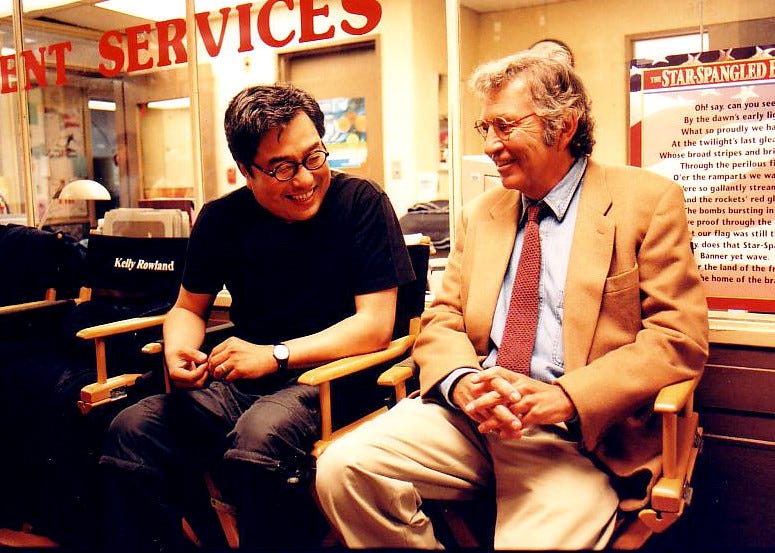
More social commentary after the cynicism has set in: “Hollywood is a very big system, holistic. They have a history of ninety years, and they are not as small as one person. You must integrate. If you ask the overall system to accommodate you, of course it will not work. John Woo kicked away to get into Hollywood, he only needs his guns, slow motion, Mark’s coat, and Terence Chang to handle all the mechanical matters for him. Not just any Hong Kong director can break into Hollywood. Hollywood is looking for you because you already have a status and have made many blockbuster movies. You go and have a meeting all day long, I'm like a car salesman doing a horse show, and while I'm telling the story, I'm going to do the sound effects myself, and then I fall down and I’m almost dead from exhaustion. Sometimes there may not be any results. If the administrative staff who agreed with you changes, then I have to start over again. The whole process is very long and the waiting time is very long. I have to say to myself: Treat yourself as a newbie and don’t be self-aggrandizing.”
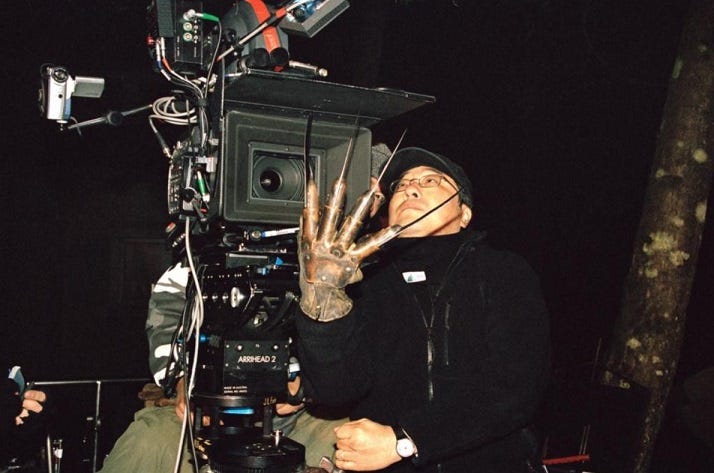
Déjà vu for the Hong Kong film fans who read about their directors working for Hollywood: “The director must explain it clearly to everyone around the world before the film can start. As soon as the script is told, everyone is surprised and nervous. Why is it so troublesome? Because the investment is large - you must understand the rules of this game. People asked: "Ronny Yu, do you want to be a prostitute?" That's not the case. This is market demand. After so many years, I have a theory. When filming, I have to look at it from the perspective of paying people to buy and sell, and I make decisions based on this. Movies are entertainment, and entertainment elements must be present and commercialized. You have to make it very clear what you want. Audiences? Film critics? Artists? It’s hard for us filmmakers to be completely unartistic.”
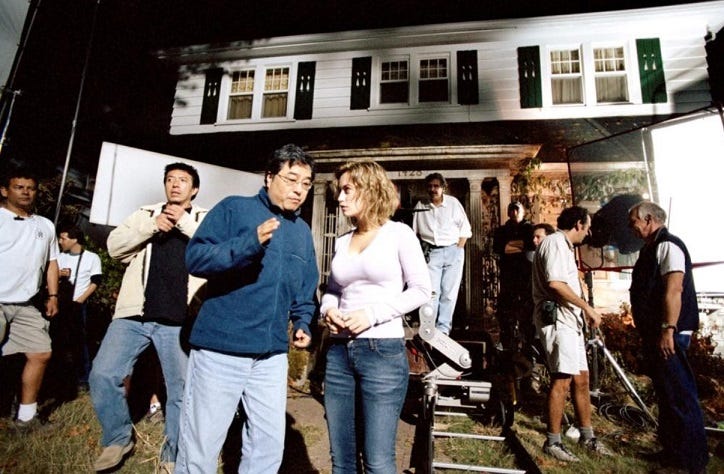
Even working in British cinema wasn’t much of an improvement: “I used Samuel L. Jackson to film The 51st State. Liverpool, England, was the first port where black slaves were auctioned. Black people have a lot of roots. Jackson likes Hong Kong films. That film did well at the box office in the UK, but not in the United States. First of all, it was produced by an independent production company and had no success in marketing. Secondly, no one understands English with a Liverpool accent. I have learned my lesson and will not sign with an independent production company in the future. The lawyer told me that if you sign with an independent production company, the big Hollywood production companies will not look for you. Every film has the phrase "if the film starts shooting", so signing it is equivalent to not signing it.”
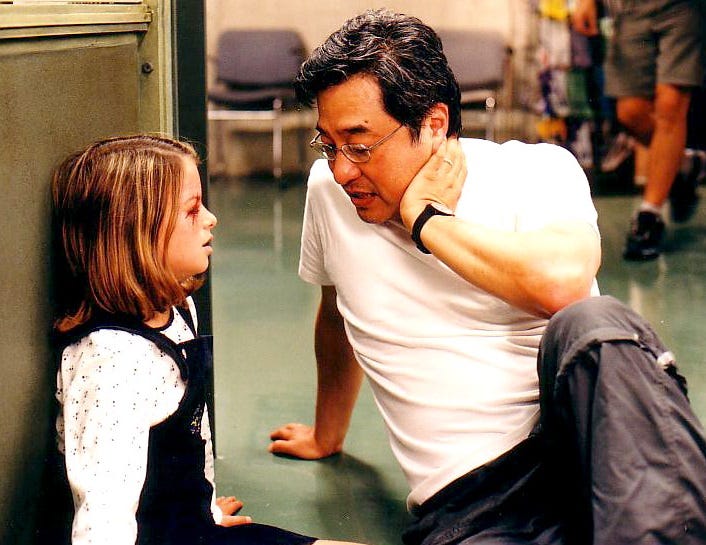
To sum up his days as a Hollywood film-maker, Ronny Yu says three words and then some (but not cumbersome): “Blood, sweat and tears. Among them, I spent most of the time in tears because of the great sense of frustration and helplessness. In Hong Kong, the director has full decision-making power, but in Hollywood, I have to bear it alone, no one is my middleman to buffer anything. Sometimes I ask myself: "Why don't I have to suffer like this in Hong Kong?" However, only American films in the world can be distributed globally, even in Africa. I swallowed all the bitterness in order to make the film visible.”
Even for money-making opportunists, there is small print in the contract that can’t be ignored. The caveat is not worth the taste of caviar. Ronny said: “Income? Not as much as you think. The lawyer takes 5%, the agent takes 10%, and taxes take 50%. In fact, there is not much left. The lawyer deducts all the above money first, and the check goes directly to the lawyer.”
As for why he chose to live in Australia instead of Los Angeles, Ron laughed and said: “In L.A., even the taxi drivers turned out to be screenwriters, and they all talked about movies all day long. It was so boring.”