
Mad Damme

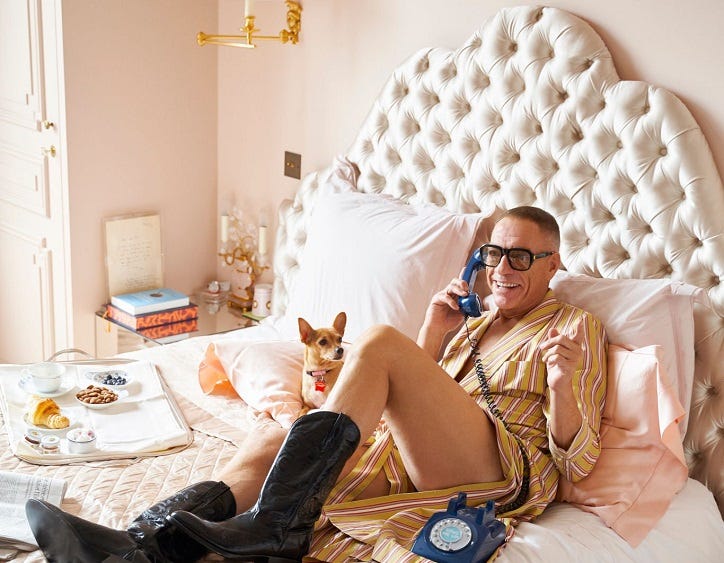
Jean-Claude Van Damme was once known as the human green card. Why? Because he brought over a few Hong Kong directors to work in Hollywood. Since Van Damme’s stock in trade was martial arts, he should have hired directors who were martial arts choreographers. John Woo, Ringo Lam and Tsui Hark should have been rejected in favour of Sammo Hung, Tony Leung Siu-Hung and Yuen Woo-Ping. The French Impact magazine, nonetheless, still covered Hong Kong cinema in general enough that the British version of Impact could be mistaken as an official subsidiary when it wasn’t. Since French is Van Damme’s first language, his best interviews are in French magazines. One such example is Impact, which gave him the perfect platform to talk about action movie stars. In the June 1989 issue (No. 21), Marc Toullec said to him: “Your background is very similar to Arnold Schwarzenegger's. He comes from Austria, you from Belgium...”
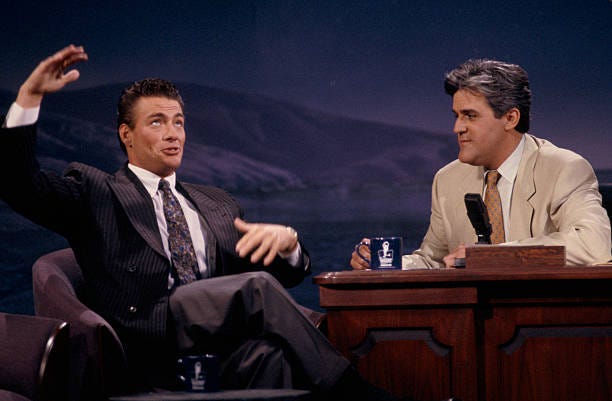
Van Damme said: “You don't compare a Rolls-Royce to a Ferrari. Before coming to the cinema, Arnold had already made a name for himself thanks to bodybuilding.”
Marc Toullec asked: “How do you compare to other muscular actors in the United States?”
Van Damme said: “I would like to reach the same level as Sylvester Stallone. For me, being compared to Chuck Norris or Arnold is not really a compliment. I like them but I don't want to be like them. Mentioning Stallone or Robert de Niro already makes me happier. They have more sensitivity. But you don't change from one to the other. It takes time, good scripts, good directors, and also a big advertising campaign.”
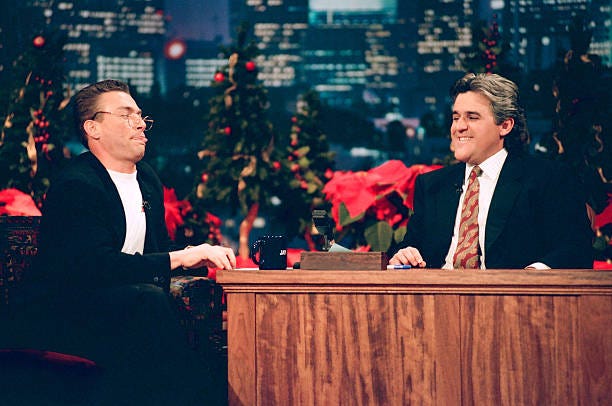
In the August 1990 issue (No. 28) of French Impact, Van Damme made it clear why he no longer wanted to star in movies that only could be placed in the martial arts section of a video store: “I am not chasing this type of product. I am chasing people like Arnold Schwarzenegger.”
In the February 1993 issue (No. 43), Emmanuel Itier asked him what he was planning to do after John Woo’s Hard Target. Van Damme said: “I hope to sign a good big comedy with Columbia in which I will share the poster with Damon Wayans. We will play two cops on the trail of a psychopathic killer of European origin who is massacring prostitutes in Los Angeles. To stop the madman, they will have to disguise themselves as women.”
This sounds like it could have been a semi-remake of Sammo Hung’s Pantyhose Hero (1990) where two cops had to pretend to be gay in order to catch a killer targeting gay guys. Damon Wayans, not coincidentally, is a big fan of Hong Kong movies. Back to Van Damme, the interviewer asked him: “Do you think the public will follow you on this adventure?”
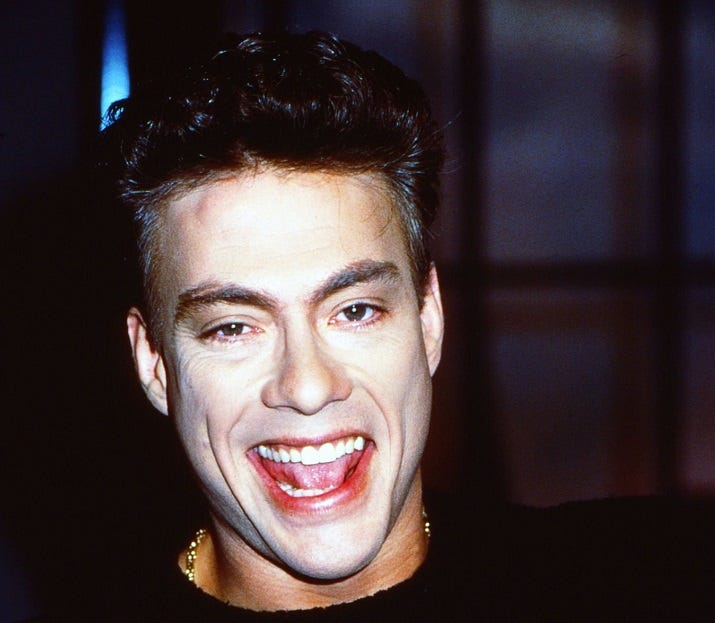
Van Damme answered: “I don't know yet. I'm always nervous and eager to know if the audience will react where we expect them to. I always attend the first screenings of my films to find out if people laugh at the right moment, if they stamp their feet at another... But comedy was successful for Arnold Schwarzenegger. Why not me? People often say that I follow in Arnold's footsteps. Like him, I come from Europe and I quickly became successful. I think Americans appreciate successful people from another continent, it reminds them that the American dream still works. Arnold and I are successful, but the comparison ends there. However, I would like to see a joint project proposed to us.”
In the July 1996 issue (No. 63) of French Impact, an interviewer teased him about the competition between himself and Schwarzenegger versus Stallone. Van Damme said: “I'm 35 years old. Schwarzie and Sly are almost 50.”
In June 1989, the French Impact magazine released an issue (No. 21) where Van Damme said: “When I arrived in Los Angeles, I thought that Stallone, Schwarzenegger and the others could help me to get into the business. I quickly realized that this city, this environment, was really a jungle and that to succeed, you had to count only on yourself. The only way to get there was to contact producers, agents, directors...”
Interviewer Marc Toullec jogged his memory about Chuck Norris, but Van Damme cryptically said: “He was very impressed by my physical qualities. He asked me to be his trainer. He had promised me a role in a film but nothing happened. I accompanied him to the Philippines on the set of Missing in Action. I understood the system quite quickly and quickly returned to Los Angeles.”
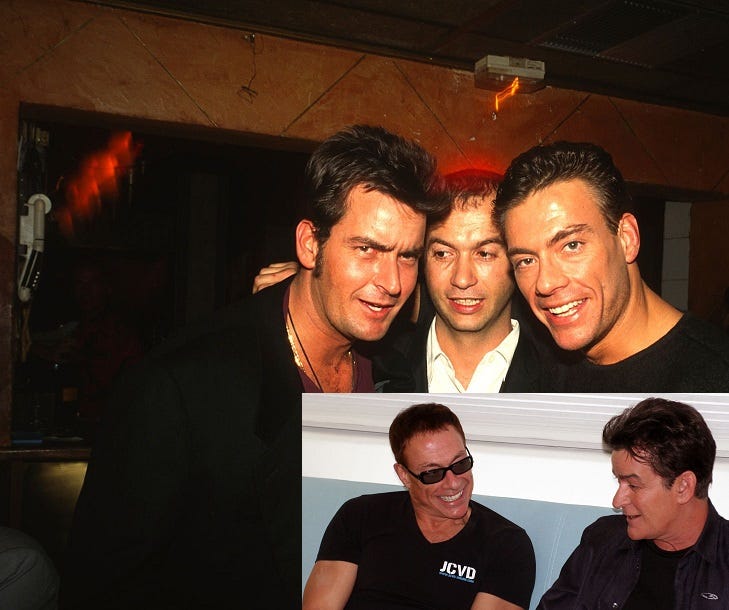
Contrary to what was said online, the above photo does not depict Mike Myers being sandwiched between Charlie Sheen and Van Damme. That is Thierry Klemeniuk. Let's get back to the man who was born as Carlos Ray Norris. Coincidentally, Charlie Sheen’s birth name is Carlos Irwin Estévez. In the February 1991 issue (No. 31) of French Impact, it was mentioned that Van Damme was Chuck’s trainer on the set of Missing in Action where he narrowly escaped being decapitated by the blades of a helicopter. Van Damme said: “Following the success of Bloodsport, Menahem Golan offered me a martial arts film in which I shared the lead role with Chuck Norris. I refused because I don't really want to be catalogued like him in this niche for a lifetime.”
Ironically, Chuck became an actor because Steve McQueen (Bruce Lee’s student) told him that he had what it took to be a star. In the February 1993 issue (No. 43) of French Impact, Van Damme explained why he chose Nowhere to Run (a.k.a. Crossing the Line) over other projects: “I accepted the film because I was offered a real role, a character a little more complex than those I have played so far. I compare Sam Gillen to Steve McQueen, not because he rides a motorcycle, but because of his looks which say more than sheets of dialogue, because of his silences. I appreciate that. But for an actor, it is sometimes more difficult to act while remaining silent than to speak. Anyway, Sam Gillen isn't a big talker. Like me, he is a sensitive person, someone who loves violins and romances.”
When asked about getting naked in front of Rosanna Arquette, Van Damme said: “I wasn't too shy. Robert Harmon was rather embarrassed; I felt guilty for having planned this scene. I asked him, "Bob, when she comes into the bathroom, maybe it would be better if I showed her my weenie? That would be more realistic." I did it quite simply. It's called the Actor's Studio method, the real game!”
When asked if he showed his manhood to the children, Van Damme said: “No! People often ask me if I mind playing naked. No way. Don't forget that I'm European, so I don't have the modesty of American actors. Here, in Hollywood, as soon as we show a little too much, it makes an incredible mess! It's the same for everything. If you are surprised in the street or at a party with a pretty young woman at your side, you are sure that the next day you will find yourself photographed in all the tabloids in the country. In Europe, you are generally more protected against this kind of inconvenience. Here in Hollywood I don't really get along anymore with the paparazzi. When they surprise me, I take them aside to ask them to take a photo of me alone. I give them what they're looking for, but solo. They have no choice but to accept this proposal. However, recently I found myself in a pile of ducks. Even though I train alone in my corner, and don't squander receptions, the paparazzi never let me go.”
When asked to confirm about the tension between himself and Dolph Lundgren on the set of Universal Soldier (1992), Van Damme said: “We were pretty good as everyone had warned me about it. It must have been hell, but everything went perfectly. Initially, Dolph was suspicious of me - someone who was really going to eat up all his scenes, steal everything from him. I was careful not to give that impression. But, be careful, as soon as he has had one drink too many, Dolph changes completely. He is no longer the nice guy you know. Better not to mess with him!”
In the December 1992 issue (No. 42) of French Impact, Van Damme said: “It's true that there are people who offer homeless people this or that amount of money to do this or that - something that will lead them to their downfall. These wretches despair to the point of giving up on life; they think they have the chance to start over, somewhere else. This situation at the base of Hard Target reminds me of the hell I experienced when I first arrived in Hollywood. I knew nothing about this jungle, about the crooked producers. I listened to them and believed everything they told me.”
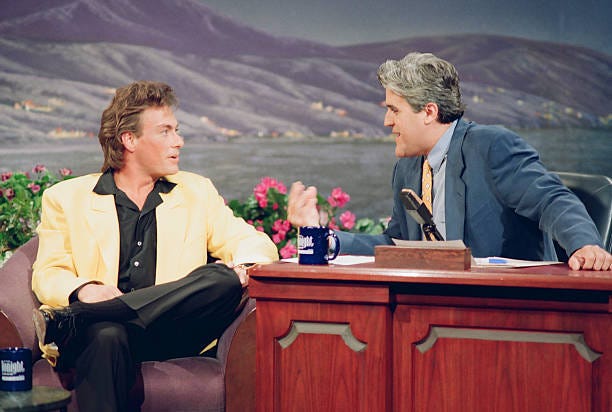
By the time that it was 1996, Van Damme was on the decline akin to a British film called The Madness of King George (1994). In the July 1996 issue (No. 63) of French Impact, the journalist borrowed a quote from an American magazine (Cinescape) where Van Damme said: “Very difficult to guess what the public will like tomorrow. If Sudden Death took a beating in the United States, it is because of its release date - right in the middle of the end-of-year holidays. The competition was tough. But Sudden Death is a hit in Europe, it is smashing records.”
The French journalist was quick to note that what Van Damme said was delusional. This is what Van Damme had to say about his current film - The Quest (released in the spring of 1996): “I unfortunately had to give up opportunities like D'Artagnan and The Royal Way by André Malraux. Producers also offered me to succeed Christophe (sic) Lambert in Greystoke II. But I don't imagine myself half naked, clowning around with a banana in my hand and jumping from vine to vine. I don't chase clichés. And Tarzan has been the subject of so many films. I'm not sure we'll ever reach the level of Johnny Weissmuller!”
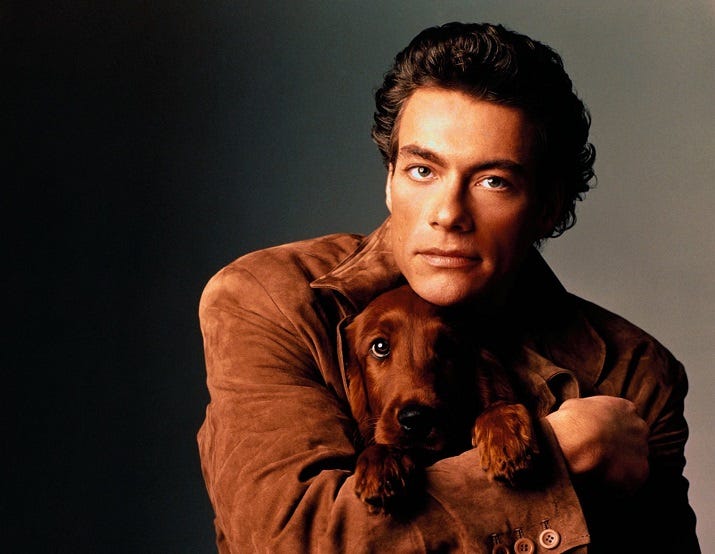
In the interview, Van Damme admitted that he would rather work with directors Oliver Stone, Adrian Lyne, Tony Scott and Alan Parker. Van Damme said: “If they call me, I'll go for it. Until then, these filmmakers looked down on me a little. I understand them because they only knew me through films like Bloodsport, Double Impact and Kickboxer. For them, I was only capable of kicking bad guys' asses! Now, things are moving in the right direction. I am free as a bird for the first time in my career, I am coming to the end of all my contracts, including those that have been resold from a studio to a bank since my time at Cannon. I can finally consider offers from producers as influential as Joel Silver, Arnon Milchan and Joe Roth. Big fish who invite you around a table, to discuss with directors as important as Roland Joffé and Roman Polanski. Big names.”