
Liaison Frisson

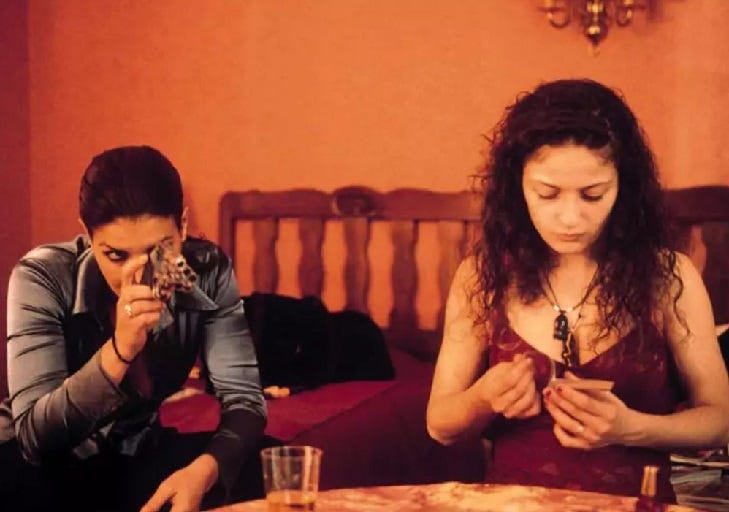
In 1999, Virginie Despentes co-wrote and co-directed Baise-moi with Coralie Trinh Thi. In the December 2000 issue (No. 90) of the French Impact magazine, only Virginie was interviewed because the movie is based on her semi-autobiographical novel (a 1993 publication). When her third novel, Les Jolies Choses, won two awards (in 1998 and 1999), this put Virginie in a place where she could advertise her first feature-length movie at the Cannes Film Market. In this prestigious venue, Baise-moi was immediately sold to many countries. Virginie spoke of the irony surrounding the furore of the movie: “The strangest is that the book had been received in a less virulent manner. Reading Baise-moi to them apparently poses less of a problem than seeing it. Seeing it makes them anxious, and I don't understand why.”
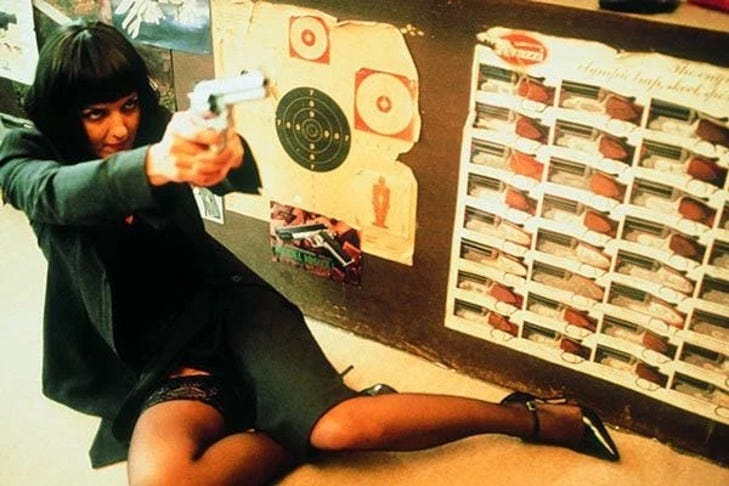
The pace in finding a producer: “Well, it happened relatively quickly. Philippe Godeau, the producer, had the rights to the novel for four years. He wanted to make a film out of it but didn't really know how. When we presented the project to him with Coralie, a small budget shot directly on video, he said yes right away. And four or five months later, we were shooting the first shots. So it was very simple. Otherwise, I suppose we would have given up on it. It could have been just another abandoned project among many others.”
Ironically, this didn’t stop Gaspar Noé from writing and directing Irréversible (2002). Not only was that shot on film but it made more money and won awards. Back to the French Impact magazine, I was surprised by what Virginie Despentes said since her IMDB filmography is misleading. I should note that “Sasha” refers to Sasha Andrès. Another thing about the following comment is that CNC refers to France’s Cinema National Centre: “I had already made a short film on digital video, a story of small-time drug dealers with Vanessa Demouy, Coralie and Sasha. It was an exercise more than anything else. Since everything was paid for by the CNC, with the aim of perhaps financing a feature film later, we shot the short with lighting while Baise-moi was made without. And I prefer the result. In any case, neither Coralie nor I had any knowledge of film or lighting. So much the better for those who know how to juggle with film and lighting, because it's often beautiful, but that's not our case. We're not technicians! So there was no point in worrying about it. We prefer to concentrate on what's in the image, and the video suits us perfectly. When the image is well calibrated, it's hot, it's pretty. For a first film, I think we did well.”
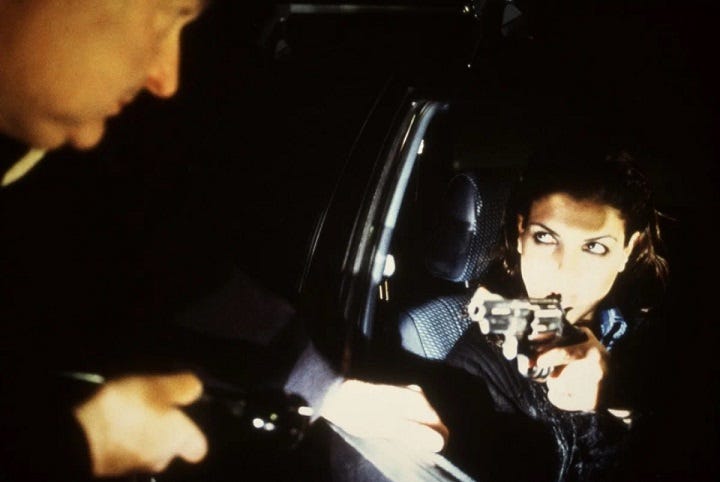
The short film that Virginie Despentes is referrring to was Les Jolies Doses (1999), but she had made another one with Sasha Andrès called Dans le lit de Lola (1996). This featured Hélène Louvart with Laurent Tuel. Not so coincidentally, Virginie was interviewed by the French edition of the Penthouse magazine for their May 1996 issue (No. 136). What’s never mentioned in the French Impact magazine is that Virginie wanted Marie Gillain and Vanessa Demouy to be the stars of Baise-moi (2000). Virginie was asked if it was a totally independent production or if she got support from the CNC like with her second short film, to which she answered: “No, we didn't have the CNC, or maybe a support fund, but I'm not sure. On the other hand, Canal+ helped us. But most of the funding came from the producer himself. From the start, he wanted his company to invest in the project. I think that's pretty cool of him because that's not often done in France. Especially since he behaved well towards us when it was banned, so that he was the first to be penalized.”
Virginie Despentes talks about double standards: “If the film had been of a another nationality, especially American, some people who hated it would have loved it. I'm sure of it. It's in the French mentality: America is good, and what comes from France sucks. The fact that Coralie is co-director must have p!ssed off a lot of people. They don't want a p*rn girl to be a director. They don't even understand that it's possible. Normally, she sucks cocks and all of a sudden, she directs! It's clear that it didn't help. People are cultured, but do not realize that they live in obscurantism.”
Virginie was asked if the movie got too much press: “It's true. We had barely started shooting when we were already being offered interviews, TV spots. But if Baise-moi hadn't been banned, I wouldn't have complained, frankly. Because the more people who go see it, the better off I am. And there are plenty of people who can go see a film, even for the wrong reasons. On the other hand, I found that they were practically all in the dark, which made me laugh. Everyone attacked the film because it was banned because it was fashionable, but no one took the step of judging it as a film, quite simply. Baise-moi only cost six million francs. For that amount, I think we did well. But no one said that. And it's funny that they complained that it there is too much sex.”
A different kind of exploitation: “Some people have taken advantage of the affair to write sensationalist articles about violence in cinema, music, video games... Like Le Nouvel Observateur, with its 100% sex and violence coverage. Putting pictures from genre films on one side and then the crimes they supposedly inspired on the other was just nonsense. As if the genre cinema was one of the great flaws of the 20th century! I don't understand how you can read the newspaper every day and then go and tell such crap. There were photos of very good films, and just below, sordid news items. That must reassure their good conscience. But the fact that they called us fascists, I didn't like that at all. You don't call people fascists like that, without real reason. It's dangerous. Then, they'll go and cry the day something really serious is reported because no one will believe them anymore. This article was really a high point. At the same time, as Coralie says, it was so crazy that it was from that moment on that we started to feel better, realizing that it wasn't us who had a problem.”
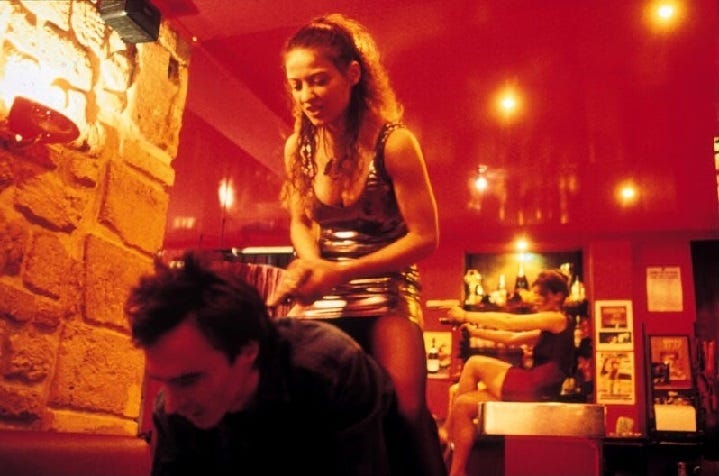
Reviewer and interviewer Damien Granger said: “The association "Promouvoir" banged its fist on the table to have the decision taken by the Censorship Committee and the Ministry of Culture through the Council of State annulled.”
Virginie Despentes remarked: “There is probably an explanation, which I don't really know. I think that the association "Promouvoir", which filed the complaint, knew someone at the Council of State. Because everything happened so quickly. What got into them? In one week, the case was settled! The complaint was filed on the 23rd and the decision was made on the 30th. They took priority over all other cases. The goal was to prevent people from being able to go see Baise-moi. Then, they attacked the MK2 cinemas and the independent theaters that were resisting by keeping the film on the bill. They even sued Catherine Breillat, simply because she had spoken out on the subject by defending us. Preventing people from saying what they have to say is the worst thing. It was really the fourth dimension when it happened! The worst thing is that from now on censorship will not even be done at the level of the law. The TV channels are starting to censor themselves. Recently, Canal + decided not to broadcast a documentary by HPG. I am furious that it was cancelled.”
That would be Hervé Pierre-Gustave. As a heads up, NTM refers to a rap group called Suprême NTM. Anyway, Virginie continued to say: “I pay Canal + quite a lot to watch what I want. It's the same for the big stores. If the video of Baise-moi is only released for rental for the moment, it's because it can't be sold anywhere. The Fnacs don't want it and neither do the Virgin Megastores. It may not be definitive, but for the moment, they all have a sudden awakening of virtue. Suddenly, they have a conscience. It's starting to make me laugh. And attacking HPG or NTM's songs and clips is so easy. In any case, it's well known that it's always the same people who pay the price.”
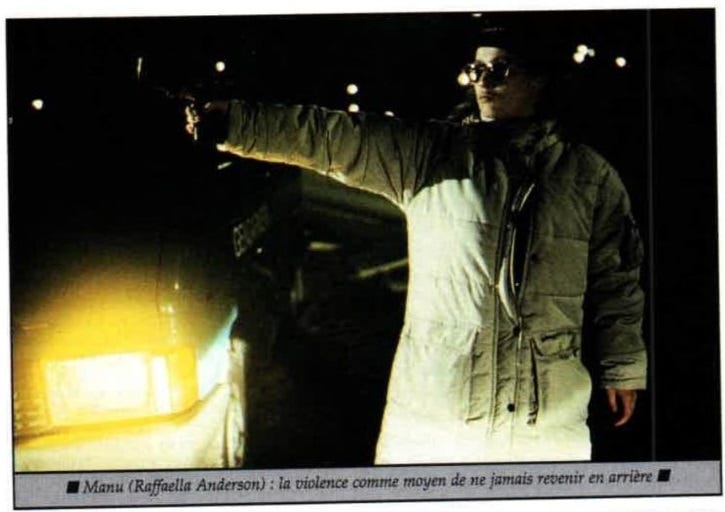
Virginie Despentes thinks that Promouvoir are fascists: “What was more worrying was to see which way the Council of State would lean. Could it allow itself to agree with fascists again? Not this time, but they're twisted, and they say things that are false. They're supposed to be left-wing, and that's not true. They call themselves feminists, and that's not true either. I'd prefer that they be themselves, and that they move forward unmasked like the puritanical Catholics of Promouvoir. It shocked me to see that there were so many reactionaries and hypocrites.”
Virginie is asked if she was told to cut scenes when she went before the censorship committee: “In France, no. It's very rare, if ever. On the other hand, there are countries where it's common, like England or Canada. In fact, for Baise-moi to be released in Canada, we were asked to cut all the scenes showing male genitals! We don't really know what to do with Coralie, so we haven't responded yet. The film should be released, but at the same time it's so stupid. In France, it's different. When Baise-moi went before the Censorship Committee, I spoke at length with one of the officials, who explained everything to me. It's pretty well done, it seems. I'm against censorship, but I think he had an interesting speech and asked the right questions. It was rather surprising, in some sense. Afterwards, it's true that the law on X exists and that it doesn't bother them more than that.”
She is asked if she had any problems with the crew: “No, everything went very well, even if it wasn't always easy. Especially the rape scene, which was very trying to shoot, and which was filmed on the second day. Since no one threw in the towel at that point, it was obvious that everyone would stay until the end. And I'm happy to have made this film with Raffaela and Karen, because there was clearly something that developed between them. I find them very funny too.”
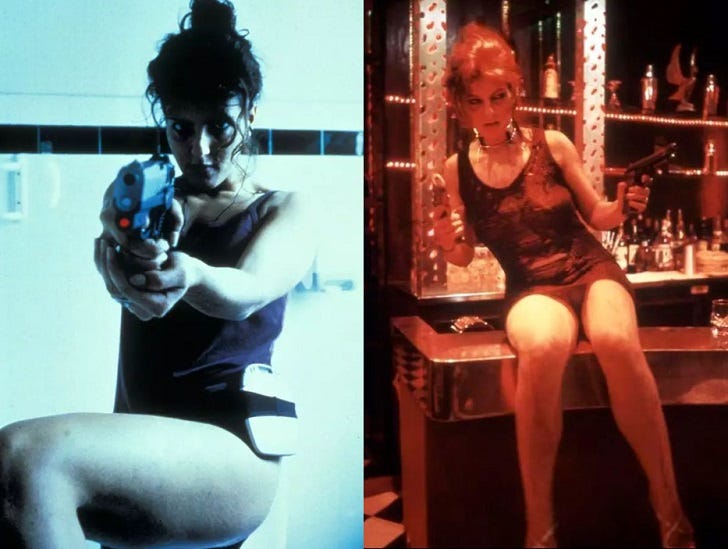
The interviewer thought they had charisma and gave great performances. Virginie said: “Yeah, I think they're great. They have such strong personalities that I love watching them. However, when you're editing a film, it can happen that you get tired of watching an actor over and over again. But I could watch them over and over again. They have very rich acting. It's not every day that you see girls like that! P*rn, I think, is something incredible to experience because it sets you apart from society, because you experience such strong emotions. It leaves a mark on you and it shows. You can feel that they've had an exceptional career, that they've gone through stuff and that's precisely where they draw all their strength.”
In the October 1996 issue of the French Impact magazine (No. 64), there was an article about another femme fatales thriller made by a directorial duo. This was Bound directed by the Wachowski brothers - Larry and Andy. All the quotes in the article are not attributed specifically to either brother. We can only assume that they took it in turns to speak on the basis of a one sentence quota. For example, the first quote is about a Sylvester Stallone movie that was co-produced by Joel Silver - the same man who produced The Matrix (1999): “Please clarify to your readers that we have made every effort to remove our names from the Assassins credits. Fortunately, on this kind of big budget, only the studio's bigwigs are authorized to make such a decision.”
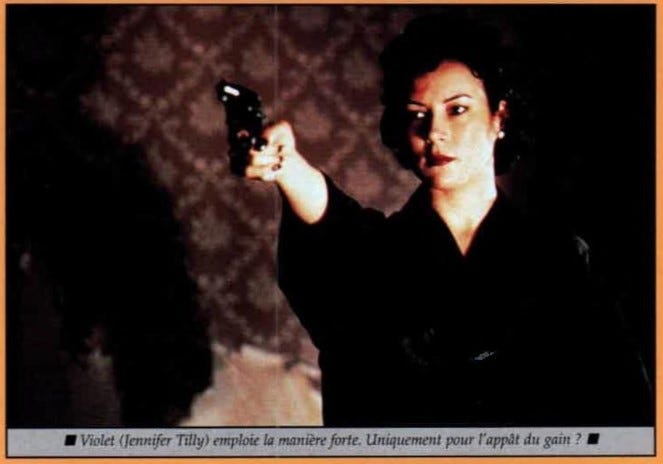
Like the Wachowskis and Joel Silver, magazine journalist Léonard Haddad is a Hong Kong film fan. He produced a 2004 documentary called L'atelier du Film: l'histoire de la Film Workshop. Given that the Wachowksi brothers became the Wachowski sisters, it’s fascinating that he described the premise of Bound by referring to a piece of advice that Howard Hawks gave to Jean Negulesco during the making of O. Henry's Full House (1952): “Change the sex of the characters, that's the key to everything.”
Then comes a Hydra-esque quote from the two-headed beast that is The Brothers Wachowski where you really get a firm grasp of who the target audience was: “We wanted to play on the conventions of the genre. The spectator had to feel on familiar ground. From then on it became fun to make him lose his footing, to surprise him.”
There comes a point where close proximity is not a coincidental degree of separation. Given that the Wachowski brothers were fans of Hong Kong cinema, it’s fascinating to see who they cast - Gina Gershon went on to have a supporting role in John Woo’s Face/Off (1997) whereas Jennifer Tilly (who’s half-Chinese) went on to star in Ronny Yu’s Bride of Chucky (1998). Part of the attraction behind being interviewed for overseas magazines prior to the advent of the internet (especially eBay and Google Translate) is that a person could get away with saying things that they wouldn’t usually say to the media at home. It’s just as well that the following quote wasn’t attributed to a specific Wachowski: “All the somewhat established actresses that we had considered backed out. They found these dyk€ characters too risky for their precious careers. We were really lucky to meet Jennifer and Gina who, for their part, immediately understood that in Hollywood they would not be offered this kind of role every day.”
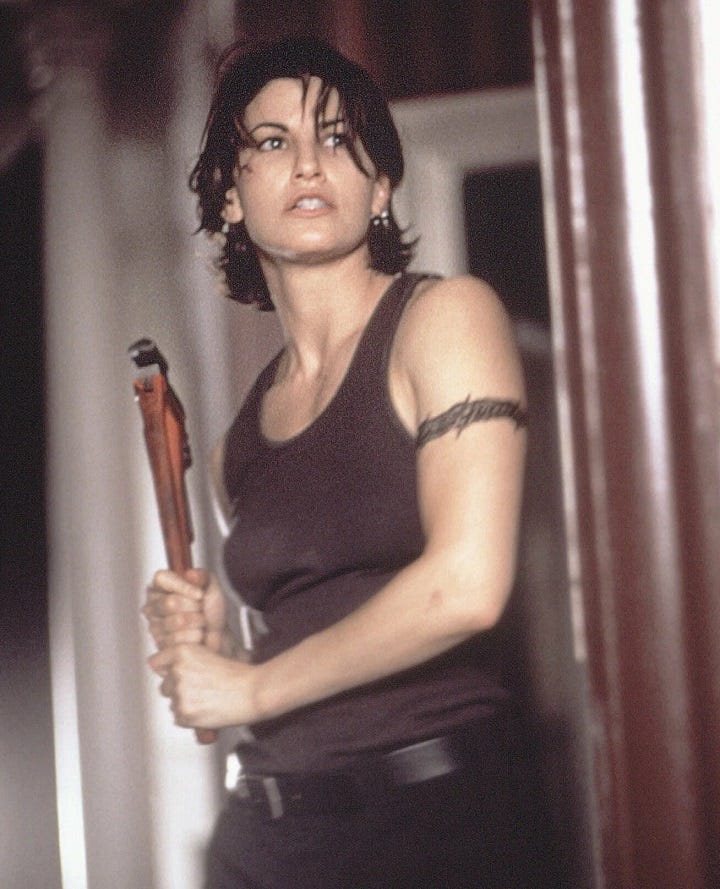
As for the sapphic content being potentially exploitational, the dual mind of the Wachowski siblings said: “We wanted to avoid that at all costs, the sixty-nine and all that bullsh!t. Really showing two women making love, in a physical, graphic way. The other day we saw the film in the middle of 1,600 lesbians. And they reacted incredibly well to these scenes. At the end of the screening they were really carrying us in triumph! Bound tells the love story of two real women who refuse their status as sexual objects, of two heroines who try to take their destiny in hand. We like strong women, and film noir has a sensual and stylized universe that has always generated interesting female characters.”
The only criticism aimed at the Wachowskis is by the aforementioned magazine reporter - Léonard Haddad. He noted that Bound is heavily influenced by the work of another sibling duo - the Coen brothers: Joel and Ethan. More specifically, their first three films: Blood Simple (1984), Barton Fink (1991) and Miller’s Crossing (1990). The Wachowskis were described as dodging the issue. They were also criticized for their extreme film-making style, to which their shared response was: “It's still strange. We've been criticized a lot for the extreme stylization of Bound, but no one complains about all these films that are so visually flat that they interfere with radio broadcasts.”
The Hong Kong film fan community, at least back in the 20th century, was truly a close-knit community. Cinematographer Bill Pope previously worked for Hong Kong film fan Sam Raimi on Darkman (1990) and Army of Darkness (1992). Magazine writer Léonard Haddad revealed that Pope’s cinematography evoked the world of comic books - a medium that the Mars-cum-Venus Wachowskis had worked in for Hellraiser director Clive Barker. The Wachowski mind collective spoke of the comic influence: “Especially Frank Miller's Sin City, and for that we needed someone like Bill, who has this culture at his fingertips and who, thanks to his collaboration with Sam Raimi, knew how to adjust the slightly twisted camera movements that we had in mind.”