
Just Cause Célèbre

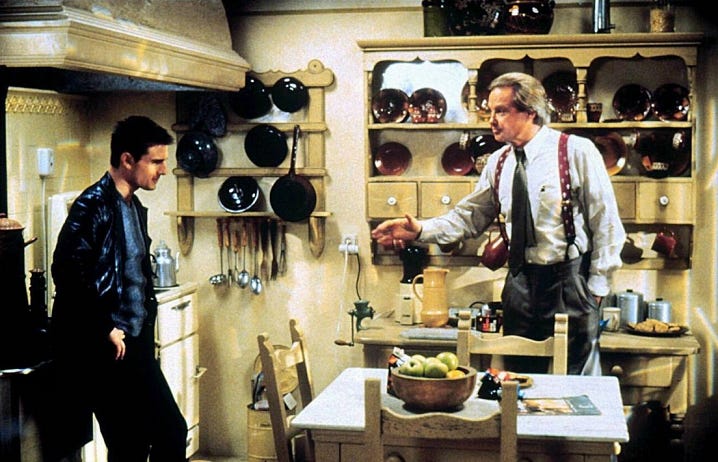
First Beckoning. George Lucas played the revisionist history game by changing the title of Star Wars to Star Wars: Episode IV - A New Hope, so why can’t they do the same thing with the first Mission: Impossible film? This is something to consider when you think about how easy that it would be to find it in comparison to looking for the TV series. When Walker, Texas Ranger came to an end in 2001, Chuck Norris was 61 years old. He could barely kick. When Mission: Impossible - Final Reckoning finished filming, Tom Cruise was also 61 years old. Since himself and director Brian De Palma wanted to distance Mission: Impossible from the TV series as much as possible, perhaps they should not have used the Jim Phelps name for the antagonist. They should have gone with Dan Briggs, who was never seen again after the first season. While it’s true that the TV series was influenced by an American film called Topkapi (1964), an overlooked source of inspiration is a French film called Du Rififi Chez Les Hommes (1955).
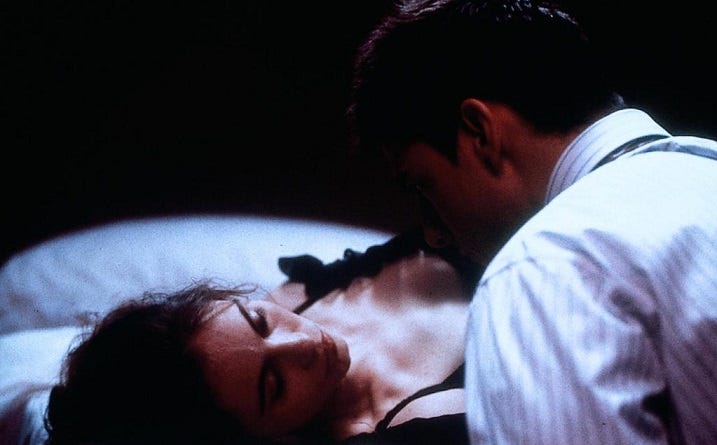
In the October 1996 issue (No. 64) of the French Impact magazine, there was a long article about the first film and the TV shows that came before it. About the first series, actor Martin Landau remembered what the creator told him: “There was a problem with CBS because, if I remember correctly what Bruce Geller told me at the time, the channel only had one time slot and had to choose between two possible series. Ours, and a series by Robert Altman, which was about a Chicago detective. CBS was leaning toward the latter, and our show was too complicated. They figured if you got up to go to the bathroom, answer the phone, or get something to eat in the refrigerator, you wouldn't understand a thing when you came back.”
This reminds me of the problem that John Woo had when he directed his first TV pilot, which was an adaptation of a Hong Kong film that he made called Once a Thief (1991). Rather serendipitously, not only was the pilot referenced in the same issue of Impact but he would later direct Mission: Impossible (2000). While people criticize this film for depicting Ethan Hunt as a martial artist, he was technically established as one in the first film during an altercation while he was dressed as a firefighter. Speaking of the first film, Tom Cruise had been wanting to do it since founding his production company in 1992.
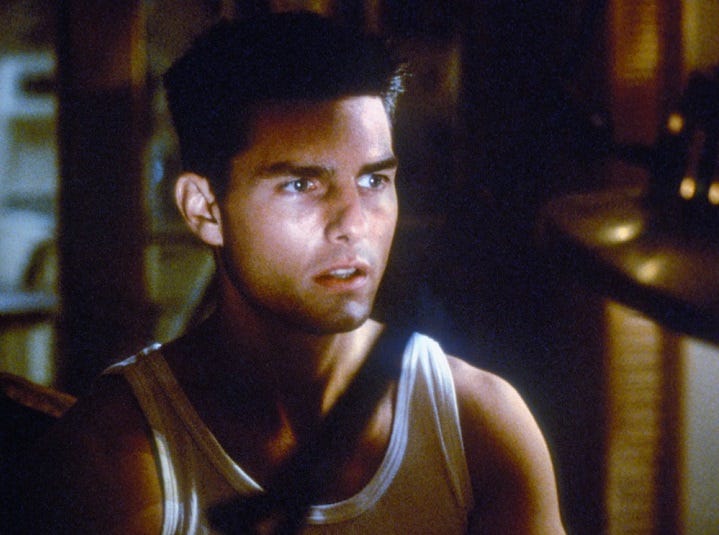
Alongside his agent, Paula Wagner, he knew that despite previous years of struggle, the film adaptation remained a viable project. Tom said: “As soon as we settled at Paramount, I inquired about the rights to the Mission: Impossible series and I announced to the studio my intention to make a film of it. It was the ideal project to launch our company because it brought together all the ingredients of a great entertaining and suspense-filled spectacle.”
Paula said: “There had been several unsuccessful attempts to adapt Mission: Impossible. Tom and I found an approach that appealed to us and immediately appealed to the people at Paramount.”
Despite having the experience of directing a 1993 episode (The Frightening Frammis) of Fallen Angels, Tom hesitated about directing films. He said: “Acting is very persona, but to stage it is even more. You don't just give your vision of a character, as a director you create your own universe. I wanted to direct, but I did not find material to launch me. Besides, there was no way I was going to wait to tackle a project of the magnitude of Mission: Impossible for a first film, that I devote two years of my life to it when I could simply produce it.”
During an evening dinner at a friend's house, Tom Cruise met director Brian De Palma. I later learned that this “anonymous friend” was Steven Spielberg, who had been a friend of Brian since the seventies. Tom was greatly impressed by certain scenes in Brian’s latest film - Carlito’s Way (1993). Tom also said: “I have always had an immense admiration for Brian, whom I consider to be a refined stylist - a master of suspense, a classic filmmaker in the best sense of the term. I thought he was the perfect person to shoot this film. Paula shared this point of view, and we were both very happy to bring him on board with our project. Our ambition was to produce a sophisticated film, taking into account the new political situation and giving equal importance to the plot, the emotions and the feelings of the characters. Only a great technician like Brian De Palma could transcend the limits of the genre and make Mission: Impossible more than a thriller and a traditional action film.”
Brian remembered: “I told myself that it was time to change everything and go back to what I had done on The Untouchables - take something familiar and transform it into something new. For The Untouchables, I did not have a star. Kevin Costner and Andy Garcia became stars partly thanks to this film. Robert De Niro had not been used in this way for a long time, and Sean Connery was going through a period where his films weren't very successful. The reason I agreed to direct Mission: Impossible was Tom Cruise. I needed a star to attract audiences to the theaters and relaunch my career as a director.”
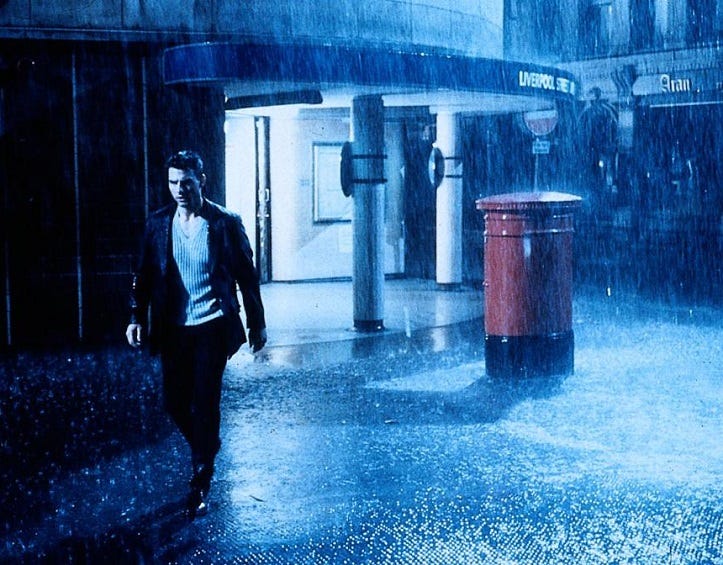
But before starting a shoot, it is generally a question of having a script available, which was still not the case on Mission: Impossible. Paramount hired Gloria Katz and Willard Huyck - the screenwriters for Indiana Jones and the Temple of Doom (1984). They were fired after a few days, at the request of Brian De Palma who apparently does not navigate in the same (flat) waters as the duo. It’s suggested that they were too family-friendly. Steven Zaillian arrived on the project, whose CV displays at the top of the page: Oscar, Golden Globe, Writers Guild Award and Humanitas Prize for the screenplay for Steven Spileberg’s Schindler's List (1993). Unfortunately, he is only available for six weeks. Himself and De Palma still manage, after intensive work, to come up with the broad outlines of the story. Zaillian passed the baton to David Koepp (the adapter of Spielberg’s Jurassic Park), with whom Brian De Palma has had a special relationship since Carlito’s Way (co-starring a friend of Tom named Sean Penn).
David Koepp said: “Adaptation or not, the important thing is that the film is born. The Fugitive was good, The Untouchables too. I think that successful adaptations are those that make you forget, at least partially, that they are based on television series. As for Mission: Impossible, bringing a 25-year-old series up to date and setting it in a contemporary political context was a real challenge. After the collapse of the Eastern Bloc, which provided almost all of the series' villains, the angle of attack had to be completely revised.”
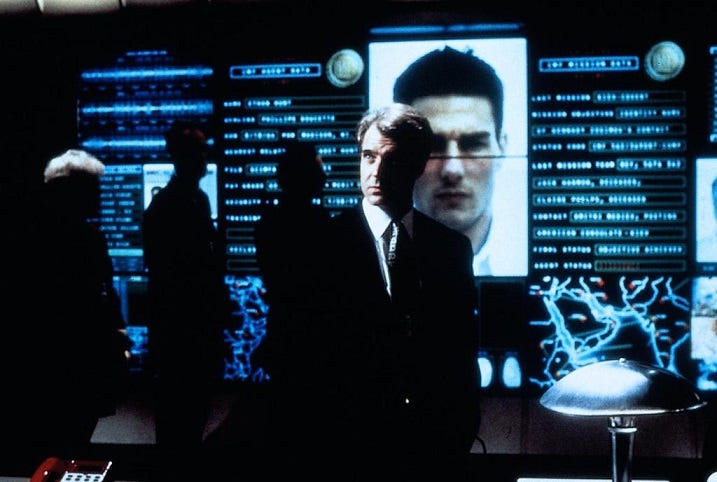
Koepp was inspired by the story of Aldrich Ames - a CIA agent convicted of treason for having sold confidential information to the Russians. Filming was about to start when Tom Cruise pulled Robert Towne, the Oscar-winning screenwriter for Roman Polanski’s Chinatown (1974) and friend of the star, out of his pocket. Even if they did not discuss the subject for the French Impact magazine, it seemed obvious that Tom and Brian De Palma engaged in a conflict of interest regarding which writer had the bigger sway. Robert Towne, after all, returned to write M:I-2.
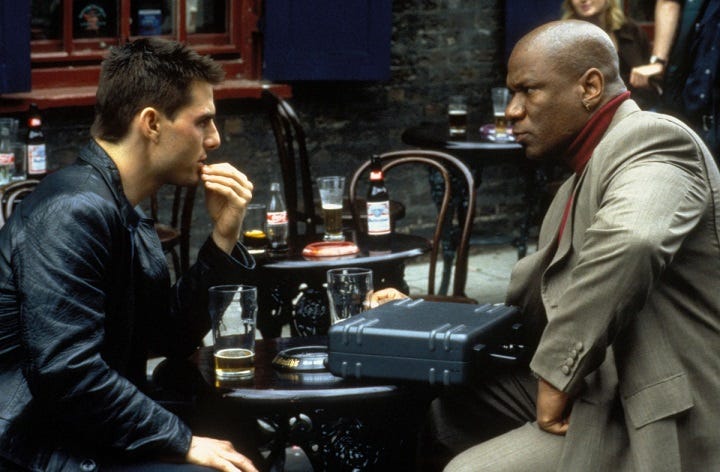
Back to the first film, Tom said: “Although Ethan Hunt is a man of action, his strength is more mental than physical. Ethan has a rare talent for getting out of the most delicate situations. This is an aspect that I really cared about. We also had to feel that he is in a very difficult emotional situation, that he is close to breaking under the weight of his trials. If you don't adhere to the emotions of the character, the scene, however spectacular it may be, falls flat. Because the suspense ultimately comes from the actor, from his guts.”
There is a conflict between the Hitchcockian nature of Brian De Palma’s films and the James Bond who Ethan Hunt eventually became. It was wise for the film to be more of a spy thriller than an action movie because there were already people competing to be the James Bond of the nineties. Arnold Schwarzenegger played a secret agent in True Lies (1994), Jackie Chan was about to release First Strike (1996), Jean-Claude Van Damme was going to star in a remake of The Colony (1997) and there was already another TV series about to be adapted for the big screen - The Saint (1997). When Tom Cruise was making his first M:I film, Pierce Brosnan was currently starring in his first 007 movie - GoldenEye (1995).
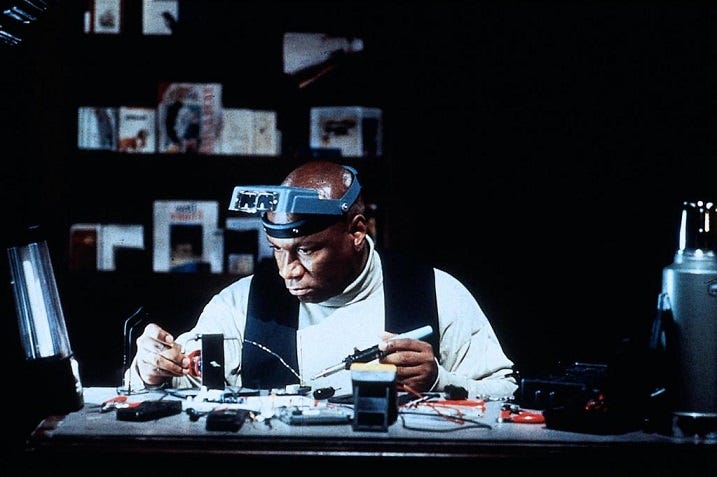
Tom Cruise said: “It was Brian De Palma who had the brilliant idea of setting up production in London and shooting the first sequences in Prague, thus giving the film an international cachet. He also made many suggestions regarding the casting.”
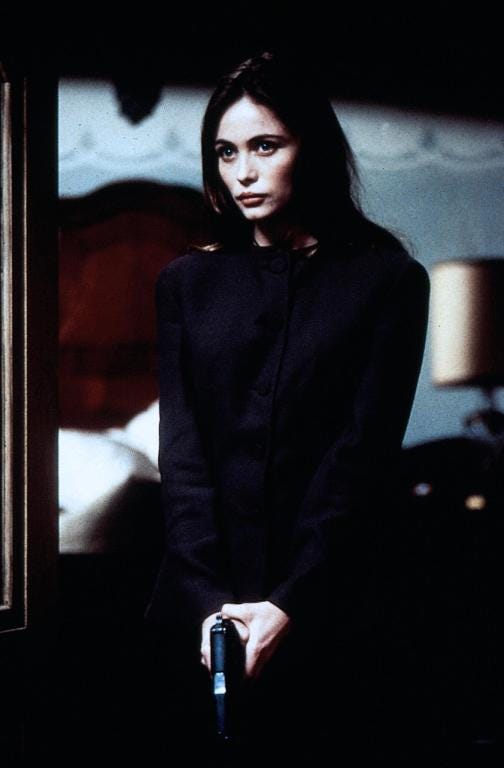
Perhaps paying homage to the aforementioned Du Rififi Chez Les Hommes (i.e. Trouble Among Men), Brian had cast two French stars despite the fact that the film doesn’t take place in France nor does it include reference to French culture. It was while watching Une Femme Française (1995) by his friend Régis Wargnier that Brian noticed the beautiful Emmanuel Béart. As for Jean Réno, the little name he made for himself in Hollywood and his striking physique were enough to win the day and join the unofficial IMF team. Jean said: “I was obviously happy that Brian offered me the role of Krieger. The character evolved significantly between the time I was hired and the start of filming. Brian actually gave him a more gruff and grumbling style... doubtless inspired by my own behavior! He gave me a minimum of explanations, contenting himself with telling me that Krieger was French and that he smoked. I think he understood me and thought it was superfluous for him to tell me more!”
The French Impact magazine included a critique of the film by an actor from the first TV incarnation - Martin Landau: “The film is so different from the series that I can hardly recognize it. A clear difference, intentional on the part of Tom Cruise and Brian De Palma. This Mission: Impossible is directly related to the action films with a big spectacle, to James Bond and everything that is currently being done. We should not have expected the equivalent of a Dostoevsky novel. At the world premiere in Hollywood, Paula Wagner, Tom Cruise's partner, asked me my opinion. I told her it was a decent entertainment. I didn't lie to her, but this movie is so far removed from Bruce Geller's concept.”
What he said reminds me of how the second MacGyver TV series went against the first one by being more in line with the first M:I series: “In Bruce Geller’s concept, there was no violence, no stunts, nothing like that. That's what makes it original, what makes it specific and also what makes it modern. It's a very cerebral series where there's no muscle-flexing. It's also a series that's very focused on the performance of technology, a series that features very close-knit protagonists who form a real team. Jim Phelps, Rollin Hand, Cinnamon and the others trust each other completely, even when their lives are at stake. In the series, everything is about getting in somewhere and getting out without anyone discovering the truth, the plot.”
The third act of Martin Landau’s scathing critique: “All that is blown to pieces in this film. The first thing its writers do? They eliminate the entire team. All of them, except Tom Cruise. That had to be the case so that he remains the star, so that he's not put on an equal footing with another actor. He's there saying - "Look at me, look at me. Mission: Impossible is really not James Bond." The series was very intelligent, very smart. The film chooses him to turn your back, explore another register. There is nothing more different, more opposed than Mission: Impossible the film and Mission: Impossible the series.”
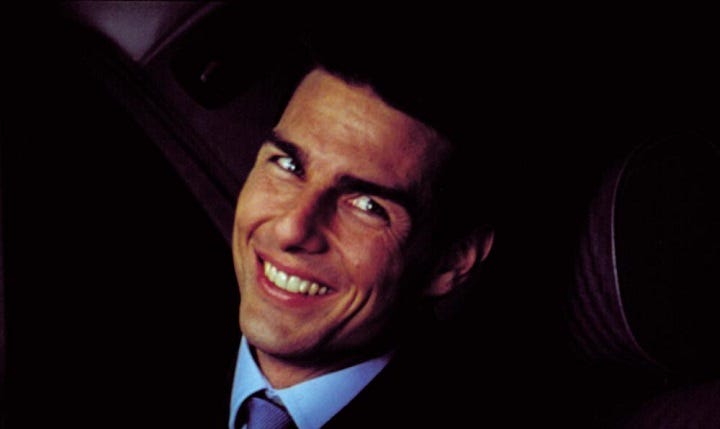
An example of karma: While filming at the Barrandov Studios in Prague, the chaotic production of Mission: Impossible decided to completely renovate a dressing room for Tom Cruise, including equipping it with a comfortable bathtub. A few months later, the people behind The Adventures of Pinocchio (1996) moved into the same studios and Martin Landau, who played Geppeto in Steve Barron's film, was shocked to see that his dressing room had all the makings of a four-star hotel.