
Joie de Verve

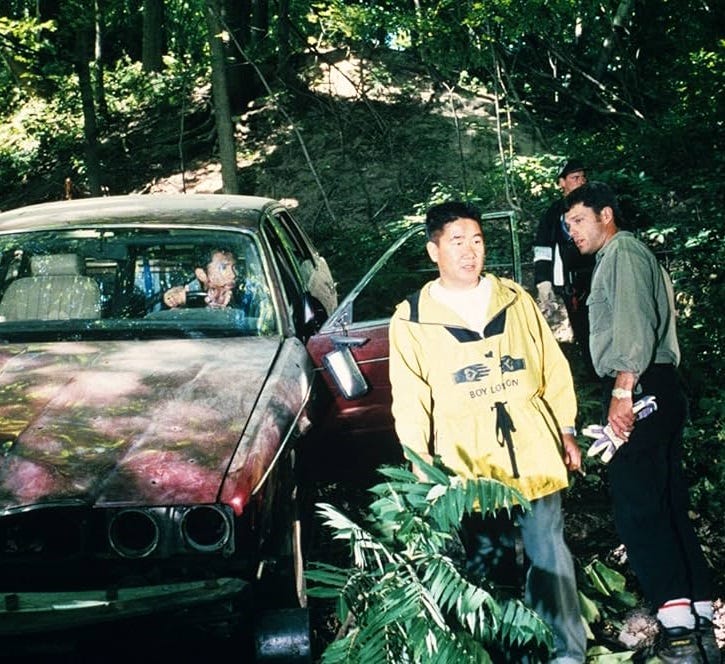
Mark Wahlberg and Lou Diamond Phillips starred in Kirk Wong’s The Big Hit (1998). Henceforth, all of the photos in this article are either stills or production shots from the making of this film. As a director in Hong Kong cinema, Kirk Wong was not really an action comedy filmmaker. He was known for his gritty crime dramas, so producer Terence Chang (also from Hong Kong) would have been better off hiring Ronny Yu (who he had a working history with). You don’t just sell a movie on the basis of its quality but on the past reputation of those involved. Ronny Yu had directed Kirk Wong in a Brandon Lee film called Legacy of Rage (1986). This was produced by the D&B film company. After leaving D&B in 1988, Terence Chang formed a production company with director Tsui Hark. Called Film Workshop, Kirk Wong found himself directing a film produced by Tsui Hark. Titled Gunmen, Tsui essentially took it upon himself to assert his directorial influence (especially since it was idea to do a Chinese version of The Untouchables).
Although they have different styles, Tsui felt comfortable with Kirk since he was familiar with him for a long time. Both men used to work for a film company called Cinema City. Kirk directed two films for them - Lifeline Express (1984) and True Colours (1986). Since Kirk was also a working actor, it was only natural that he would act in a Tsui Hark production. Kirk acted in I Love Maria (1988) and The Big Heat (1988). Kirk had even worked as a costume consultant for Tsui’s Working Class (1985). The French Impact magazine had interviewed Kirk for three issues - October 1989 (#23), February 1995 (#55) and August 1998 (#75). In the first issue, Kirk said the following about Gunmen (1988): “Tsui Hark wanted Gunmen to take place in Shanghai for a reason. He wanted to see the actress Elizabeth Lee walking around in a fur coat. Given the heat in Hong Kong, we had to find something else!”
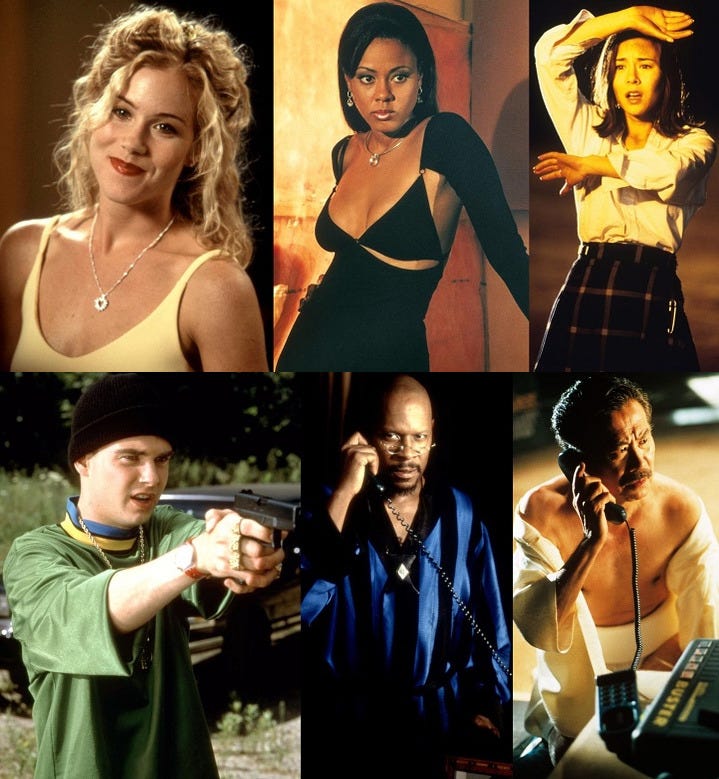
Kirk Wong and Tsui Hark must have been close because Lela Rochon (the black actress pictured above) went from acting in Kirk’s The Big Hit (1998) to Tsui’s Knock Off (1998). Back to Gunmen being covered in French Impact circa 1989, Kirk described the process of working with Tsui on this film: “It's very difficult to shoot for him. He's very demanding. But I also think it’s very difficult for him to work with me (laughs). We had different points of view on Gunmen. We also went over budget. Tsui Hark was constantly on my back during filming. I can laugh about it now, but it was really hard. For me, it's more of a love story than a thriller. Tsui Hark also wanted the villain not to be so bad. I wanted him to be even more evil, the kind that would kill a six-year-old girl! (bursts out laughing) Tsui's idea of making this guy almost sympathetic was good, but ambitious and complex to realize. It embarrassed me because it would have become the main theme of the film. For me, the theme is the love story between the police hero who cheats on both his wife and his mistress. Among our disagreements was the music for the finale. Tsui wanted it to resemble Ennio Morricone's score for The Untouchables.”
Make no mistake about it, they weren’t eternally at each other’s throats. Tsui Hark still liked Kirk Wong enough that he cast him to play one of the main villains in The Twin Dragons (1992). When this Jackie Chan movie was being made in 1991, Tsui and Kirk had their eyes mainly set on Jet Li for different reasons. Tsui was directing Jet for Once Upon a Time in China II while Kirk wanted Jet to star in a contemporary thriller called Crime Story. In the February 1995 issue (No. 55) of French Impact, Kirk was asked to explain why fewer directors work for Tsui or at least why they don’t work for him more than once. Kirk said: “Tsui Hark always has a lot of ideas, and he found himself facing people who had a very strong imagination, who had already built their own universe. The difficulty did not come from the production process itself, but from the fact that it was a question for the director of working with a producer as creative as him. In my case, I know that we wasted a lot of time in meetings, confronting our ideas. Which is both totally exciting and undeniably exhausting. That's why we decided to leave on good terms, without having the desire to start the experience again immediately.”
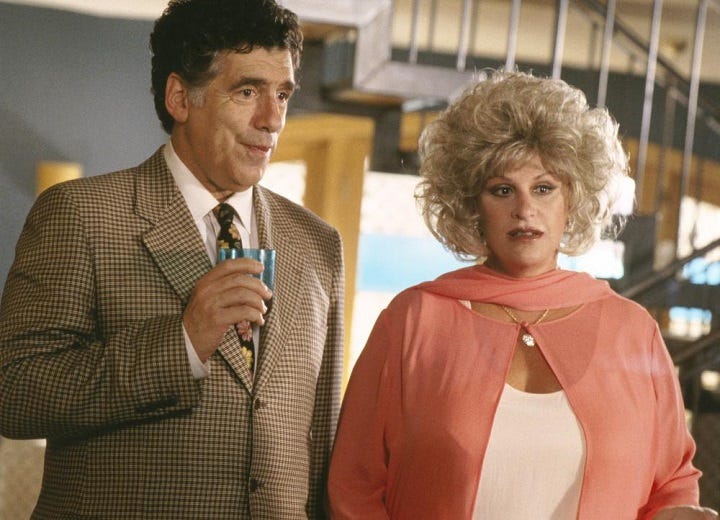
Kirk Wong met a policeman from the Anti-Triad Bureau who became his consultant for a trilogy of films about the Hong Kong police. Kirk said: “I was fascinated by what he told me, but at first, I introduced him to John Woo. I called John a few months later to ask him how things were going. He was determined to write the screenplay for Hard-Boiled all by himself, even though he had at hand an absolutely sensational testimony on how the Hong Kong police really work.”
To comprehend how weird that Kirk’s comment is, I should inform you that the screenwriter was Barry Wong whereas John Woo only wrote the story. According to producer Terence Chang in his 2023 memoir: “Barry Wong wrote a detailed synopsis and two-thirds of the script then went to Europe for personal matters. He originally planned to complete the script after returning to Hong Kong. Unexpectedly, he died of a heart attack while in Germany.”
To give you an idea of the timing, Barry Wong died in mid-October 1991 whereas the film was released in mid-April 1992. Back to Kirk Wong being interviewed for the French Impact magazine for their February 1995 issue, he talked about Crime Story (1993): “I had started with the idea of a low-budget film that wouldn't exceed a million dollars. I had already contacted an actor who quickly backed out. Then I asked Jet Li if he was interested, but after the success of the costume drama Once Upon a Time in China, he didn't think that acting in a contemporary film would suit him.”
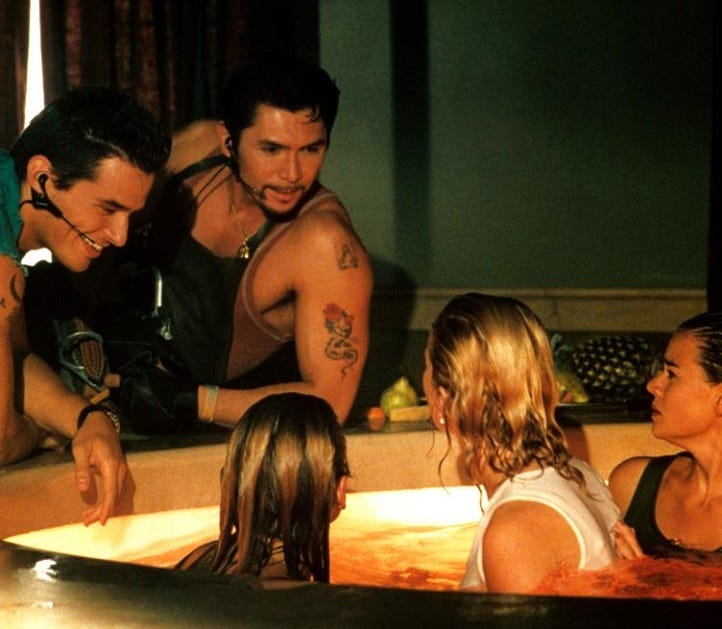
I have to interject here. Jet did want to do the film. Not only did he do a photo shoot with Kirk Wong and the cast, but he was dressed in character and they had already began filming. As a matter of fact, Jet’s manager was getting close in securing a film deal where Jet would co-star opposite Sylvester Stallone. I won’t go into any more detail about the Jet Li situation since I had already written a Substack article that addressed this - Bullets in a Bully. Back to Kirk Wong: “Finally, when I was starting to despair, I met Jackie Chan. I said: "Well Jackie, do you want to play the lead role in my new film?" Since I didn't have a final script yet, I added: "Your character is a hero, a cop who will have to fight in a scene from one end of Hong Kong to the other, fighting a hundred thugs." He didn't even have a second hesitation and immediately replied: "That's a great script. I'll do it right away!" It's the pure truth.”
In issue 48 (December 1993) of French Impact, Jackie Chan said of Kirk Wong: “He told me about Crime Story on the set of The Twin Dragons in which he played one of the bad guys. I accepted his offer after Jet Li withdrew from the production.”
Jackie began filming Golden Harvest’s Crime Story in May 1992. By this point, Jet was starring in Golden Harvest’s Once Upon a Time in China III - a few months after the death of his manager. When Jet was the star of Kirk Wong’s crime film, the title was originally going to be Beast Detective. Fastforward to that 1995 issue of Impact, and Kirk was asked if he had to change the Crime Story script because of Jackie Chan. Kirk said: “Not at all. The story is exactly the same as my original screenplay. The only difference with the original project is of course the budget, which increased tenfold after he signed. Otherwise, nothing has changed.”
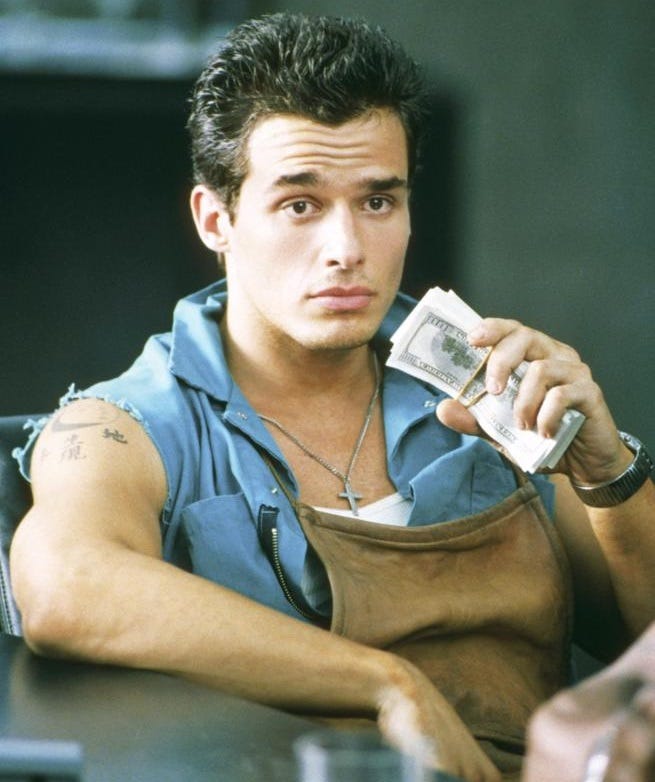
As for how the directing was decided: “Things were clear right away, because for me it was not a question of doing action in the style of Jackie Chan. First of all, it is a style that is foreign to me. Secondly, it would not have meant anything in the context of this story. I did not want a funny Jackie in semi-comic fights. So we discussed it. I explained to him that by considering the action scenes from a different angle, he would change his image, he would be able to go further. I think that at this stage of his career, Jackie wanted to experiment with something new. I added that in my opinion many people had long wanted to see him in a more serious, more mature role, and this is a point on which he completely agreed.”
Kirk Wong’s second installment of his police trilogy was Organised Crime and Triad Bureau (1994): “While I was shooting Crime Story, I was walking down the street already thinking about the locations for the next film. I wanted Danny Lee, the cop in John Woo's The Killer, for the lead role and he accepted, even offering to produce it.”
The final gunfight of Organised Crime and Triad Bureau crosses the whole district of Wanchai: “I assure you, it's impossible! But we were lucky. Danny Lee is indeed very friendly with the big shots of the Hong Kong police, which allowed us to get their collaboration on many scenes in the film, as well as the possibility of shooting in the middle of Wanchai. Obviously, we didn't have official authorization, but the cops on patrol, if they stopped us from time to time, generally turned a blind eye. So we shot the scene over several weeks, every Sunday. A challenge!”
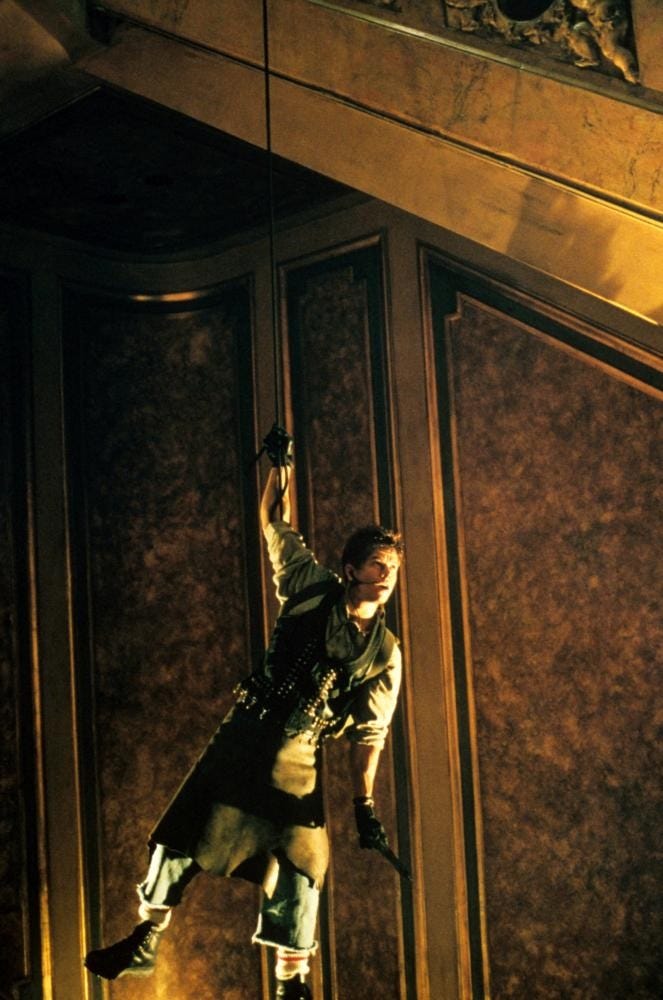
In the June 1998 issue (No. 75) of French Impact, it was revealed that Gunmen (1988) was Kirk Wong’s only only film to have been released in French theaters. Kirk explained how he got involved with The Big Hit (co-produced by John Woo and Wesley Snipes): “Producer Terence Chang found this project for me. Knowing me very well, he was convinced that The Big Hit would please me, would make me feel comfortable for my first American film. When I read the script, I was immediately enthusiastic about this story that is both lively and funny. I was seduced by the irony of the dialogues and the situations that, in my opinion, reduce the violence of the film while intensifying its pace. Despite the slightly wacky side of this story, we find several elements already present in my previous films: stunts, chases, gunfights... And I also particularly liked the atypical treatment of the characters, very different from classic killers. We have the impression that they improvised as assassins by watching too many gangster films from the 1930s. This direction interested me because it contributes to the second degree of the film. which has nothing to do with the humor as particular and refined as that of the French! (laughs)”
Kirk explained how he adapted to the American humour: “Very easily, since the script in its original state already made me laugh a lot. On the other hand, more generally, the rest of the team wondered if I could fit in to the American way of constructing a narrative. The executives didn't know if I was able to understand Jewish traditions, for example. Finally, they were surprised to learn that the kosher cookbook used in the film belonged to me! I grew up in Hong Kong, which is a cosmopolitan land, I watched films from all over the world - many of them from the United States. I also spent a few years studying in England. In a way, American, Anglo-Saxon humor is easy to assimilate. It is a relatively direct style. People often have trouble understanding why the French laugh at this or that thing. French humor is generally related to social life, politics. To appreciate it, you absolutely have to live in France, otherwise it escapes you. The American style, on the other hand, is much more obvious. If their cinema works so well, it is because everyone is able to understand it.”
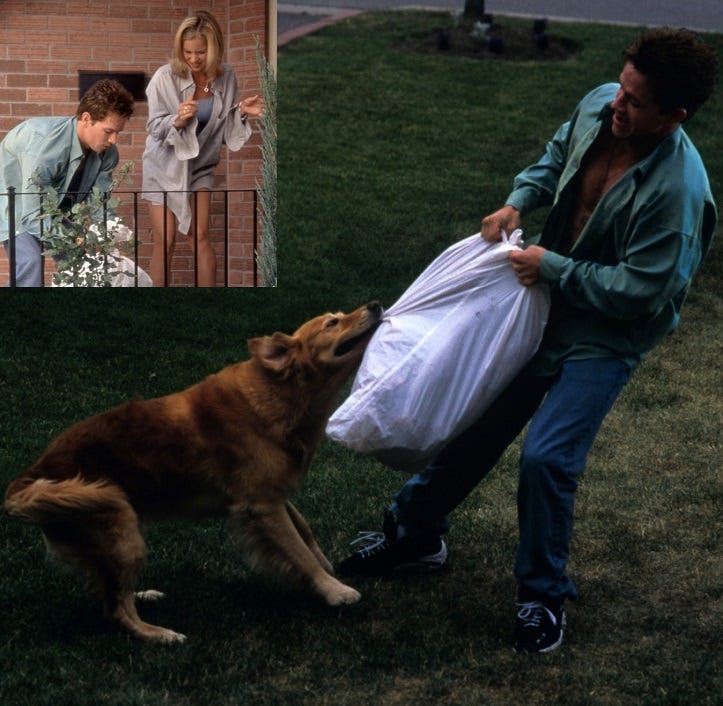
As to whether Kirk changed the screenplay: “Without radically changing it, I reviewed the script every day, because you constantly have to respond to new requirements and review certain scenes with the actors. During rehearsals, new ideas are proposed and you have to find a way to insert them into the script. Of course, you have to report to the studio managers, warn them of major changes you make to the story, submit the part you want to change to them for approval. American studios don't like surprises. When they give you money to make a film, they like to find the story intact when it arrives. So we were in constant contact with the executives, who were very cooperative and very supportive, since they liked the rushes. To avoid having them on your back, you just have to gain their confidence.”
The studio imposed some censorship: “They still asked me to lighten up a few scenes because they found them too violent, and to remove the one where Crunch masturbates at home. For them, it was out of the question to use it. We still included it in the editing for the first test screening and it was very well accepted by part of the audience. The other part, more conservative, simply rejected it.”
Working with the U.S. actors during the action scenes: “You have to be aware of the rules that you have to follow, the things that you can't afford to impose on the actors. But I was surrounded by a good troupe of actors, real athletes who never hesitated to play daredevils. They wanted to do their own stunts, trusted me, and sometimes seemed unaware of the danger. They always wanted to do more. So I had to be behind them all the time to reason with them, to explain to them that they didn't need to take these kinds of risks because I had surrounded myself with stuntmen specially flown in from Hong Kong to take part in the most dangerous scenes. Each actor was trained, sometimes up to 4 hours a day, and psychologically prepared for the action and combat scenes. We supervised them in the same way as in Hong Kong.”
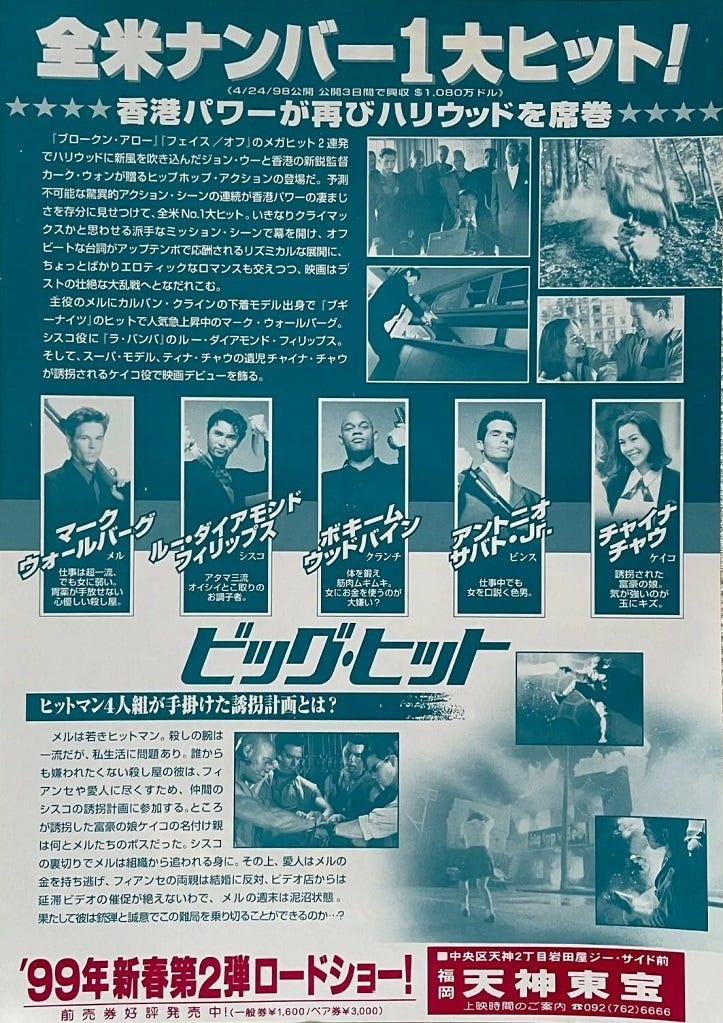
It's hard to get an idea of the real Kirk Wong: “Oh yeah, THE REAL Kirk Wong! (laughs) In Hong Kong, no one would have ever let me make a real comedy. There, they want pure Kirk Wong: for them, I'm not a joker! For some time, I've been waiting for the opportunity to try new things, and Hollywood has given me this chance. I don't want to limit myself to a single genre, the thriller, but to touch on all styles. In this sense, The Big Hit was a good experience because I find that its cocktail of action and humour works wonderfully. So I'm more confident about the comedy genre. Besides, in the future, I think I'll add a real humorous touch to each of my films, even the most explosive ones. It's so gratifying to hear the audience laugh at the right moment.”