
Gushing Disgust

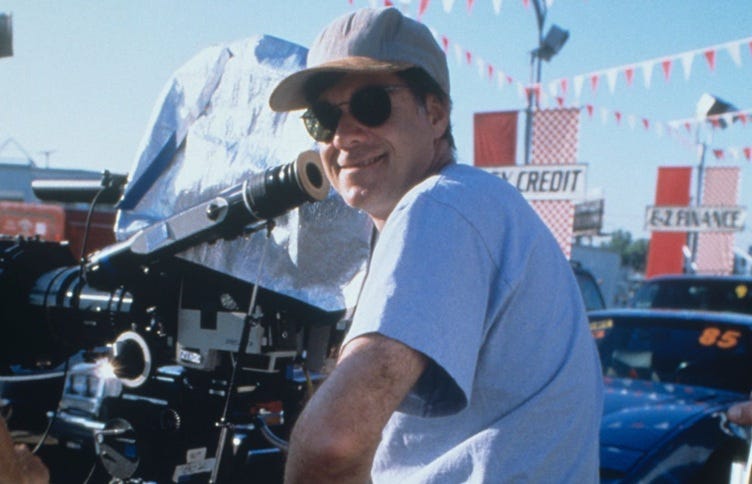
Gus Van Sant’s Psycho is misunderstood. When he bravely decided to remake the 1960 adaptation of a 1959 novel, Gus didn’t announce the entirety of his intentions because it would have got him blacklisted by Hollywood. When he made his decision in 1997, it was three months after the release of a similar project i.e. Adrian Lyne remade Stanley Kubrick’s 1962 adaptation of a 1955 novel. What Lolita had in common with Psycho was the idea of a man getting too close for comfort with a woman for his own good. In 1997, Gus Van Sant achieved major success for Harvey Weinstein with Good Will Hunting. A few years later, Gus played himself in Kevin Smith’s Jay and Silent Bob Strike Back (executively produced by Harvey).
Like his self-deprecating cameo, Gus personifies what it means to be an ironic indie filmmaker; and not just because of his cameo in Psycho where he is antagonized by an Alfred Hitchcock lookalike. When Gus decided to cast Vince Vaughn and Anne Heche, they were already starring in a remake i.e. Return to Paradise (1998) is a remake of a French film called Force Majeure (1989). When people remade French films, it was because most Americans were put off by subtitles. When people remade black and white films, it’s because most people prefer colour. It’s a sign of Gus Van Sant’s awareness that he attended the premiere of Return to Paradise on August 10, 1998. By that point, he was a month into filming his remake of Psycho.
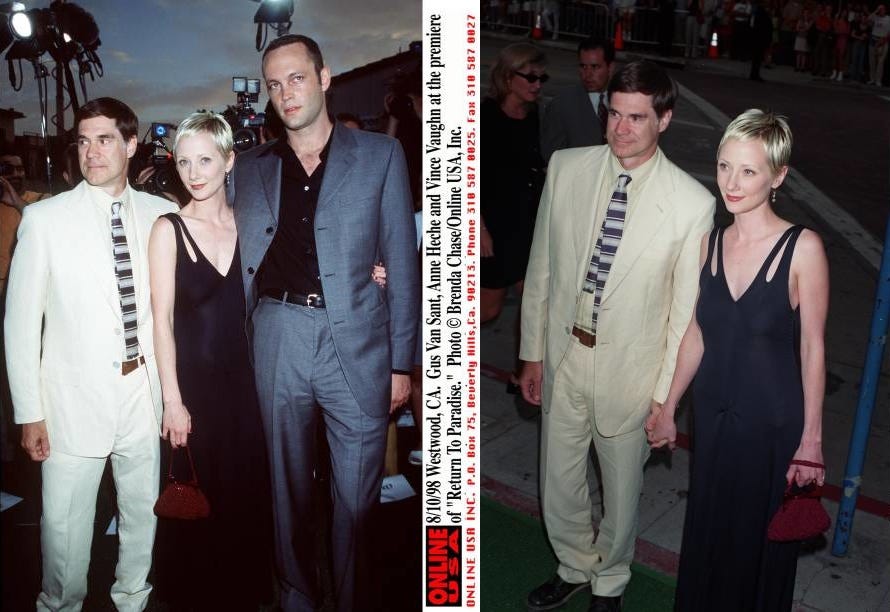
In Return to Paradise, Vince Vaughn and Anne Heche played lovers. In Psycho, it was quite the opposite. When attached to both films, Anne was already an outsider to the Hollywood system in that she was in a publicized relationship with another woman (Ellen DeGeneres) and she had rejected the advances of Harvey Weinstein. The latter was regarding the casting of Beautiful Girls in 1994. The irony was not lost on Gus Van Sant when Lolita came out in 1997. Anne Heche had yet to publish her memoir, Call Me Crazy i.e. 2001 was when people learned about her sexual abuse at the hands of her father.
A sad footnote to this story is the conspiracy theory surrounding Anne’s death on August 11, 2022. The theory goes that she was murdered because of her role in a Lifetime movie (Girl in Room 13) which was said to be a reaction to the case of Jeffrey Epstein, who died on August 10, 2019 - the 21st anniversary of when Anne attended the premiere of Return to Paradise. Adrian Lyne’s Lolita was an extension of the perverse portrayal of Shirley Temple’s characters. In 1990, Gus Van Sant had directed an actor who had been abused i.e. River Phoenix in a gay film called My Own Private Idaho. Coincidentally, Psycho had some of its filming done in Phoenix, Arizona. Gus had earlier directed River’s brother, Joaquin, in To Die For (1995) and again in Don’t Worry, He Won’t Get Far on Foot (2018).
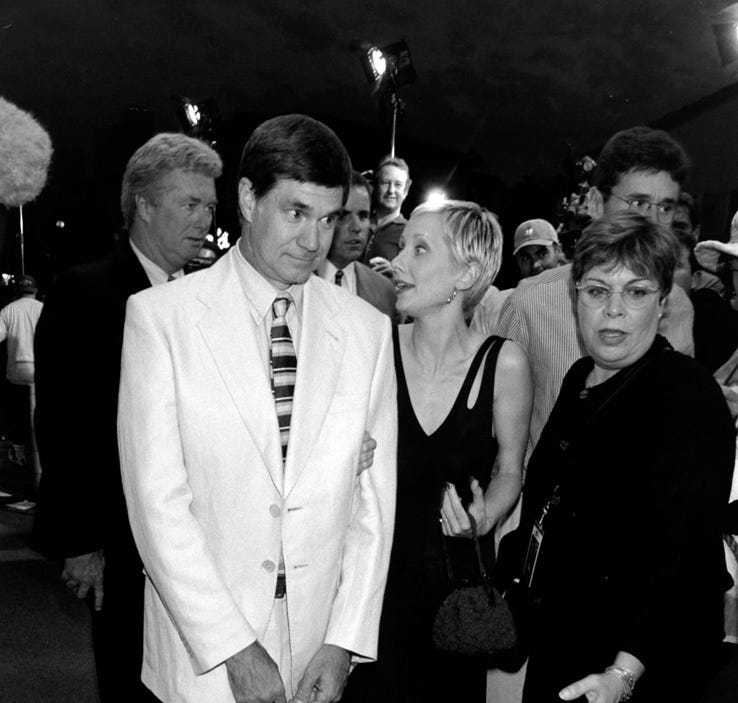
Gus Van Sant is gay, and directed a 2008 gay film (Milk) starring Sean Penn. In doing so, he consolidated the trope of not having anything to do with the subjugation of women on film. Make-up artist Elaine L. Offers was a common denominator between Psycho and Return to Paradise. She applied her services to Anne Heche one more time for The Third Miracle (1999) before becoming Julianne Moore’s regular artist; the significance being that Moore co-starred in Psycho. Moore’s connection to the WLW community is not just the number of queer women who she’s socialized with or worked with, but the amount of times that she portrayed such women.
The most iconic image in the Psycho remake pertains to the poster depicting Anne Heche’s left hand going down the bath curtain. It could be seen as a reaction to the lampooned right hand on the window shot during the steamy love scene in Titanic (1997). The choice of the left hand is strange because Anne Heche’s character reached out with her right hand like in Alfred Hitchcock’s original adaptation. The choice of the left hand is symbolic because a woman is supposed to wear a thumb ring on her left hand to show that she is a lesbian. The very notion of thumbs in a gay context plays a literally big part in Gus Van Sant’s Even Cowgirls Get the Blues - a 1993 adaptation of a 1976 novel. This featured Rain Phoenix, who Gus later directed in To Die For.
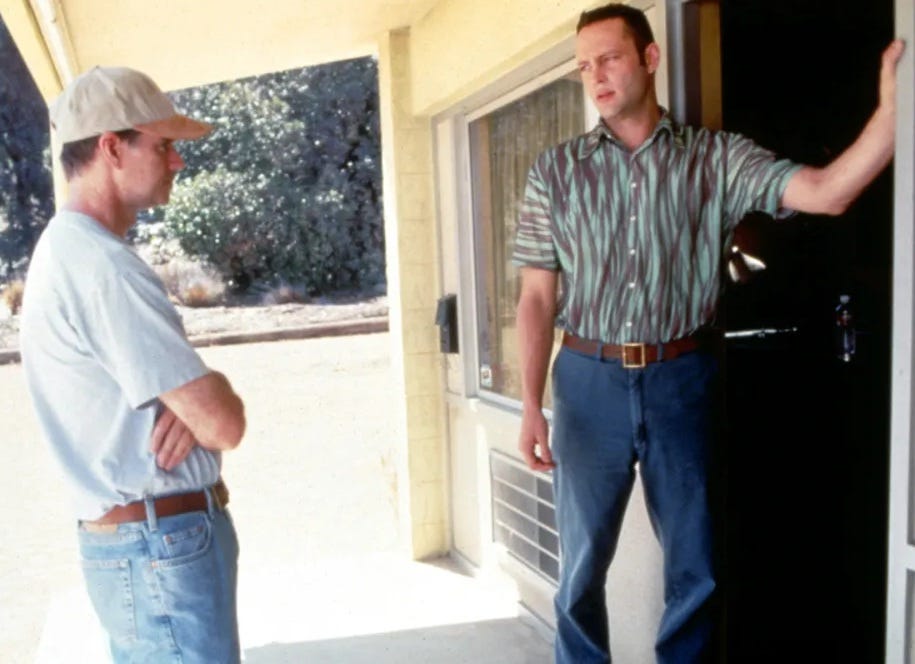
What cements the connection between the late ‘90s remakes of Lolita and Psycho is the employment of a camera operator who specialized in aerial cinematography i.e. Ron Goodman. When it came to literally handling both films, Gary Burritt was employed as a negative cutter. Both films contain songs co-written by Jimmy McHugh and Dorothy Fields. Gus Van Sant’s Psycho had On the Sunny Side of the Street while Adrian Lyne’s Lolita had I’m in the Mood for Love. Jo Stafford sang on the former whereas she sang on a different song on Lolita i.e. Tim-Tayshun by Arthur Freed and Nacio Herb Brown. I’m in the Mood for Love would have been a good choice for Gus to use because he is a friend of Christopher Doyle, who was later the first cinematographer for Wong Kar-Wai’s In the Mood for Love (2000).
As a fan of Hong Kong cinema, it appeals to me that Gus thanked John Woo for his kitchen knife in the closing credit sequence of Psycho. Woo, himself, was on the verge of remaking Hitchcock’s Notorious as Mission: Impossible II (2000). Jack Carpenter worked on the stunts in Psycho but operated a car with a camera in it for Lolita. Ultimately, both films are about how the death of a mother instigates a disturbing chain of events. Despite their obscene crimes, the evil male protagonists are incarcerated instead of killed. While 1997 Lolita is more serious than 1962 Lolita, the reverse is true for Psycho. This type of irreverence adds to the typically meta nature that you would associate with an indie filmmaker. I recommend Thomas Leitch’s 2001 article: 101 Ways to Tell Hitchcock’s Psycho from Gus Van Sant’s.