
Fait Accompli

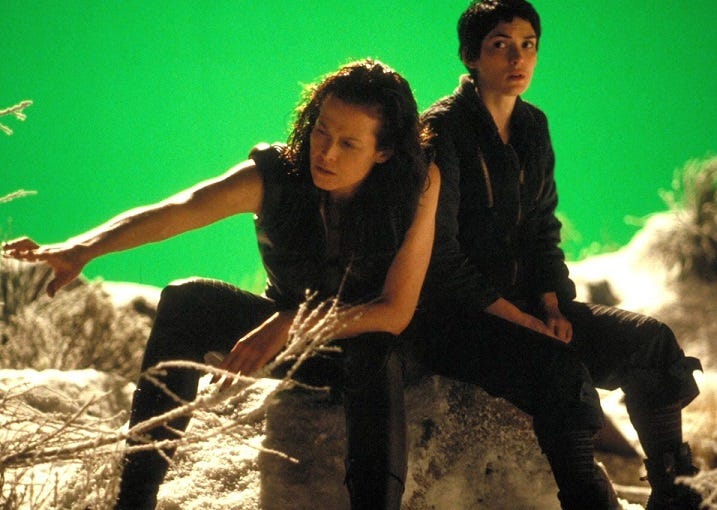
Alien: Quartet could have been the title when you think about the ending. In the November 1997 issue (#110) of a French magazine called Mad Movies, the director of Alien: Resurrection was interviewed. There are two sides to the story about Joss Whedon’s screenplay. What was printed in the nineties doesn’t stay in the nineties, and they can’t take back what they said. Director Jean-Pierre Jeunet talked about his reaction to the script: “In Joss Whedon's original script, there was really too much stuff. The story was too dense. It was necessary to prune, to cut from the mass, the volume of events, characters and special effects to come. It was also necessary to review this ending that I did not like. In this respect, the executives of 20th Century Fox agreed with me. It was necessary to modify this conclusion which took Earth as its setting. To close Alien: Resurrection there would have required considerable means. So we wrote four different endings in the hope of bringing down costs. I wrote two. In desperation, not being able to fit this part of the film into our budget, I took it upon myself to wrap it up in the ship, to end on a note closer to the first two films in the series.”
As for the co-director of Delicatessen and The City of Lost Children, Marc Caro is referenced: “When I called Marc to tell him about my troubles, he would answer me: “I don't know how you can resist that. I would crack!” But I envy him, even knowing that I wouldn't be able to resist. The fact remains that Marc worked on the film. Very discreetly. On a few sketches of hairstyle, costume… There are still a few details on the screen. If you look closely at Winona Ryder, you will see that she is wearing striped socks. That's pure Caro!”
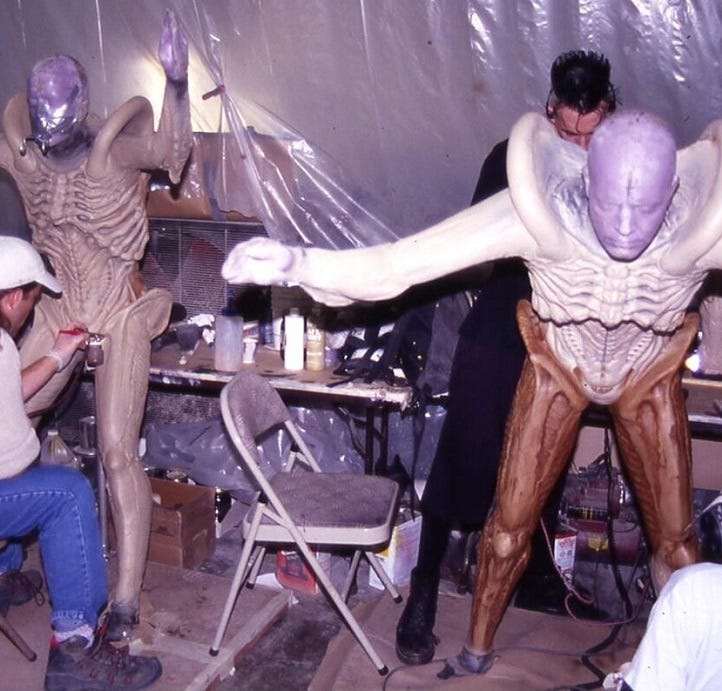
Being in osmosis with the leading lady: “Working on the script with Sigourney Weaver, I noticed that she particularly appreciated the sensual, ambiguous and mysterious side of Ripley. I rushed into this, proposing lots of ideas, modification to stick as closely as possible to his vision of things. It was her desires for the character that drew me pushed to perform certain sequences. Like the one where Ripley falls into the Queen's lair, where a creature carries her in his arms, caresses her. I grafted a lot of stuff onto Joss Whedon's script, ideas that are very much my own like the tiny spider on its web which scares Ron Perlman, the alcohol cube that a laser liquefies, this breath vaporizer that allows you to open doors, by Brad Dourif imitating the alien behind the armored glass..... I have adapted my universe to that of Alien. It was strangely easy because, when you are not the author of the script you are working on, it is a game, a pleasure to add extra details. Write a script is a pain, something difficult. Intervene on someone else’s manuscript; it's quite the opposite. Authentic happiness!”
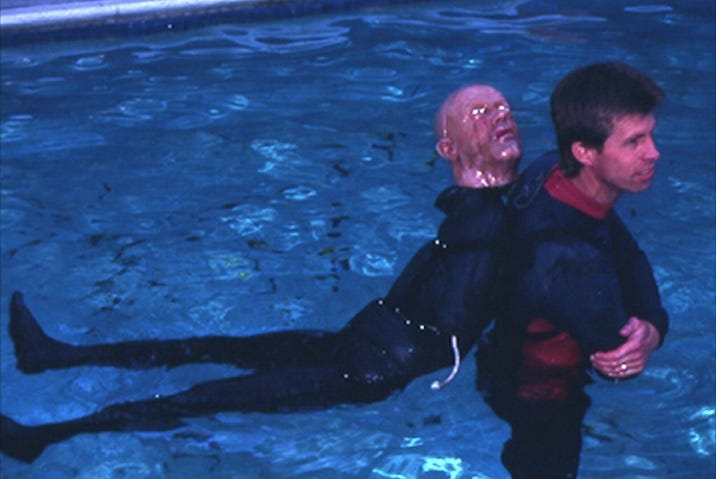
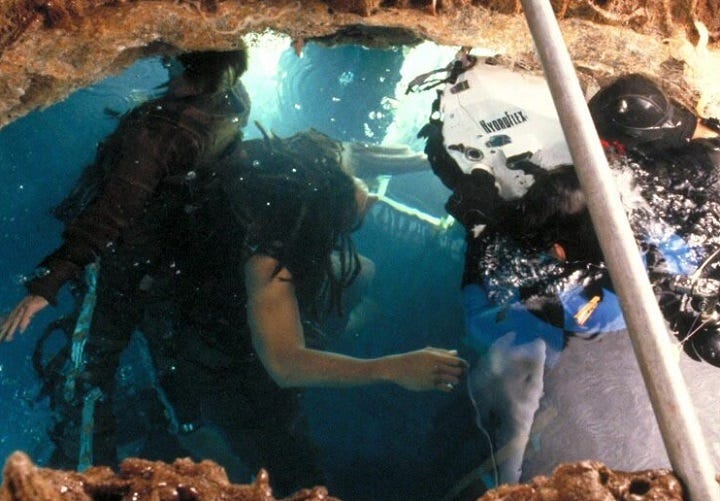
Jean-Pierre Jeunet is accused of being a ghost writer who wrote under a nom de plume: “In Joss Whedon's original manuscript, I have found scenes already present in Delicatessen and The City of Children. An example? Call/Winona Ryder falling into the water and sinking to the bottom. It's already in The City of Lost Children and in Delicatessen, in the form of an aquatic kiss. I forgot, while filming Dan Hedaya as General Perez frantically polishing his shoes, I realized that I had shown this scene in Delicatessen. The similarities abound!”
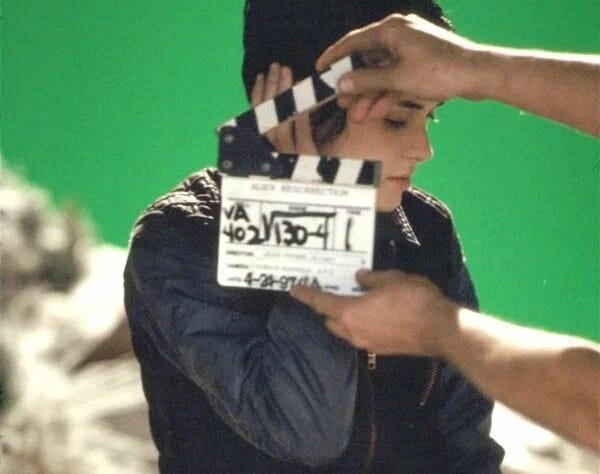
JPJ’s own contributions: “Working on the storyboard, I set myself the goal of adding one personal idea per sequence. As soon as a scene didn't satisfy me, I needed to take it over. Sometimes, I only added a tiny detail. Sometimes, I completely changed it, I set it elsewhere. In Alien: Resurrection, I also brought my sense of humor. Humor isn't really the strong point of the first three films. However, I warned my contacts at Fox that I wouldn't be able to stop myself from adding some. At the preparation stage, I tested them. I could see that I was going in the right direction. On set, however, I was a little worried about the accuracy and appropriateness of this humor. I didn't know if it would hit the mark, I was afraid of overdoing it a bit. Being humorous is not really the spirit of Alien. Fortunately, the first public screenings proved me right. By reacting favorably, the spectators reassured me.”
Joss Whedon was often blamed for all the humour but JPJ said: “Sometimes, I was close to the red line that should not be crossed. In particular when General Perez notices the open fracture of his skull. There, we are more in the butchery of Delicatessen than in Alien! The character of General Perez, I also conceived him with an anti-Independence Day perspective - rather make fun of him a little than make him a glorious military man. I took a mischievous pleasure in sprinkling Alien: Resurrection with elements likely to offend the sensibilities of Americans. There is also this sequence where the pirates watch a teleshopping program exclusively devoted to weapons. All this to say that the most powerful weapon is the alien’s acid blood. There is nothing in the world more stupid than American television. As for the actor who plays General Perez, Dan Hedaya, he lent himself to the game with relish: he loves it!”
The luckiest foreign director to work in Hollywood: “I did not suffer from the constraints of this system, from close surveillance by zealous executives constantly present on the set. I know that others have endured this treatment. I did not have to account for my actions on a daily basis. I benefited from a great deal of artistic autonomy. To tell the truth, they hired me so that I would bring something to the film, my universe, my sensitivity... So it was not in their interest to put spokes in my wheels. I am totally responsible for Alien: Resurrection. Of course, I had to defend my choices. Concerning the casting in particular. I had to fight to impose the actors I wanted. Concerning the editing as well. Everyone was pitching in to reduce this, accentuate that, in order to improve the narrative. That's where the battle was the toughest. In fact, at the end of the actual shoot, Terry Gilliam, visiting the set, told me, "You think you've resisted the pressure, but the real pressure starts today. In the editing room." He was right. I have to admit, though, that the remarks, the studio's observations are generally well-founded, intelligent. However, I had to defend my point of view.”
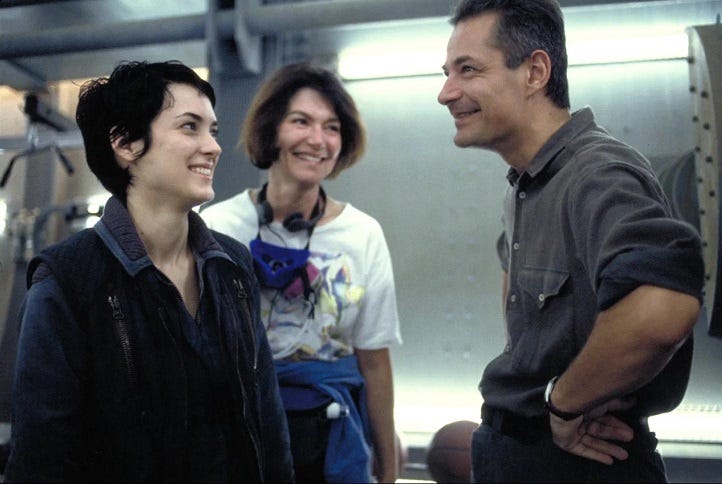
Interestingly, someone online described the film as Terry Gilliam meets Eli Roth. JPJ spoke less English than John Woo but that didn’t matter because JPJ had a translator who went on to become a film director in her own right - Aruna Villiers: “A real phenomenon because she translates simultaneously, like subtitles accompanying images. When I finished a sentence, she finished it at the same time, to the nearest fraction of a second. Incredible. During the American promotion of The City of Lost Children, she was already at my side. Her presence allowed me to reassure the bosses at Fox about my ability to direct a film without speaking the language of the country. Thanks to her, I was able to speak normally, to limit the loss of time inherent in an ordinary translation.”
It wasn’t all smooth-sailing: “Of course, the process was sometimes a little difficult, mainly in the dialogue sequences. Since Alien is not Bergman, it was not a big deal. Sigourney Weaver also helped me a lot. When we had to rewrite, adapt the dialogues on the set, she would put on her glasses and, right on the floor, we would start working. A precious help. Not so much in the sense that she speaks French, but rather because she wanted to move on to directing. She therefore attaches great importance to the text, to the project as a whole. To tell the truth, my ignorance of English was not a major obstacle.”
The basketball game between the space pirates and Ripley: “At first, I worked on a first storyboard of the sequence, then on a rehearsal with stuntmen since we were at that point in a fight. Then Sigourney Weaver arrived, with lots of ideas as always. She convinced me to change everything, to abandon the initial concept of a confrontation between Ripley and the pirates for a new basketball game. I went back to work on these bases.”
Why we should be lucky that the film wasn’t PG-13 like Alien vs. Predator (2004) or a Marvel movie: “Joss Whedon's script didn't skimp on gore. I didn't hesitate to take the same direction. In three films, the audience has gotten used to aliens. They're not as scary as they used to be. To restore fear, I therefore insisted on violence, the damage they inflict on their victims. I asked Fox how far I could go with the gore. To my great surprise, its bosses gave me carte blanche, claiming that the film is not aimed at children, that it will inevitably be rated R.”
The discovery of the laboratory full of degenerate clones turns the stomach: “This is not a sequence that I initiated: it was in the script. On the other hand, I visualized it by drawing inspiration from photos of malformed children to give the clones a semblance of realism.”
Joss Whedon was also interviewed for the French magazine: “The first two words I heard on the subject were Jorge Saralegui. This executive from 20th Century Fox once told me: It is high time to produce a new Alien. He was thinking in terms of a franchise, with the aim of bringing money back to the studio. But Jorge Saralegui liked the series beyond the purely financial aspect. Knowing me through Buffy: Vampire Slayer, he asked me if I would be interested in writing the first draft of the next Alien. I didn't yet appreciate the difficulties of such an undertaking. When I was first asked how I was going to go about it, I didn't know how to answer. I simply asked them for a little time.”
The genesis of the story: “This synopsis spoke of Newt, the little girl from Aliens, androids and the despotic power of the Company. I don't want to dwell on this too much because some malicious person could very well plagiarize me.”
Joss is accused of being a tad Hollywood but he balked: “Not in Hollywood where ideas are worth gold and are so easily stolen.”
After the Newt story was scrapped: “They now wanted me to place this new Alien in the continuity of the previous ones. They were also looking to see if Sigourney Weaver might still be interested in it. I quickly understood that I would have to come up with an idea to bring Ripley back to life. An idea on which the entire project was based, an idea that should not be just a clever gimmick, a script pirouette so transparent that the viewer would immediately switch off. I searched to arrive at the following conclusion - if someone managed to sell Jurassic Park on the basis of the cloning of dinosaurs that had been extinct for millions of years, why would people give less credence to the resurrection of a character who had died recently? Of course, there are people who have said that's a stupid idea! At first, I rather tended to believe them. Finally, I convinced myself that I was to write a meaningful story.”
The justification: “The Ripley of Alien Resurrection does not bear the stigmata of the Ripley that we know. Like a superhero or the monster of Frankenstein, she is now more than human. You can't get over your death without suffering some after-effects, without fundamentally changing. You no longer belong to the norm. Ripley thus shows herself to be morally ambiguous. It is impossible to determine which side she is on, which species she belongs to. She is a force of nature that you cannot understand intimately.”
About Sigourney Weaver: “I was afraid that she would stay away from this concept, that it would intimidate her despite her desire to embody a character on the edge of the mud. I was afraid that she would want to return to a Ripley who was either glamorous or purely heroic.”
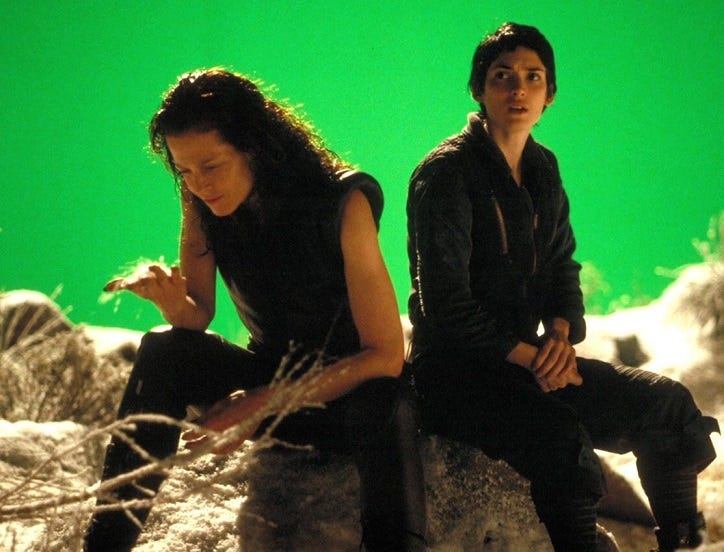
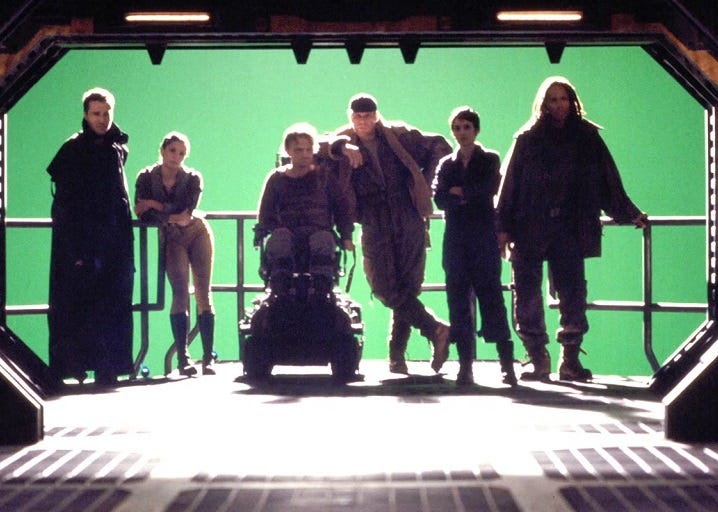
The challenge: “Not only did I have to resurrect Ripley, but I also had to surround her without falling into the déjà vu. In the first Alien, you have the crew of a transport ship. In the second, armed soldiers. In the third, guys between monks and prisoners. I wanted to see The Wild Bunch in space. I wanted to see pirates, b@stards, gallows game like Jesse James forming a motley group. It is these brutal, rough men who further elevate Ripley, who give her, by their proximity alone, her stature.”
Another influence - a film by a director who is also a fan of Hong Kong action cinema: “When writing the screenplay for Alien: Resurrection, I referred to one film in particular. Even though I recognize a certain kinship with The Poseidon Adventure in the survivors' escape towards an emergency exit, it was essentially Evil Dead that guided me. Its first half hour remains very effective, frightening today. Nothing happens, but you are in the imminence of something horrible, of the irruption of horror. Sam Raimi lays the foundations for the events to come. He places the pieces, the characters on the chessboard. He waits a good thirty minutes before giving the green light to the forces of the beyond. From then on, it doesn't stop for an hour. There is no question of letting the spectator rest. He maintains a constant pressure. This is the very key to the screenplay for Alien: Resurrection.”