
Érotique Démon

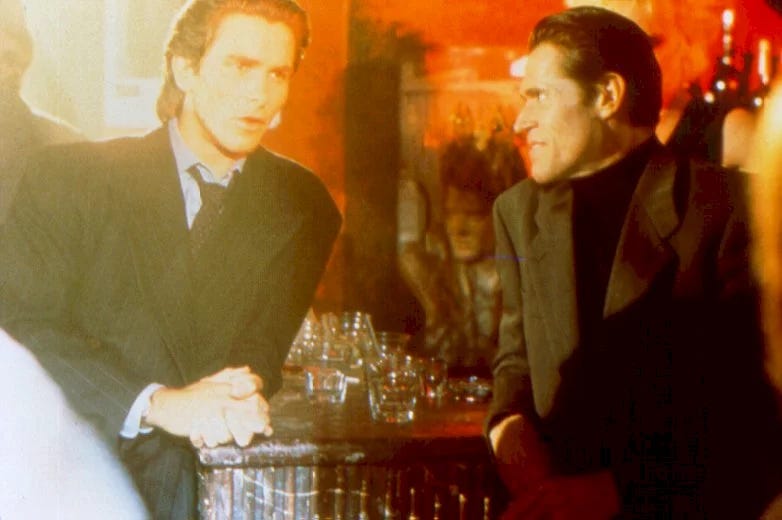
These two men had played Jesus Christ in separate films. For Christian Bale, that puts the Christ in Christian. But for most people, he went from Bateman to Batman. Anyway, the February 2000 issue (No. 84) of the French Impact magazine had a feature about American Psycho. Director Mary Harron's first choice for the role of Bateman, Christian Bale found himself sidelined when Leonardo DiCaprio took a keen interest in the project. After much hesitation (and a six month wait for production), DiCaprio finally chose to go on vacation by starring in The Beach. Mary Harron had barely gotten Christian Bale back into the fold when she had to fend off a takeover bid launched by Oliver Stone, who no doubt saw in American Psycho the opportunity to give us a hardcore remake of his formidable Wall Street (1987). Mary won the battle and filming could finally begin in Toronto, where many demonstrators were waiting to relay the recent statements of Paul Bernardo: this Canadian serial killer had confessed that himself and his wife had been inspired by the novel American Psycho.
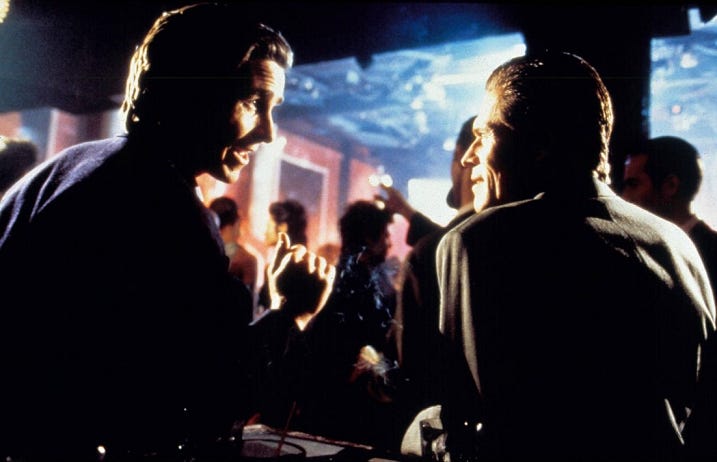
When Christian Bale was interviewed by Didier Allouch, he said something that made me wonder how little that he thinks of Tom Cruise (given how Bale talked elsewhere about being inspired by how Cruise projected himself in an interview). When asked how he approached the character of Patrick Bateman, Christian said: “Bateman is an actor. All day long, he is in permanent performance. I decided to approach him by making him a kind of bad actor who gives an almost always exaggerated vision of reality, a vision also disturbed by his total absence of conscience. Bateman can do anything because he has no rules, no limits. For me, it was a joy to play such a character.”
Christian’s view of the America depicted in the film: “I'm English, I didn't know the America of that time or its rampant materialism. But, to prepare the film, I met some Wall Street brokers. They revealed to me that they earned more money today than in the ‘80s, but that they were not at all the same. At that time, they considered themselves rock stars - the masters of the universe. They lived in a kind of permanent glamour, basing their lifestyle on magazine shots. They were empty. They were vain. They were Bateman.”
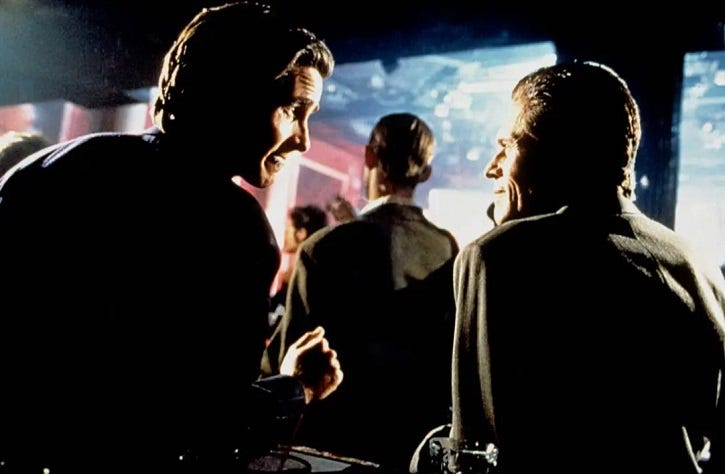
How Christian chose to move on from playing him: “Right after American Psycho wrapped, I played Jesus Christ in a TV movie. I needed to redress the balance, and compared to Bateman, Jesus fit the bill!”
As for director Mary Harron, she was asked how she approached the adaptation: “With my co-writer, Guinevere Turner, we took our favorite scenes from the book and tried to create a narrative that would tie them together. We also decided to keep the dialogues as much as possible, they are so brilliant. Almost all of Patrick Bateman's monologues in the film are almost literal transcriptions of those that can be read in the novel. Contrary to what we initially believed, the adaptation went quite easily. It was just a matter of finding the trick.”
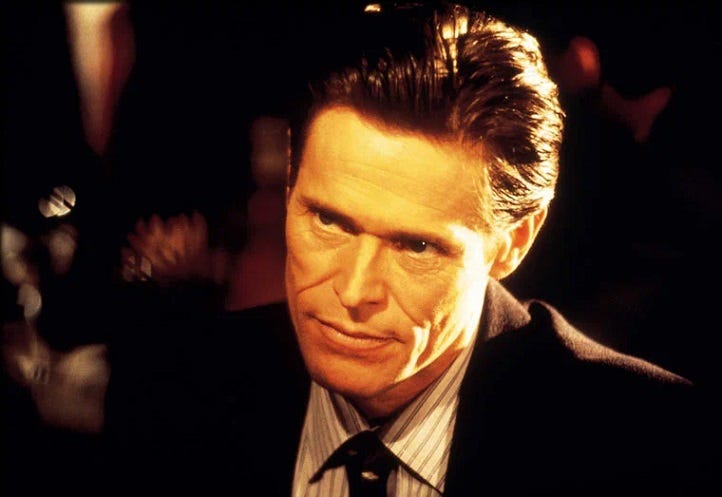
Visually referencing a classic film - both directly and indirectly: “I wanted the notion of reference to horror films to be well specified in the film. Bateman is a totally empty character who fills himself with what surrounds him. He builds an identity by reading magazines, his sexual behavior comes directly from the p*rn he watches... In the same way, he reproduces the murders he saw in horror films. In addition, The Texas Chainsaw Massacre is a cult film that I love, because it expresses terror like never before on a screen, by taking a step back and without showing too much. Exactly what I wanted to do with American Psycho.”
The struggle to adapt in the pre-production stage: “You can't imagine how much! When Leonardo DiCaprio and Oliver Stone expressed interest in the story, I almost lost my film. But when they walked away from the project, I was able to take over, shoot the film with the actors I wanted and the money I needed. Now, I still have to fight to avoid American Psycho being banned for under-17s because of a sex scene. But I know that if I want to continue working in cinema, my life will be a succession of battles to be able to say this is my film. And I can proudly say it today: American Psycho is my film.”
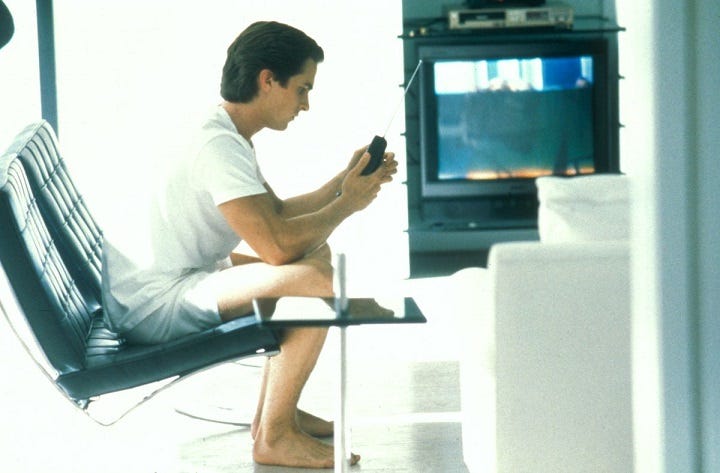
In the April 2000 issue, French readers experienced the “To be continued…” feeling of American TV shows when they purchased issue #85 of Impact. Director Mary Harron was referred to as Batewoman. Mary was reminded that the American Psycho novel was called the most terrible horror novel ever published. Her observations: “When I read the book in ‘91, I found that it was the work that captivated the absurdity of the first covers that captivated the obsessive competition for luxury goods, the 80s, the disturbing fixation around prestigious restaurants. In short, everything that made up this culture of emptiness, whose heroes were the young Turks of Wall Street. I found that Bret Easton Ellis had succeeded in a perfect satire of this society within an excellent horror book. I absolutely wanted to respect this balance. For example, the novel alternates scenes of ultra-violence with entire chapters on Bateman's discographic analysis of his favorite singers. I think these passages described the inner monstrosity of the hero as much as the abominations he committed. In the film, I integrated these monologues on pop music into the murder scenes. Before Bateman attacks them, he tells them what he thinks of Whitney Houston or Phil Collins. I think it was a cinematic way of recreating the unease felt when reading the novel.”
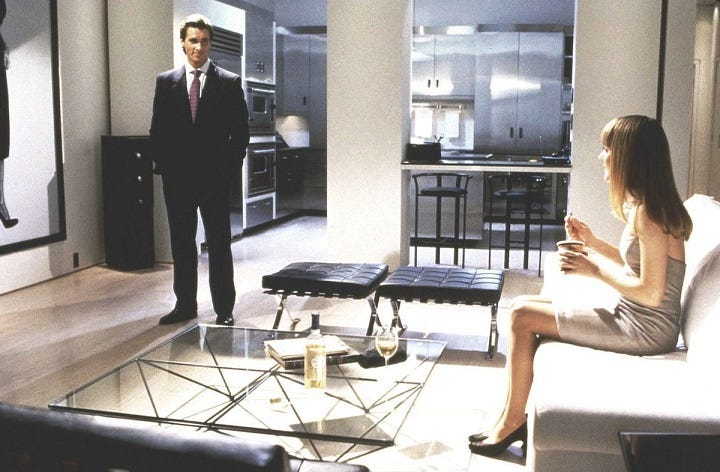
The novel was long seen as an apologia for machismo, and many people didn’t know what to think about a woman being at the helm of this adaptation. It begs the question if things would have been different had it been directed by a man. Mary admitted: “Honestly, yes. But I never considered the book to be macho. Like everything Bret Easton Ellis addresses in American Psycho, the machismo is treated with great irony. I don't know if this irony could have been brought to the screen by a man. In cinema, they are rare, the directors capable of taking enough distance to make fun of the male gender. When I almost got dispossessed of the film in favor of Oliver Stone, I was devastated. There is no more macho director than Stone. It's perfect when he makes Any Given Sunday, but it would have been a disaster with American Psycho. I think that a female point of view allows us to take the necessary distance to be able to make fun of Bateman's machismo. The film is a masculine portrait of a greater savagery than what a man would have done. As for the female characters, let's just say that we gave them more importance and dimension than Bret Easton Ellis in the novel.”
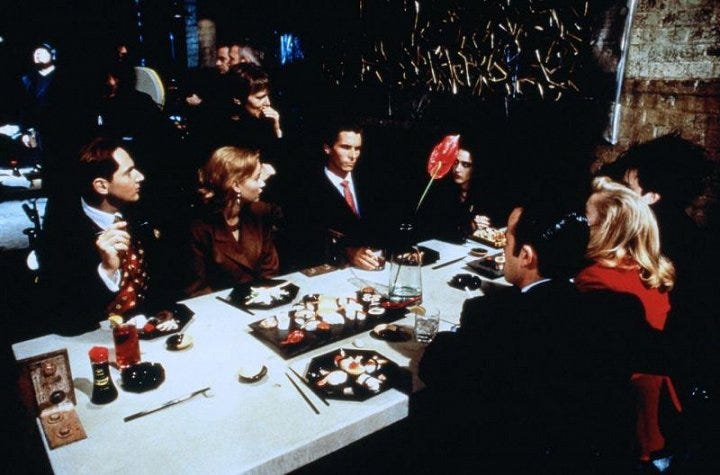
The violence quotient: “Compared to most Hollywood productions, American Psycho is not that violent. We knew from the start that if we followed Bret Easton Ellis to the letter on this ground, we would end up with just an ultra-gory slasher. Then there would be nothing left of the terror that Bateman inspires in his victims and we would do our utmost to avoid that. Be careful, American Psycho is still a violent film that describes the actions of a ruthless serial killer. To remove all graphic violence would have been the worst hypocrisy, but this violence is not the central element of the discomfort that Bateman's actions create in the viewer. The idea was to place the terror off-screen, like the vision of this twisted coat hanger with which Bateman joins the prostitutes in bed - I leave it to the viewer to imagine the usefulness of this strange accessory. It's often much more effective than any gore sequence.”
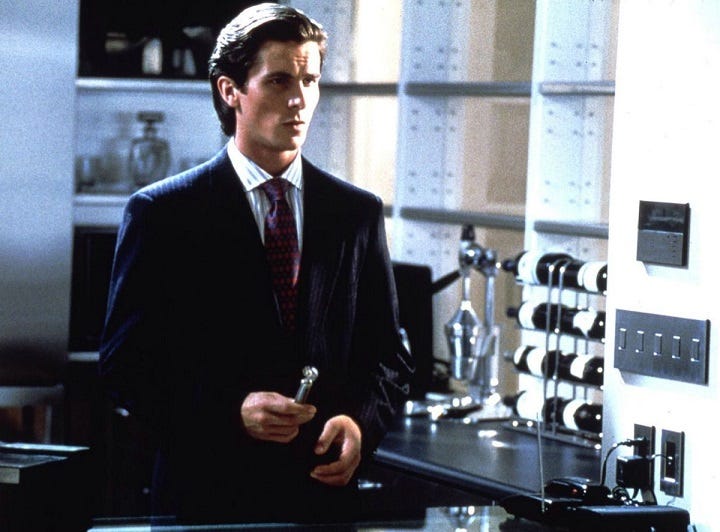
Why Christian Bale was chosen: “Call it intuition, if you will. I saw him as Bateman right away, despite his English accent and his casual attire the day we first met. And then, Christian is a workhorse. He prepared for months for the role. He imposed a strict diet on himself, he built an athlete's body through incredibly demanding workouts and also worked for weeks with a dialogue coach to acquire perfect elocution, the Wall Street accent he liked to end up with. He prepared so rigorously that when he arrived on the set the first day, he had completely created the character of Bateman. There was hardly any need to direct him. On set, the crew affectionately nicknamed him the Robot. His continuity was impeccable and he never forgot a single line of dialogue. Without him, American Psycho would have been a completely different film.”
Demon comes from the Greek word Daimōn. Matt Damon co-starred in Kevin Smith’s Dogma (1999) where he played a fallen angel. Someone missed a step by not casting Demi Moore in either film because “demi-monde” refers to a class of women whose status is questionable. The British modern equivalent would be WAG (wives and girlfriends of athletes), although there’s a limit to how Demi Moore would have demeaned herself (even when you consider her being in The Substance).