
Danse Macabre

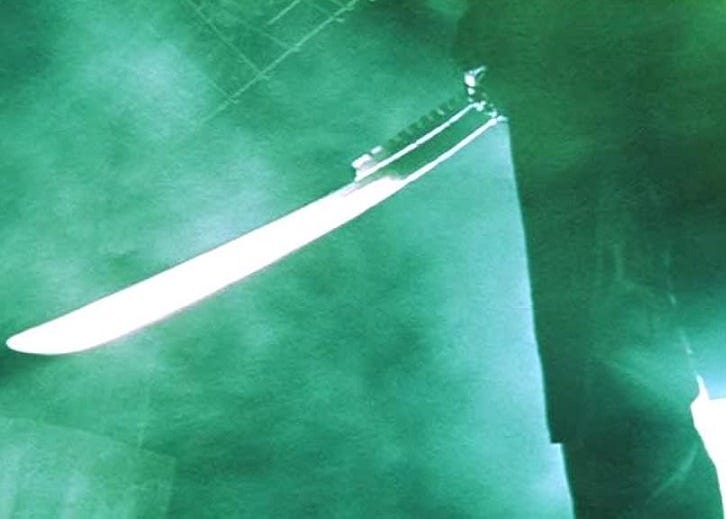
Dance of Death. Back in 2000, there was a Japanese film that became a cult hit for its mix of action and horror. More specifically, it’s a zombie film. Titled Versus, the director was interviewed for the March 2001 issue (#130) of a French magazine called Mad Movies. Ryûhei Kitamura was not only the director but the main writer. At the time of print, he was two months away from turning 32. In 2000, Ryûhei screened the film in a French town called Gérardmer. Much later on, he directed Bradley Cooper in The Midnight Meat Town (2008). Back to the Mad Movies magazine, Mr. Kitamura revealed his background: “I grew up watching fantasy movies from the ‘80s. It was during this period, around the age of 17, that I decided to become a filmmaker. Since I am a fan of Mad Max, Razorback and Highlander, I thought that Australia was the best place to learn. So I enrolled at the Visual School of Arts, an American school with an office in Australia. I studied for two years.”
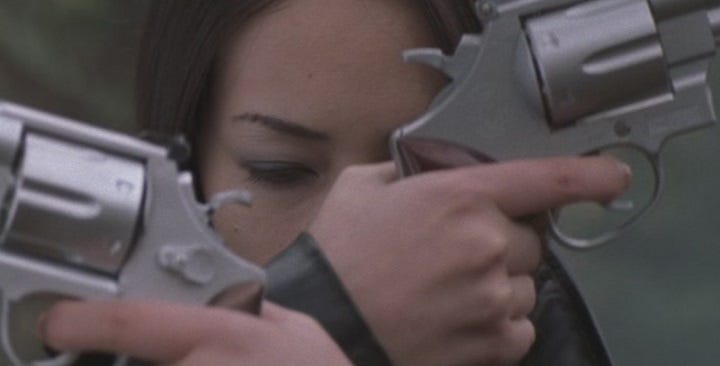
Back in Japan: “I met Keishiro Shin, my current producer, and we started working together on amateur short films. That was ten years ago. Then we decided to take things more seriously by shooting a horror film called Down to Hell. It is a film in the spirit of The Evil Dead but much shorter since it is only 50 minutes long. There were only six of us shooting it and the budget was quite small, $3,000 in total for a hi-8 video film. We edited it and we liked it. We sent a copy of the film to all the influential people in Japanese cinema, putting a three-minute trailer at the beginning of each tape. We also enclosed a little note that said: Give us three minutes of your time, if you like the result, watch the rest and call us, if not, throw the tape in the dustbin.”
Fruit of labour: “That's how we met a very well-known actor in Japan with whom we made Heat After Dark in 1997, another 50-minute film that we had trouble selling to a distributor because of its length. Until then, I didn't really care about the length of my films. It was with the problems encountered in the distribution of Heat After Dark that I decided to make a feature film. So a year and a half ago, we started working on the script for Down to Hell 2. Still in the same spirit as the Evil Dead series, I wanted to remake my first film but with more resources. The collaboration with my new screenwriter made us deviate from the subject by making it more emphatic. What was only a feature film on video has now become Versus, a film shot on film. So we started shooting in October 1999, in the province of Tokyo.”
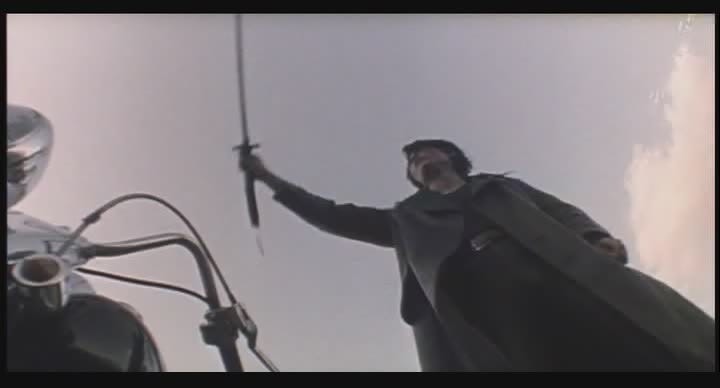
Production pace: “It lasted two and a half months. We're pretty fast! You know, Japanese films don't usually have big budgets, especially compared to European or Hollywood films. That's what often gives directors excuses for making lazy films. Despite our budget and tight schedule, we tried to get the most out of the project. We had to come up with spectacular sequences, shots that are a real eye-opener, what we call production value. In these cases, I think the most important person is the director of photography. On Versus, it was a friend who took on this position, a talented guy who is in high demand in the advertising world. Since it's his first film, his work offers a very different point of view than some of his colleagues. He made Versus for free out of friendship and therefore turned down a lot of well-paid offers during the shooting. The whole crew, as well as the actors, made the film for free. In a sense, we couldn't really pay them because we had a fairly small budget compared to our ambitions. Versus only cost $400,000.”
As to whether it was released in Japan: “No, it's supposed to be released this summer. Versus wasn't produced by a big company. We covered all the costs. That said, we didn't have any trouble finding a distributor this time. That's probably because we did two test screenings in Japan and the audience was very pleased. I was convinced that I had made a film that wouldn't be very popular in Japan. The Japanese industry doesn't produce action films in the broad sense of the word anymore, and in fact, I thought that the local audience had lost the taste for this kind of film. We were more interested in appealing to the international market or to Hollywood, which is in contrast to the approach of most local artists who only target Japanese, or at least Oriental, audiences.”
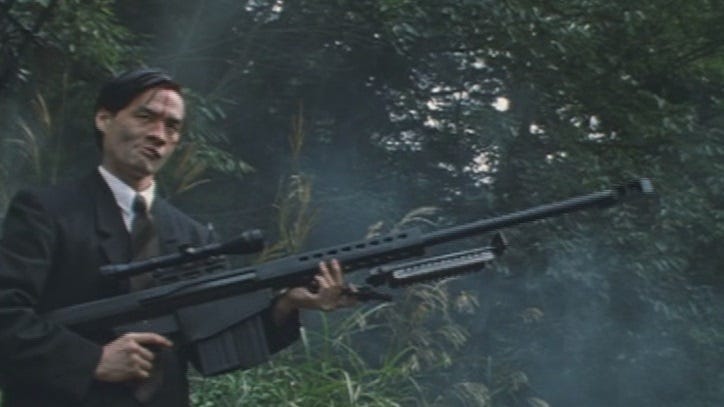
Some sequences in Versus are reminiscent of a French film titled Dobermann (1997). Ryûhei Kitamura was asked by Stéphane Moïssakis if he had seen it. Ryûhei said: “Oh yes, I love it! I met Jan Kounen at the Tokyo Fantastic Film Festival a few years ago. He came to present his film, I think... At the time, I was still a complete stranger since I had only made Down to Hell and I introduced myself to him by giving him a tape of my film. I can't tell you if he watched it.”
It's a film that would make Jan jealous: “You think? From such a talented director, it would really be a compliment. But you know, he and I are from the same generation, so logically we have the same type of influences. As for me, apart from the films I mentioned, I particularly like certain novels by Stephen King or Dean Koontz. I also like comics, Devilman for example, which is very popular in Japan. I would like to make an adaptation of it. If we refer to certain shots in Versus, we can also think that I am a fan of Sam Raimi. Well, believe me, that is the case! At times, we redid exactly what he did on The Quick and the Dead or Evil Dead. These are only a few homages scattered throughout the film, but I insist on it.”
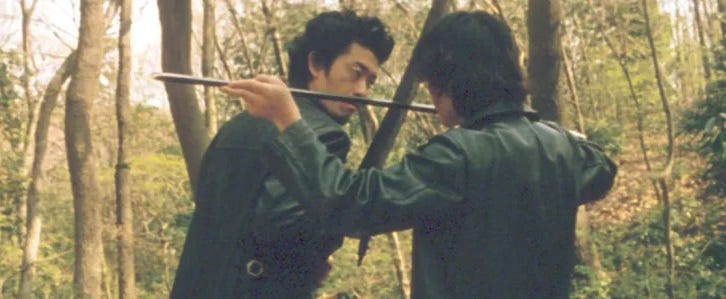
About Ryûhei’s co-writer, Yudai Yamaguchi: “I started writing the script and after a few scenes, I submitted the script to him and said, "Here's what I've done, you continue." He then came back with several ideas and I started writing the rest and so on. The process was a lot of fun because Yudai has a point of view that is complementary to mine. His tastes are different, so he would write scenes that I couldn't have imagined and that I really liked. It was then up to me to surpass myself to surprise him. That said, there are no particular scenes that bear his signature or mine. It is really a collaborative work. A kind of exchange of ideas if you will. Let's say that he is more into horror while my thing is more action. I like George Romero and Lucio Fulci, for example, but he worships them. He also loves Dario Argento but I have a little more trouble... Now, his work was not limited to the script itself. He also directed a few scenes from Versus. In fact, he was a second unit director on the film.”
“Non-Stop Freefall Ultra-violence Action Entertainment” was how Ryûhei publicized the film because: “This is just a bluff! Since we wanted to make a movie that offered two or three hours of non-stop action, we thought it would be fun to find an enticing way to sell the concept to the public. Hence the long name of this process that absolutely does not exist!”
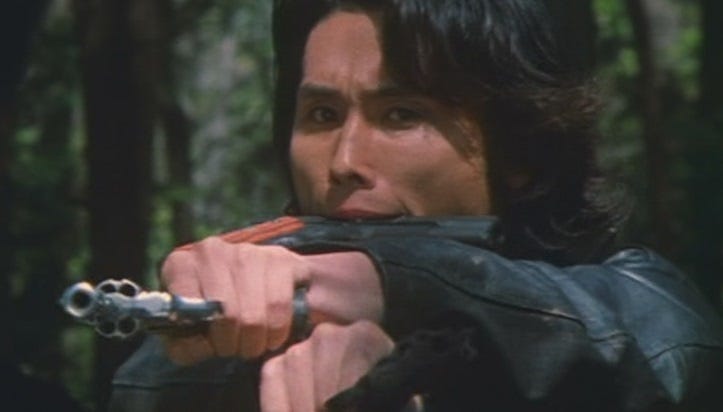
No fear of mixing genres: “At that level, I was pretty confident. The material really lent itself to mixing everything up. Basically, the film is just about a gigantic fight. And already, for us, shooting Versus was a daily fight. So of course, there are comic aspects in the film and even a bit of a love story, but above all it is the story of a fight and a group of people who cannot escape their destiny. If there had to be a message in the film, it would be something like: “If you have an enemy, you will inevitably have to face him one day.” I mean that sometimes, you have to deal with your problems head on. With such a simple plot, we were able to put everything we liked into the film. Besides, the script changed a lot as we went along that we were shooting.”
How to encourage good acting: “I let the actors improvise according to their mood. I don't like to force them to do something on set. If they don't want to, it's the best way to get a bad performance from them. So I would come up with a dialogue and they would make the changes. You know the character of Shorty, the nervous little sidekick? He was supposed to die at the beginning of the film. The other actors are tall, handsome, they have class, and he's not at all! But it turns out that he didn't want to disappear so quickly. I told him he wasn't my type of actor but he didn't want to understand. Since he insisted, I offered him a deal: "Okay, as long as you make me laugh, I'll keep you in the film!" So he did it and gave us a slapstick number that was hilarious. Since I found him funny from start to finish, he stayed for the entire duration of the shoot!”
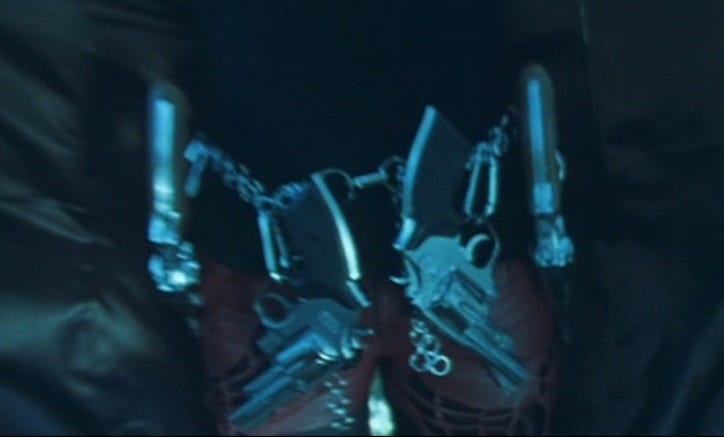
Two hours of non-stop action might be a bit long: “That is to say, that was my original intention. I wanted to make an action movie that never stops. The first cut of Versus was 2 hours and 20 minutes long. Most of the action scenes were longer and the movie ended differently. I will probably use these outtakes as extras on the DVD edition. I really had a hard time accepting to cut the movie but my producer begged me to bring it back to a more reasonable length. So I cut twenty minutes and the movie is now 1 hour 39 minutes and 59 seconds long. Less than two hours! That was the limit but I didn't want to cut more because I have never seen a non-stop action movie of that length. You know, I really like Commando with Arnold Schwarzenegger. Okay, it's a stupid movie but it never lets the viewer breathe. In that respect, it really is the perfect movie but it only lasts 90 minutes. It's easy to indulge in non-stop action for an hour and a half. My idea was to bring the audience to its knees. I wanted them to be satisfied, to have their dose of strong emotions. Since I am always the first spectator of my films, it seems to me that the public is today capable of accepting a film as extreme as Versus.”
Some camera movements are very complex, so it’s safe to asume that the director of photography designed them. Ryûhei agrees: “Yes. Personally, I think he did an incredible job, but he's not happy at all. He wanted me to remove his name from the credits because he's convinced he could do better. However, given the tight schedule and the shooting conditions, I think he worked miracles. It must be said that shooting in the middle of a forest in the middle of winter wasn't easy. For budgetary reasons, we did everything in natural light. Only the night scenes really required lighting. On some camera movements, the focal length could change three times during the take and despite everything he managed to focus without any problem. He's really a very talented guy and I'm very lucky to count him among my friends.”
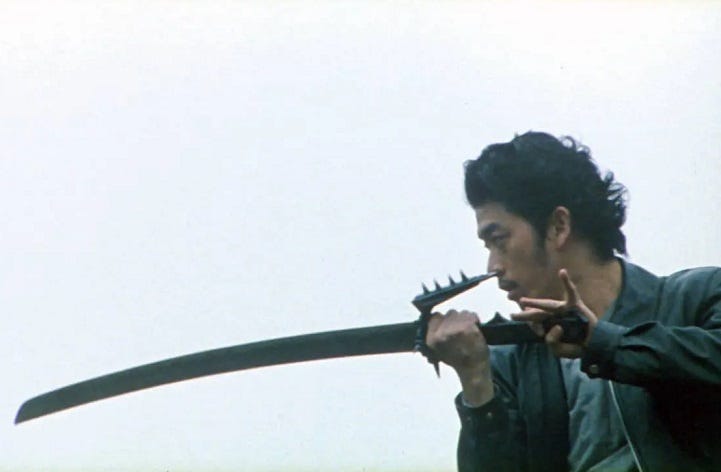
Ryûhei Kitamura’s opinion of Japanese genre cinema in general: “I guess in the West, Japanese genre cinema is mostly represented by Godzilla and Chambara films. I like the old ones like Ishirō Honda’s Godzilla films, but today's are really bad. In Japan, many people, especially producers, think that it's still a tradition to make Godzillas. Maybe, but not like this! I have to say that at this level, I preferred Roland Emmerich's film. It's not very good, that's for sure, but it's still better than those that are produced today. The Japanese film industry is very traditional. It's dad's cinema. If you try to innovate, they'll do everything to put you down.”
Then-future projects: “At first, we wanted to do a sequel to Versus but we thought it might be too early for that. We'll probably do it next year. I want to do something different without doing a comedy, a love story or a boring drama. I really want to stay in fantasy cinema. So I came across a very popular comic book in Japan that tells a really exciting story because it deals with a lost soul, a lonely hero who fights aliens and all sorts of stuff. I thought it was the perfect material to follow up on after Versus. We're in full pre-production right now and the movie is called Alive. The budget is bigger than Versus. In a way, it's going to be pretty close to Cube. It's not going to be a non-stop action movie since it's going to have the same sense of isolation, but I still managed to include a few wired Kung Fu scenes!”