
Dame Mortelle

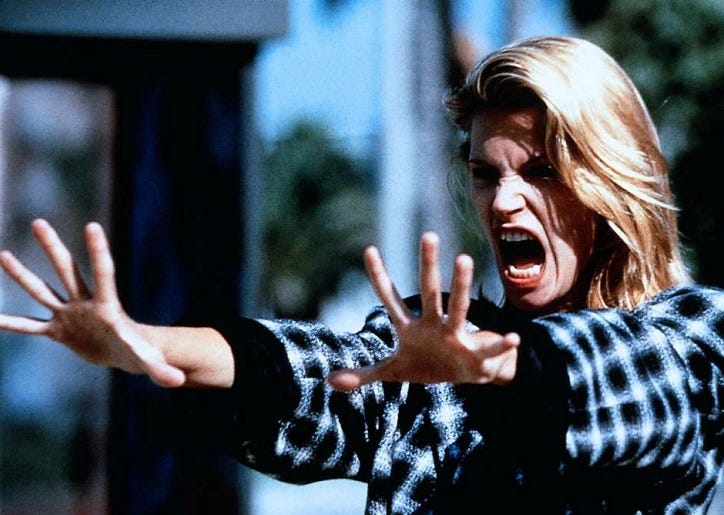
This is French for lethal lady. My article is about the Species films starring Natasha Henstridge. For the November 1995 issue (#97) of a French magazine called Mad Movies, the director was interviewed at the Deauville festival. Roger Donaldson had directed Mel Gibson in The Bounty (1984), Kevin Costner in No Way Out (1987), Tom Cruise in Cocktail (1988) and Robin Williams in Cadillac Men (1990). As for Species (1995), Roger said this about the script: “If I asked for some changes in the script, they are really minor, small changes concerning the protagonists and the general coherence. Nothing fundamental. I must also say that Dennis Feldman's script pleased me because the action took place in a realistic setting, the streets of Los Angeles. An original environment in the genre.”
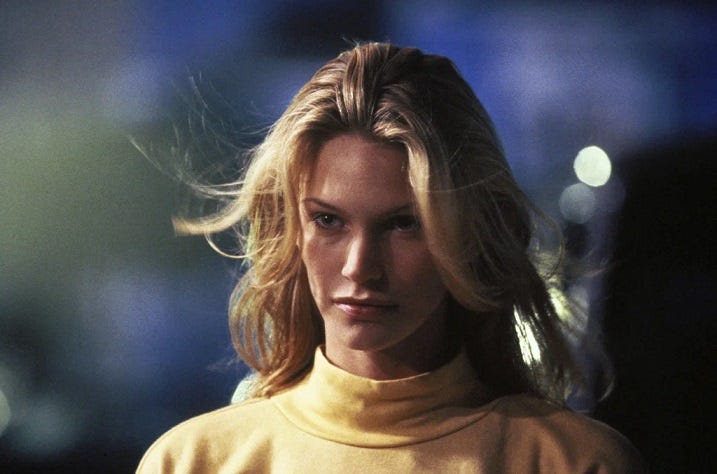
Roger wanted to cast an unknown actress because: “If the actress had been seen or noticed elsewhere, it would have broken the spell. It would have been impossible to believe in this creature that experiences accelerated growth, that, from a teenager, immediately passes to the stage of an adult woman. It is not very hard to find such talents. Natasha really impressed me with her will, her desire to learn from other actors, her endurance. She is still very young, but the modeling profession has trained her. The special effects imposed hellish hours on her, especially the sequence where she falls naked from the cocoon. Any famous actress would have cracked. She agreed to reshoot the take as many times as necessary. Not easy at all when you know that we had reversed the set, namely that the ceiling became the floor and vice versa.”
One should have a sensor when dealing with censors: “More than the gore, the mix of sex and horror particularly interested me. If Hollywood is particularly tolerant of violence, it's a different story for sex, unlike the Europeans. I was not under any particular pressure to soften this aspect of the film. I was acting within the very precise framework of the contract I had signed with Metro-Goldwyn-Mayer, namely that I had to shoot a film that was not banned to those under 17, that it was simply banned to those under 12. In compliance with this clause, I was able to do as I pleased. Afterwards, the censors asked me to cut a few images related to sex that were a little too explicit when Sil literally rapes her prey. Nothing deadly. The film you saw is really the one I wanted to make. Nobody imposed anything on me. I've known some very annoying producers, but here, everything went smoothly.”
SFX: “The special effects are the result of a marriage between the work of Steve Johnson for the make-up and Richard Edlund for the optical special effects. The perfect synchronization between the two makes certain sequences particularly spectacular and credible. In particular when the tentacles start to come out of the child Sil's face. A trying special effect for the actress, Michelle Williams. Small cables, wires ran over her face, covered in latex, to then be erased by the computer. Because she was tired of waiting for the effects to be ready, because she was dying of heat, she burst into tears. We consoled her, the poor kid...”
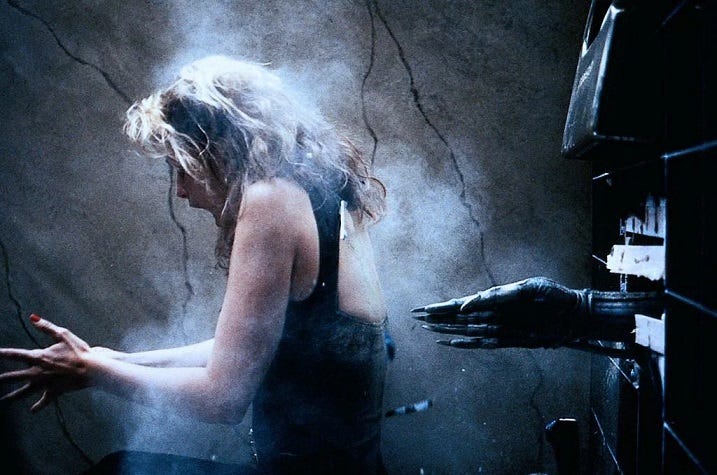
Natasha Henstridge was also interviewed for Mad Movies. When asked by Marc Toullec about the erotic aspect of the film, she said: “I'm basically a new version of Dr. Jekyll and Mr. Hyde. In one scene, you see me naked in all my suave blonde beauty and, in the next moment, tentacles come out of my body, a shell covers my face and stretches it. Playing this character who goes from one extreme to the other in a few seconds really fascinated me. I was just as happy to give up my role as a model for such a challenging role, for a character not devoid of dark humor. After all, even if I have a nice ass, I hope to be able to show people more interesting sides of myself!”
What makes her character different: “My character, Sil, is very different from the monsters you usually see on screen in science fiction films. She undergoes a very rapid mutation. She is very naive and does not really understand what she is doing on this planet. It is only gradually that she realizes that she is not like the others. As a joke, the people of the team gave Species this second title - Fatal Instinct. It is not as out of place as it seems because Sil constantly follows her instinct. For her, killing is as natural as it gets. Procreation is a necessity that justifies her quest for men to whom she could make love. She throws herself at them at 200 an hour and massacres them after the embrace! I like that. Sil has two faces: one angelic, the other evil, it seems a bit like, which is my daily life. But don't we all have, at a more or less important level, this double personality?”
Thanks to Marc’s translator, Didier Allouch, Natasha is asked if she thinks that Species is a sci-fi horror with a feminist tendency: “In one scene, a man roughly pulls me towards him to rape me. I try to escape without killing him, but he stops me. I lose patience. I kiss him to pierce his skull with a lick. At a preview of the film in Los Angeles, a woman in the audience shouted at the end of this sequence: “Well done, my lady!” I've experienced that and I wish I could do the same thing. The Feminist Mutant? Yes, because Sil is a very strong woman. The kind of woman I would still like to play. But, be careful, that doesn't mean I want to see myself decked out in prosthetics for my entire career. The hours of makeup on Species were truly horrible. It's dirty, it takes ages to come off and you're bored stiff while the makeup artists work on you. Honestly, special effects aren't my cup of tea, although I still want to kick some men's asses. After having been a model for a long time whose main mandate is to be beautiful and to put it on the back burner, I want to play with my personality and forget the mystery of the fashion world. In any case, when producers put millions of dollars on the table, they don't really want mystery, but something concrete, something solid. Frankly, never gaining an ounce to put on mini-bikinis, I'm really fed up with it!”
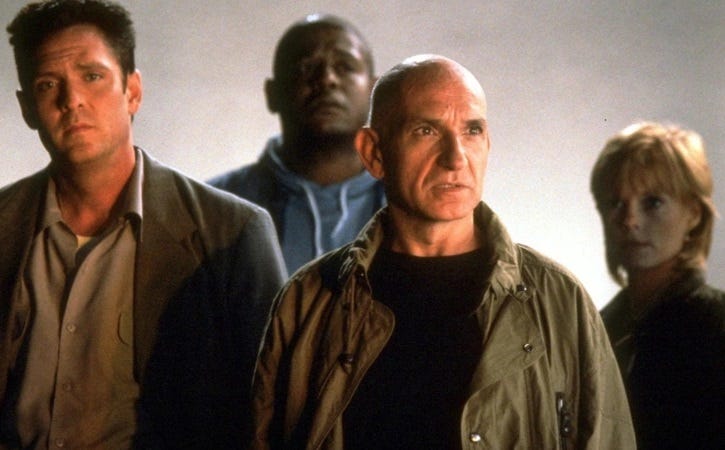
After Poltergeist II and Alien 3, Species marks the visual effects supervisor’s third collaboration with Swiss painter H.R. Giger. Richard Edlund said: “All his inspiration is based on feminine references. For thirty years, these works have reflected a strange sexuality, a great eroticism, perceived from a point of view that is not essentially macho. Species gave him the opportunity to complete his work, in short, to create an authentic female monster on a par with Alien. We had not seen that since The Bride of Frankenstein, although this creature is not a real success, at least visually speaking. The Species experience was profitable for him; he likes the work of the people responsible for special effects. Generally, Giger complains about the directors who have mishandled his drawings. The alien from Alien 3, for example, he hates him! I know that first hand.”
Cinema potentially can’t do justice to the poetic grace of his artistry: “Giger works with an airbrush, a tool that gives his paintings a translucent appearance. We can see beyond the surface itself, inspect the entire infrastructure of the creature, examine the skeleton, the internal organs. Achieving such an objective, in cinema, is almost impossible because the surfaces of the suits adapted from his paintings seem really too opaque, too dark. They are only costumes, including in the case of Alien, as beautiful as it is. We wanted to avoid that in Species. You only find three shots where the actress is wearing a full suit. And they are very quick shots that last hardly more. In fact, traditional one-second makeup does not do justice to Giger. Only computer-generated images can give the monster this translucent, almost transparent shell. Thanks to the coordinator, the creature no longer only has the appearance of a Giger creature, but also the fluidity, the gestures, the extraordinary agility that are reflected in his paintings.”
How the monster was created: “Basically, we had a 60-centimeter-high articulated puppet with electronic sensors distributed at strategic locations for movements. These sensors sent signals to the computer, very precise position signals. So, we immediately had the result of what we asked the software to do, it was displayed on the screen, live. Under the tutelage of Roger Donaldson, we could intervene immediately, modify the movements at will. This technique is so easy to use that in one afternoon we were able to shoot 130 takes of a particularly difficult shot - where Sil I had to jump and climb the wall of a cavern. Now, you can act in real time on your special effects, choose the shot where your monster seems the most convincing. This is like selecting the scene in the editing where the actors are at their best.”
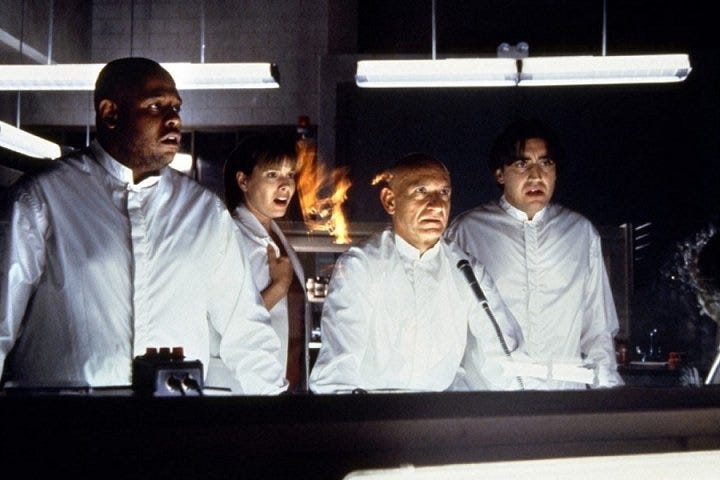
How a director new to special effects overcame the challenge: “Roger Donaldson's personality would have been an insurmountable problem two or three years ago on an identical project. Roger does not belong to the breed of directors who plan everything in advance, who storyboard every sequence down to the smallest detail, who anticipate everything. Even before giving the first turn of the crank, these people know exactly how the film will look. And it is precisely this type of filmmaker who, until today, best suited projects full of special effects. Roger Donaldson, having never touched the genre, improvises enormously. Improvising with special effects was madness until recently. Thanks to new software, new techniques, Roger Donaldson has been able to work as before. The tool now adapts to man and gives us more autonomy, more freedom. We forget the blue screen, all the old technical problems, the endless delays.”
In the November 1997 issue (#110) of Mad Movies, producer Frank Mancuso found himself in an embarrassing situation. Despite having produced multiple sequels of Friday the 13th along with the TV series of the same name, Frank said: “The only thing that is really important is not to make the same film over and over again, to avoid repeating ourselves.”
It doesn’t help matters that Species II (1998) essentially rehashes the premise of Alien: Resurrection (1997). Instead of Roger Donaldson coming back, Peter Medak was hired. This Hungarian director based in England said: “No matter how original or eccentric the story is, you definitely want the film to make sense. It is very important to start from a real premise. Even if you are not a scientist, you know subconsciously if dialogues ring true or are fake. And it is so easy to avoid them being fake.”
In the July 1998 issue (#114) of Mad Movies, actor Justin Lazard revealed who else was competing for his role as the antagonist: “I found myself competing against guys like Billy Zane and Grant Show. I must have had eleven hours of auditioning at least!”
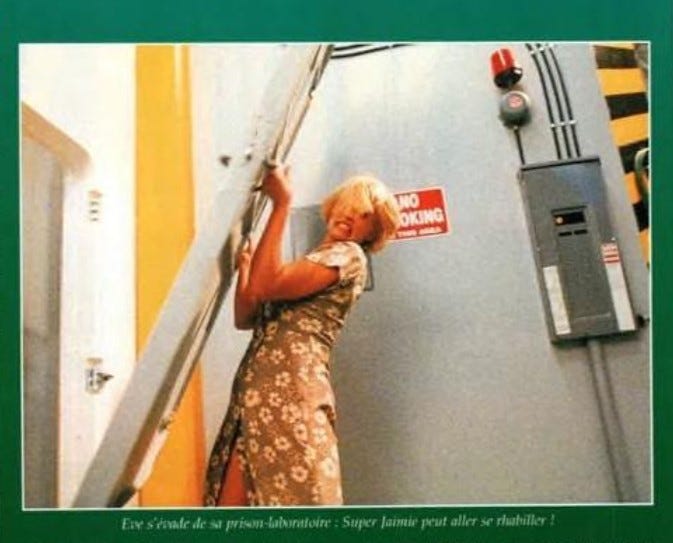
Back to Peter Medak, he talks about how unexpected that it was for him to direct: “I've never done a film like this. I wanted to learn how to work with special effects, computers. I was considered for GoldenEye and it didn't happen. So I thought it would be fun to try this one. The studio thought it would be interesting not to give Species II to a specialist in the genre. I've filmed ghost films, thrillers, dark films, and they thought I could bring that experience to the film.”
Climbing up the studio ladder: “It seems like I try to do this every three or four years and then come back to what I usually do every few years. But what that part, it feels good to be somewhere other than home. It refreshes you. And, honestly, I had a lot of fun.”
His opinion of the first film: “I really like Natasha's character. Not just because she's naked, but because the energy she exudes forces you to look away from her body and into her eyes. I was surprised that it wasn't the exploitation movie I was expecting.”
Back to the sequel: “I reworked the script with the screenwriter. We gave it the necessary shapes so that the studio would be convinced that it was a good investment. This is not a question here of a deep and traumatic artistic exercise; it has more to do with the possibility of being able to make a commercially viable film.”
Commerce being an example of artifice versus artistry: “The idea, basically, was to make it work, if possible by integrating qualities of interpretation, but in a fairly classical way. It was not a question of terrifying the audience but of just giving them a few sensations.”
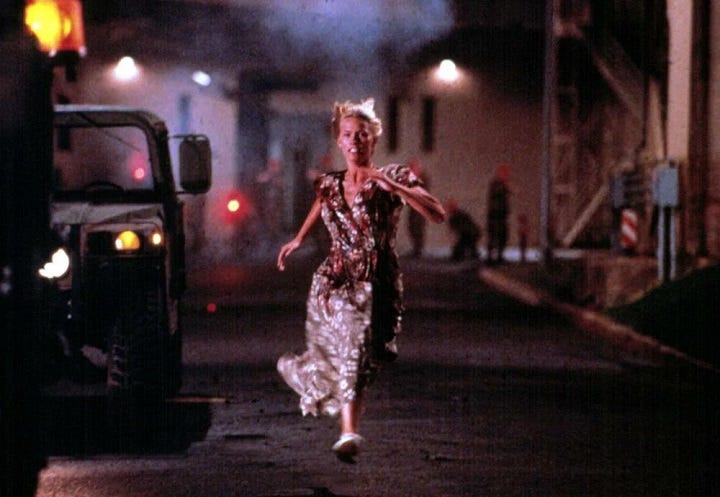
The gag that opens the film is right up his alley: “I thought we'd seen this shot of a ship entering the frame a hundred times before. I thought it was funny to bring up this little detail. We thought about including the most famous brands, but it was hard to convince the sponsors. I would have happily added funny elements like this, but the studio wanted to stay below a certain level at all costs at all times. We had to cut a little over half an hour of footage, which focused on the relationships of the main characters, giving them volume. We had to choose between texture and rhythm, and rhythm won out. Some would see this as an ideal opportunity to compare American and European conceptions of cinema. But I believe that at present, the majority of the world's audience is educated on the same source - MTV and CNN. I would like it to be otherwise, of course, but I admit that I was fully aware that I was making a strictly commercial film.”
Peter’s main difficulty: “Editing. On a special effects film, you end up editing empty space, shots where the subject doesn't appear. It's up to you to see where this shot begins and ends. It's a very frustrating step. And the effects themselves require a lot of time and patience before you can even get a little idea. One time it's not great, then it gets better and then it gets even worse. It's a long and fluctuating process, which requires your constant presence alongside the computer graphics artists. Species II was edited over six and a half months. In comparison, on Let Him Have It, the entire process from A to Z was completed in six months.”
The predominance of sexual danger, symbolized by Sil, was at the heart of the first film. This sequel drops that aspect of things: “MGM wanted to avoid a simple sequel. Species was a chase film, a sexual hunting party. This second episode focuses on the human victims of evil, first through the character of the cosmonaut, then through those he has infected. The heart of the plot is composed of the torments of the protagonists, whether it is the inner struggle of the hero, Eve's frustration and her awakening to her deep nature, the relationship between Michael Madsen and his ex.”
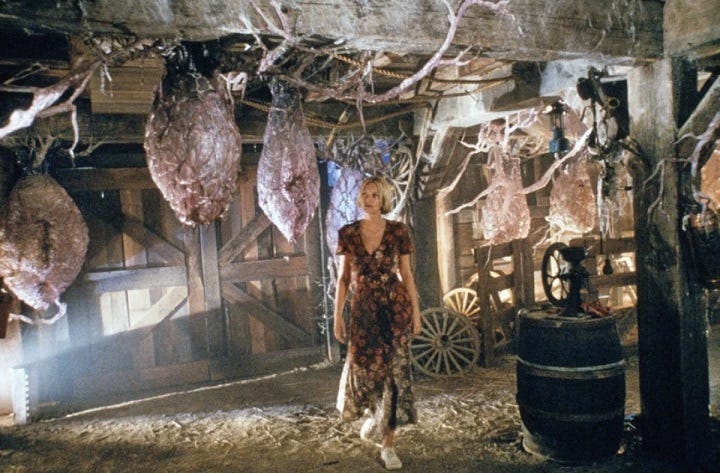
The monster's offspring: “The children are only a subplot, justifying the final destruction of the cocoons in the barn. It's just a threatening idea, nothing more.”
The final creature has a funny look: “The studio wanted a big monster. And Steve Johnson, who had built the body of the first one, had designed it six months before Giger or I came on the project. If Giger had done it, the monster would have been more graceful. But it was a question of money. It was too late to change the design. Plus, it was pretty hard to get it to work properly on set. There was an operator inside, and the armature was hard to control. Which is part of the reason the scene was edited in a very choppy way.”
Species was in CinemaScope. Species II uses the 1.85 format because: “The studio wanted a widescreen film. I thought it would be hard to hide the tricks with a widescreen, and I preferred the audience to focus on the center of the screen. Species II takes place largely indoors, unlike the first one, and a widescreen would have made it confusing. In scope, you lose the top and bottom of the set when you get closer to the faces. My favorite format, to be honest, is still the 1.37 of black and white films. The 1.85 is therefore a good compromise.”
What has changed in horror cinema since The Changeling in 1980: “For me, not much. On The Changeling or Species II, I do the same thing. I play at creating suspense that confirms or breaks the audience's expectations. A director's universe is recognizable says his early films. If you watch David Lean's Great Expectations, you already see the essence of Lawrence of Arabia or Dr. Zhivago. Your obsessions with cinematic language remain over the years. Otherwise, what has changed is that the idea of success is becoming predominant in the director's career, whatever the genre. To acquire a certain independence, you must first deliver a galactic success. You must pay for your right to identity. And in the meantime, continue to shoot, no matter what.”