
Cultivated

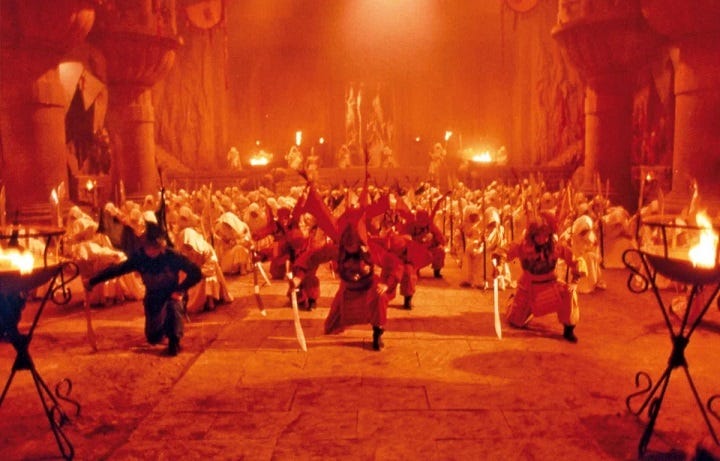
Kung Fu Cult Master (1993) would have been taken seriously as a film had it been titled Demon Cult Leader. Nevertheless, it’s still a cult classic. There used to be a site called Kung Fu Cult Cinema, and there is even a book called Kung Fu Cult Masters. As you can see, the film resonated enough to have influenced a cult following. When it was released in Hong Kong cinemas, it didn't have an English title since it was presumed that no Westerner would be interested in watching a fast-paced period film with a convoluted storyline (although the release still maintained the H.K. tradition of presenting the English subtitles underneath the Mandarin ones). It was only on DVD that the film had an English title, but the print itself had no English title; instead, it was on the DVD sleeve.
On VCD, it was erroneously known as Kung Fu Colt Master. A better title would have been Clash of the Cults as a nod to Clash of the Titans (1981). Kung Fu Cult Master is Wong Jing's best film in terms of narrative scope, spectacular action, creative camera-work and clever editing. It’s a true masterpiece. It even foreshadowed Zhang Yimou's Hero (2002) with the symbolic use of colour. Kung Fu Cult Master has flashback scenes whose coloured filters symbolize the emotions of Jet Li's character i.e. blue for depression, and red for anger. If Kung Fu Cult Master was the same as it was but credited to a director like Jeff Lau or Lee Lik-Chi then it may have been considered for the 13th Hong Kong Film Awards. With Wong Jing at the helm, the film was dismissed by critics as commercial schlock.
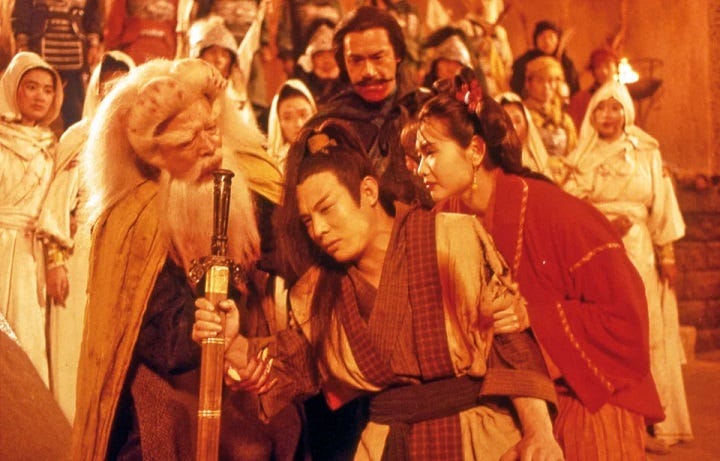
There has been speculation about the fate of the sequel. A Chinese fan claimed that the sequel wasn't released because the prints were burnt in a fire. It was speculated by an American fan that the sequel was made back-to-back with the first film but canned once the predecessor underperformed. It has often been rumoured that the sequel wasn't filmed at all because the popularity of the Wuxia genre was dwindling. On the surface, this makes sense. In actual fact, the genre was undergoing a peculiar transformation – the diminished returns in Chinese territories were rivalled by the growing success in non-Chinese territories who were more selective about distribution of Chinese films anyway.
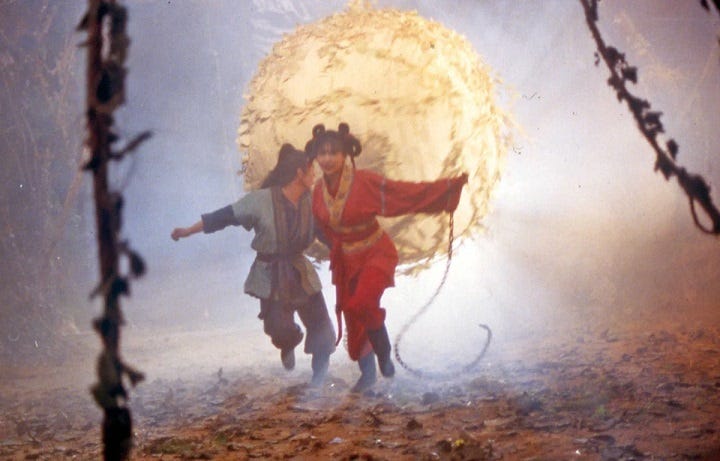
For example, Swordsman II (1992) broke the box office records in Singapore and Korea, but didn’t break any such record in Hong Kong. The mediocre box office performance of Wong Jing's masterpiece did not quell Wong Kar-Wai's burning desire to waste as much money as possible when he filmed Ashes of Time – another Wuxia film which, like Kung Fu Cult Master, had Sammo Hung experiment with similarly psychedelic photography as a fight choreographer. This film is also a masterpiece. Wong Jing's film is better because the expensive budget made the expansive vistas all the more worthwhile to see.
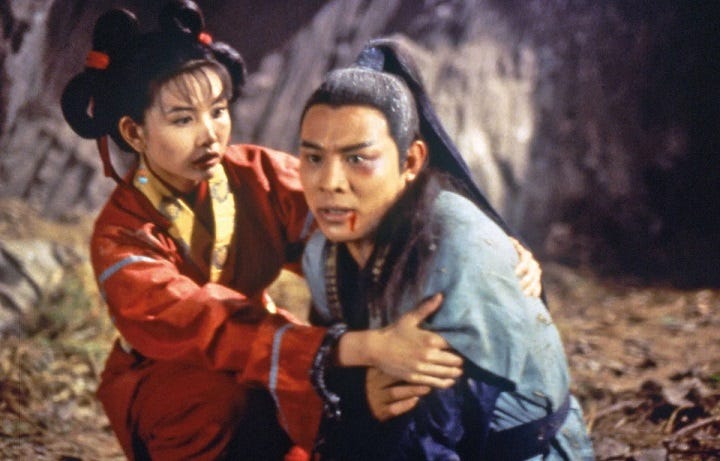
My favourite action sequence involves Jet Li's character fighting the Shaolin monk played by Cho Wing, because Wong Jing wanted to mimic a visual that he had seen in the Dragon Ball anime where Goku transports towards an opponent in a zig-zag manner while leaving silhouettes of where he stood. It's on the strength of this scene that Jing should have been hired to direct Dragonball Evolution (2009). This would have allowed him to reunite with Chow Yun-Fat.
While Kung Fu Cult Master only grossed over HK$10 million locally, it fared better than other 1993 Wuxia films such as the January-released Butterfly & Sword (which earned HK$ 9.1 million), the March-released Legend of the Liquid Sword (which grossed a paltry HK$3 million) and the June-released Holy Weapon had grossed HK$9.8 million. Directed by Michael Mak, Butterfly & Sword (starring Michelle Yeoh) made enough impact in Taiwan to make Wong Jing want to cast Joey Wong as Butterfly in Holy Weapon. She rejected him because she was too busy alternating between working on Ashes of Time and The Eagle Shooting Heroes, which was produced by Wong Kar-Wai. The arthouse maverick had to put the former on hold because he couldn't meet the 1993 Chinese New Year deadline, so he had started work on the latter.
With Jeff Lau writing and directing The Eagle Shooting Heroes, there was absolutely no reason for Wong Kar-Wai to delay his masterpiece unless he was running out of funds for his Jet Tone Productions company. Wong Jing wasn't worried about Ashes of Time because, besides the previous star-studded flops that became synonymous with Wong Kar-Wai, it looked like the film would take ages to get made. Instead of being scrapped or deemed unreleasable, the film was released to a frosty reception of only HK$9 million when it was screened from September to October in 1994. Wong Jing complained: “Wong Kar-Wai ruined the Hong Kong film industry during this period. He exploited the star power of his cast to sink so much money into his films, which usually flopped. Even Tsui Hark is more frugal than him despite having more extravagent production values. Like Jackie Chan, Wong Kar-Wai wasn't blacklisted for overspending because he had an international cult following. Sammo Hung was less lucky.”
The average box office result of Wong Jing’s film didn’t put off Jeff Lau from filming A Chinese Odyssey in late 1994. Like Jing’s Royal Tramp duology (made and released in 1992), this was a novel adaptation starring Stephen Chow. According to the January 12, 1995 issue of City Entertainment, Jeff Lau filmed both parts of his duology in a three month period. Since he always had the intention of there being two films, he would alternate between directing different films on the same day. Not only that, but filming was divided into three groups. Non-action scenes were directed by Jeff Lau, action scenes were directed by Ching Siu-Tung, and special effects scenes were directed by Andy Ma Yin-Leung.
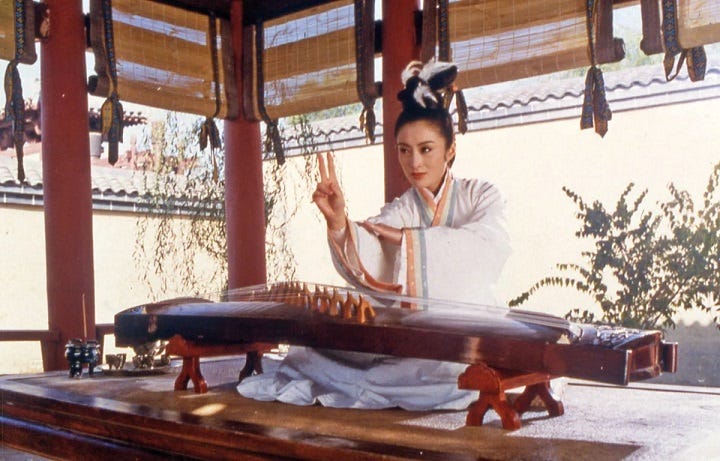
In all honesty, a nineties sequel to Kung Fu Cult Master could have been done since the film's income elsewhere in Asia was triple the budget. There were two problems. Firstly, Sharla Cheung Man didn't want to work with Chingmy Yau again. Don’t forget that they don’t share a scene together in God of Gamblers Returns (nor did Sharla share the same photo space as Chingmy for the box office celebration party). Secondly, recasting Sharla's role would have made for a confusing transition if Wong Jing was to film the opening of the sequel. Recasting worked on Swordsman II because it was a standalone story, and it worked on Royal Tramp II because Sharla’s character had metamorphosed (Sharla was replaced by Brigitte Lin much like how the latter replaced Jacky Cheung).
Pertaining to the making of Kung Fu Cult Master, Wong Jing explains the problem with filming in Beijing: “Foreign exchange bonds was a relatively new concept for the city. Many shops were not used to it. We went to buy things and we were asked for exchange certificates, which left us dumbfounded. The four-star hotel that I stayed in was quite new. It had beautiful gardens. It is called the Zhongyuan Hotel, but every surrounding street in the afternoon would turn into a street market. Vendors would open stalls selling fruit and vegetables. During lunch and after work, there was rush hour traffic where you would have to wait for half an hour.”
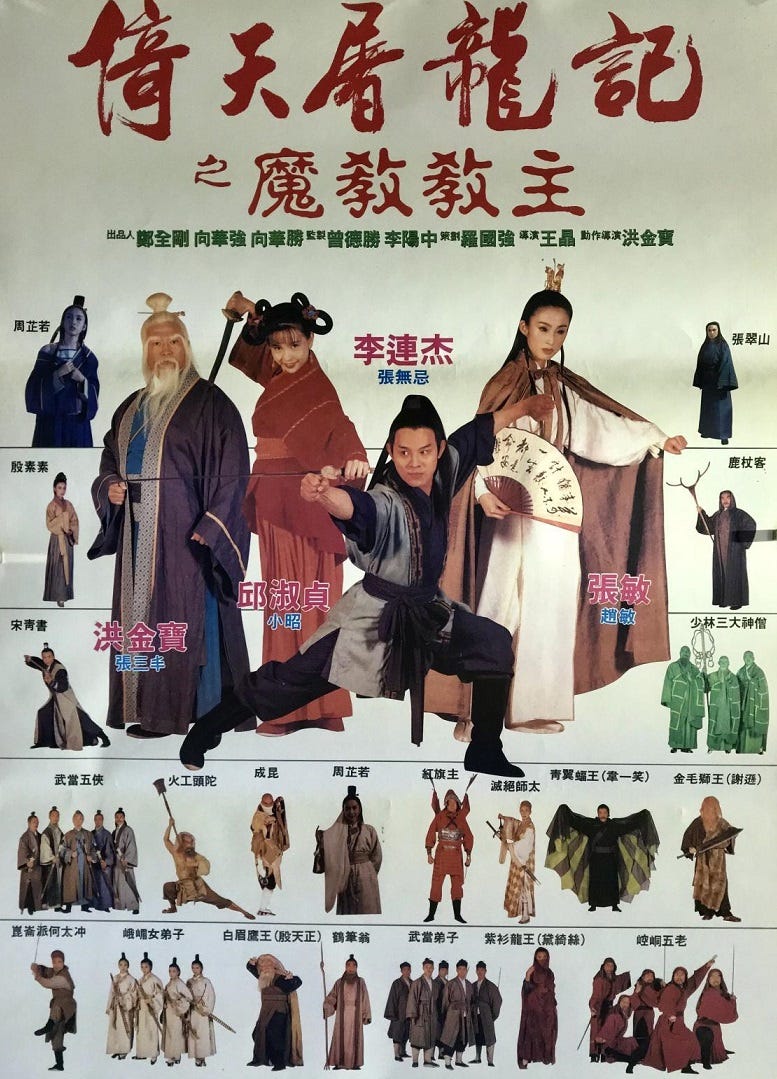
Wong Jing was still morose about not being able to do a sequel to Kung Fu Cult Master, but he happened upon a marketing gimmick that Hollywood would exploit on a remarkably regular basis in this century – remaking movies so as to build an audience for the originals. This paid off for him when a company called Celestial released and remastered VCD as well as DVD versions of the Shaw Brothers film catalogue. By 2003, he was relieved that more fans of the film would check out Chor Yuen's 1978 adaptation of the source material. Before Wong Jing rebooted his own masterpiece, people would usually recommend that viewers watch the 1978 Heaven Sword and Dragon Sabre duology in order to find out what happened after the cliffhanger.