
Crevice

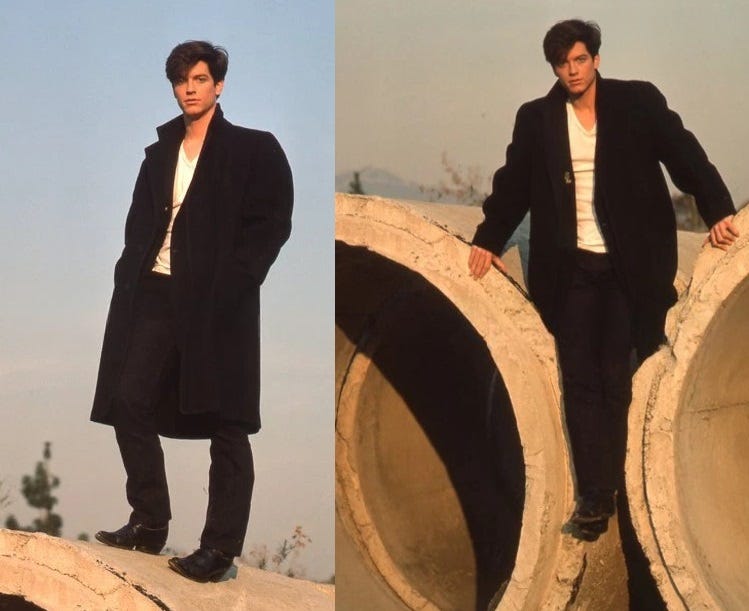
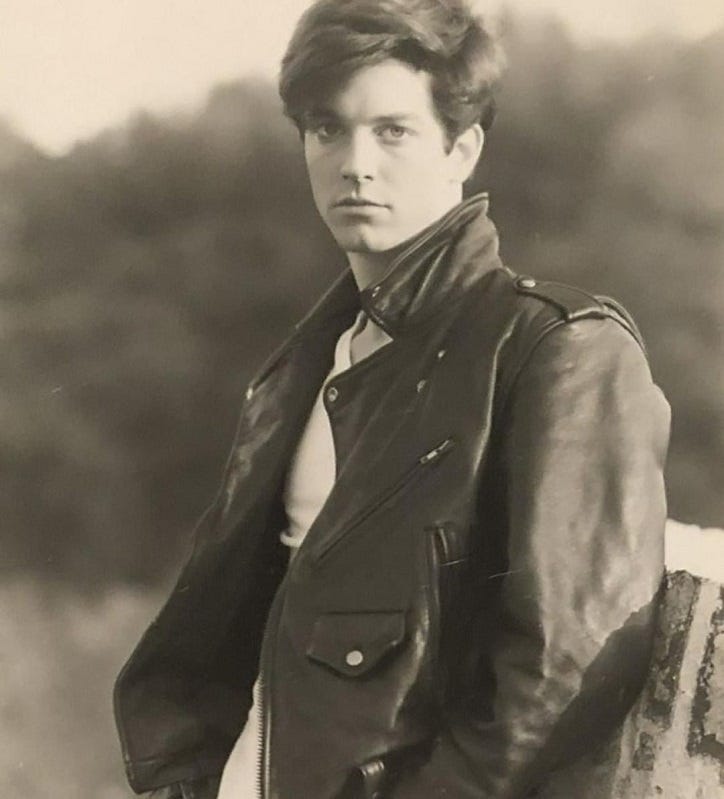
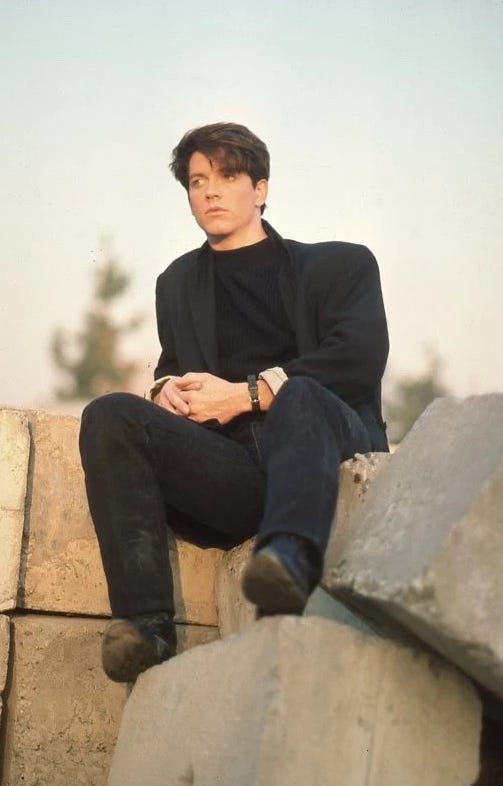
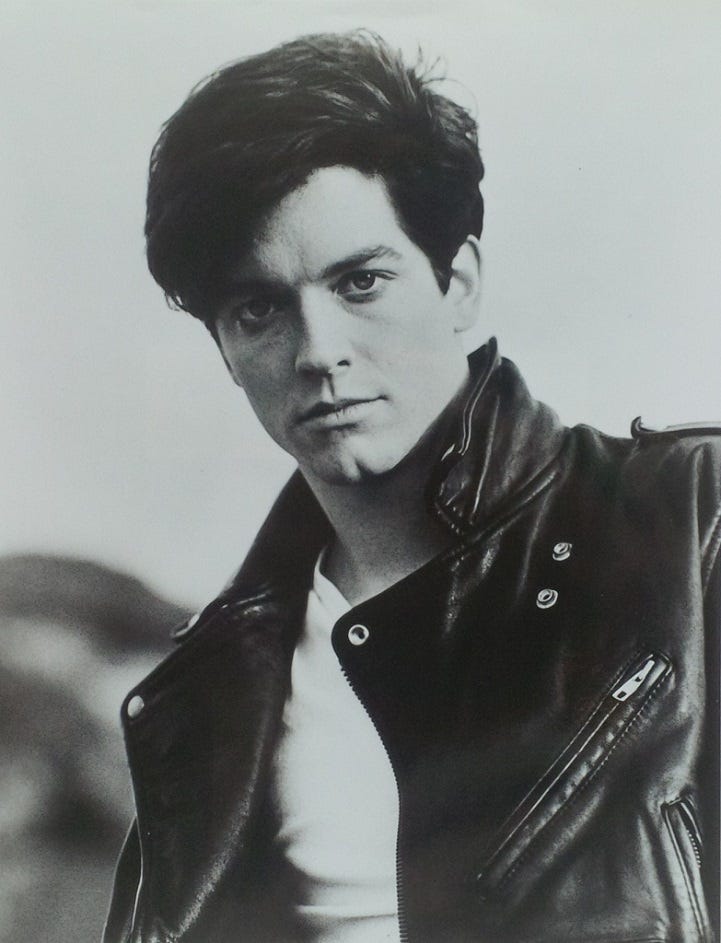
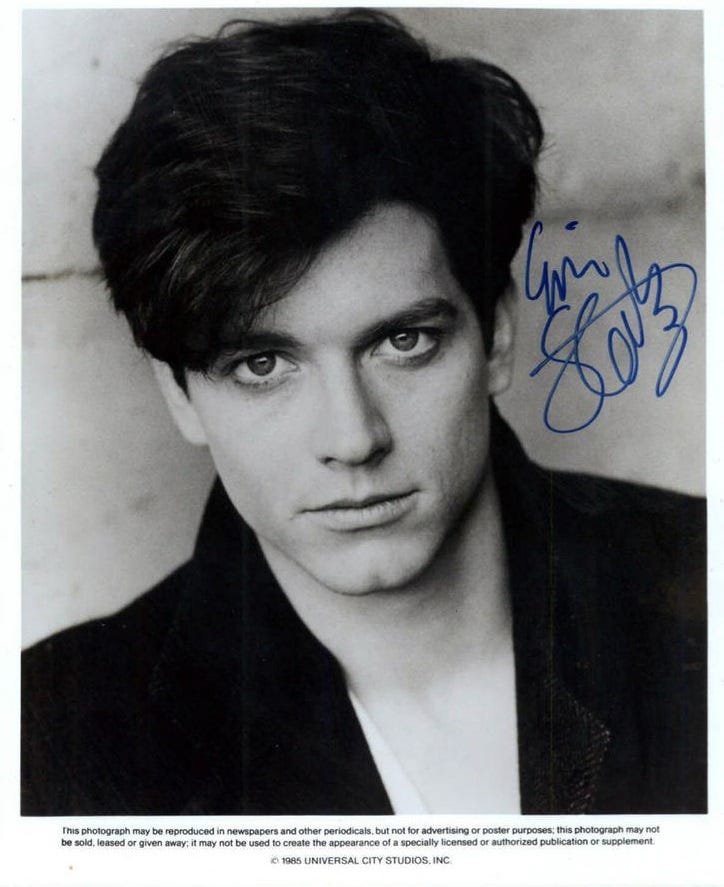
This is about Eric Stoltz in Back to the Future. This was originally from my WordPress article titled Symmetry. There was so much info that it made sense for it to be its own article. So much has been said about the original version of BTTF that it’s easy for certain facts to slip through the cracks. For example, the success that Robert Zemeckis had with Romancing the Stone (1984) meant that he could easily have arranged for BTTF to be greenlit by a company that wasn’t Universal. It wasn’t like Universal was the only film studio who were willing to finance the film. For example, The Goonies (another 1985 Steven Spielberg production) was produced by Amblin but distributed by Warner Brothers instead of Universal. Another such example is Spielberg’s The Color Purple (also 1985).
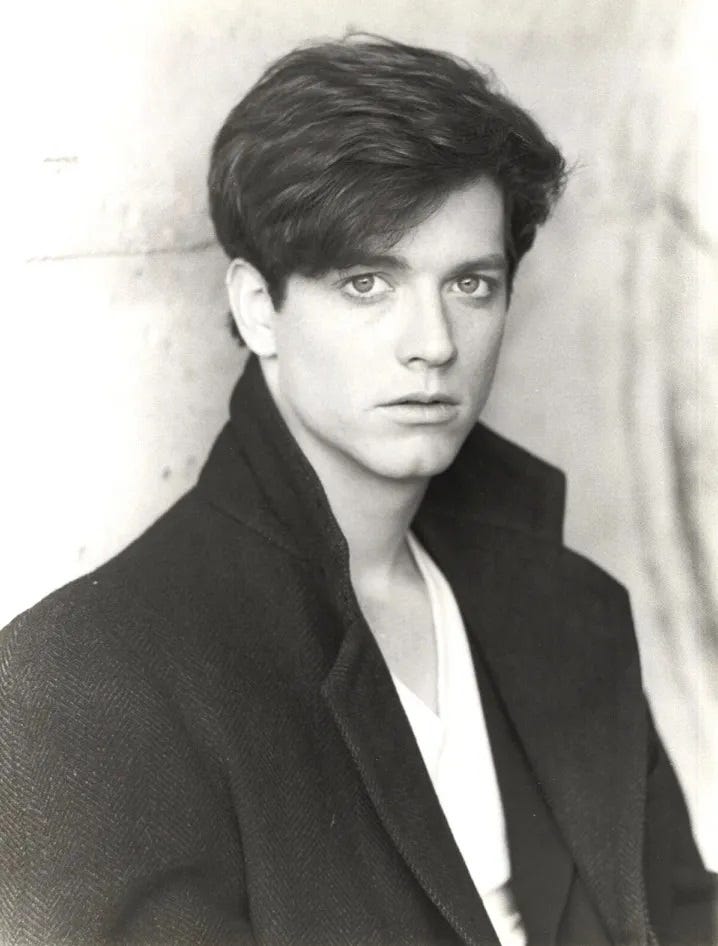
When people talk about who produced BTTF, they focus on Bob Gale and Steven Spielberg. The latter for obvious reasons, and the former because he was the main screenwriter. While Gale was the main line producer, Spielberg was just an executive producer. There were three other producers - two executives and one line. The other executives were Frank Marshall and Kathleen Kennedy. What compounds the BTTF situation further is that Frank married Kathleen in 1987. She helped form Amblin Entertainment with Frank and Steven in 1981. To digress, many people say that Eric Stoltz wasn’t cut out for comedy, but John Hughes said otherwise in an old interview that can be seen on the Some Kind of Wonderful DVD. He claimed that Eric gave an “outstanding” audition for the role of Cameron in Ferris Bueller’s Day Off. Eric’s middle name is Cameron, and he has worked with Cameron Crowe on a few occasions.
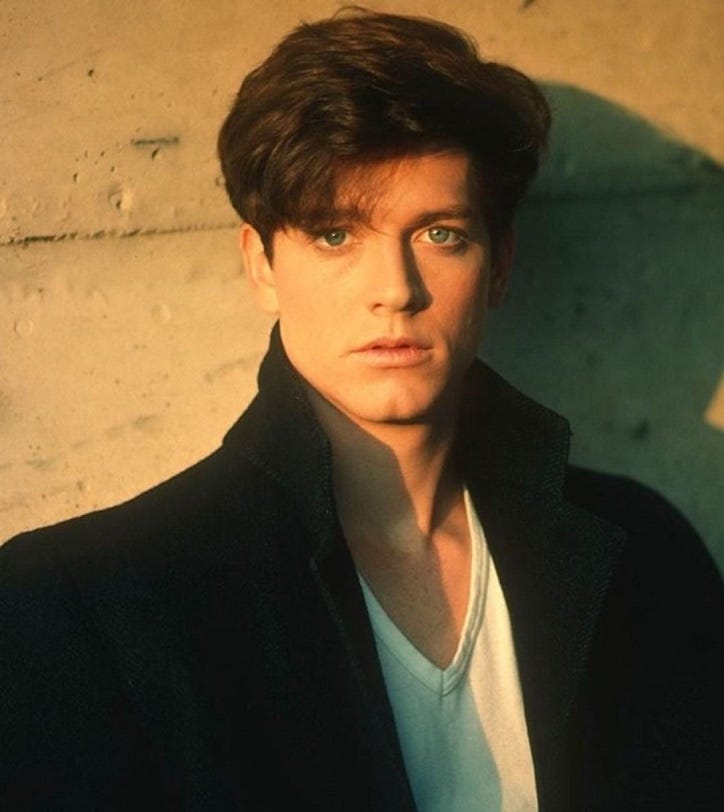
Back in 1985, Eric was even more of a reject when his character in the Things are Looking Up pilot (aired on June 1984) was recast for a new series called The Best Times (aired from April to June 1985). One of the regular cast members of this NBC series was Melora Hardin, who was going to play Eric’s girlfriend in Back to the Future. She wasn’t in the pilot. NBC is owned by Universal, who were behind BTTF. When the Eric Stoltz clip from the 2010 Blu-ray documentary was first uploaded on YouTube by CNN, Kathleen Kennedy’s talking head footage was missing. This meant that the video began with Robert Zemeckis talking. It’s a pity because Kathleen’s contribution made the casting of Eric Stoltz obvious in terms of motive when she said: “We begged and tried to see if we could cast Michael and we couldn't, and then we started really looking for somebody who might embody many of the qualities that Michael had.”
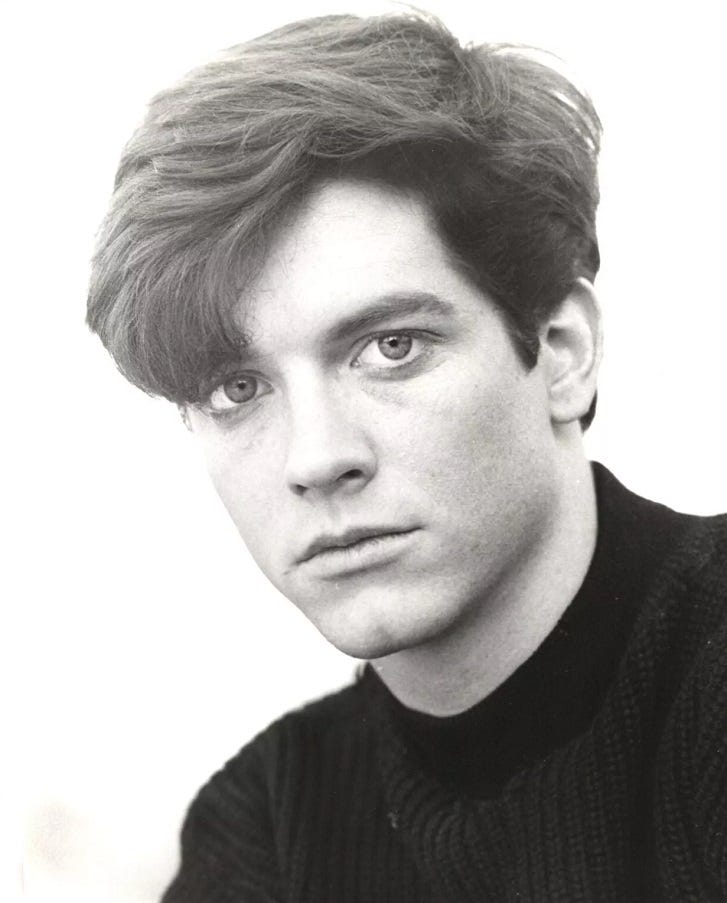
Most people would agree that the only compatible quality that Stoltz had was his resemblance instead of his mastery of sitcomedic acting, not to take away from the fact that he had previously been in film comedies i.e. Fast Times at Ridgemont High (1982), Surf II (1984) and The Wild Life (1984). Besides Bob Gale, the other line producer of BTTF was Neil Canton. He was the only producer in general to not be seen talking about the casting in the Blu-ray documentary. He was also not mentioned when Gale was listing the producers in an interview for a 1994 book called The Cutting Room Floor. The context of Gale’s comment was Zemeckis showing the Eric Stoltz footage to the producers. Neil had extensive experience with the man who directed Eric in Mask (1984) i.e. Peter Bogdanovich. Neil worked as his production assistant on three films in the `70s – What’s Up, Doc? (1972) and Paper Moon (1973) before Nickelodeon (1976).
Frank Marshall, on the other hand, was Peter’s assistant on Targets (1968) and his location manager on The Last Picture Show (1971). Frank clearly cared for Peter’s opinion enough to help him produce Paper Moon, Daisy Miller (1974), At Long Last Love (1975) and Nickelodeon. Frank had first met Neil as they both assisted Peter in producing What’s Up, Doc? Let’s get back to the connection between the Things are Looking Up pilot (1984) and the ensuing series - The Best Times (1985). One of Eric’s closest friends, Dean Cameron, was in both. Judie Aronson was in the pilot; the significance being that she was in a rival sci-fi teen movie that was made at the same time as the original version of BTTF. I am referring to Universal’s Weird Science. I detailed the specifics of the rivalry in a WordPress article titled BTTF: The Overlooked Drama. By the way, The Best Times should not be confused with Fast Times - a 1986 TV series also featuring Dean Cameron and the other actress who played Jennifer in BTTF i.e. Claudia Wells.
I think that it was Neil Canton and Frank Marshall who persuaded Steven Spielberg to cast Eric Stoltz as Marty McFly. Whoever voted in favour first, both of them washed their hands of casting him after things went awry. To understand the backroom politics, Frank and Neil convinced Steven to cast Eric on the strength of Peter Bogdanovich’s exaltation i.e. Eric’s ability to convey emotion with his eyes and voice alone. Steven then convinced Robert Zemeckis, who knew that Airplane! (1980) was proof of a drama actor being able to play the straight man in a comedy. Bob Gale and Kathleen Kennedy wanted a big name, but Steven sensed his right-hand man’s gut instinct. Steven had first met Frank because of Peter as can be read in the May 1982 issue (#19) of Fangoria.
In a 1987 book titled Oscar Dearest, Spielberg was quoted about the decision to fire Eric Stoltz: “It was the toughest call I ever had to make. After all, 4 million dollars went down the drain. Eric Stoltz is a remarkable young actor in the same league with Sean Penn and Emilio Estevez. I should have gone with my hunch and delayed the film until we got Michael J. Fox.”
Instead of handing the blame to someone else, Robert Zemeckis admitted that he was ladder-climbing (as quoted in a 2002 Robert J. Emery book titled The Directors: Take Two): “You can never make creative decisions because of corporate reasons, because someone’s going to get hurt.”
Another example of self-reproach shows how Eric’s layoff from BTTF was as difficult for Zemeckis as it was for Spielberg (as mentioned in the above book): “Letting Eric go was terrible. It was awful. It was the hardest meeting I’ve ever had in my life and it was all my fault. I broke his heart.”
Most surprising of all is how even Gale was willing to take the fall in the November 1992 issue of Cosmopolitan (Volume 213, No. 5): “I’ll take the heat on that one. We messed up. We put Eric in the movie, and he’s a damn good actor, but good at playing disturbed young men. We expected Eric to have the outgoing quality that Michael J. Fox has naturally. Recasting after shooting began was a big bullet to bite.”
At the same time, we can’t forget that Zemeckis saw Eric in The Wild Life - the reason why Lea Thompson was cast. While this was mentioned in the 1990 book, Back to the Future: The Official Book of the Complete Movie Trilogy, nothing was said about Mask despite the book providing the background info on Neil Canton. The book didn’t even mention Frank Marshall’s similar background. Ironically, Zemeckis referenced Mask in The Directors: Take Two but not The Wild Life.
Here’s some food for thought: while Zemeckis had proven with Romancing the Stone that he could direct a successful film, Gale had yet to prove that he could write or produce a hit movie prior to BTTF. He had his neck on the line as a line producer.
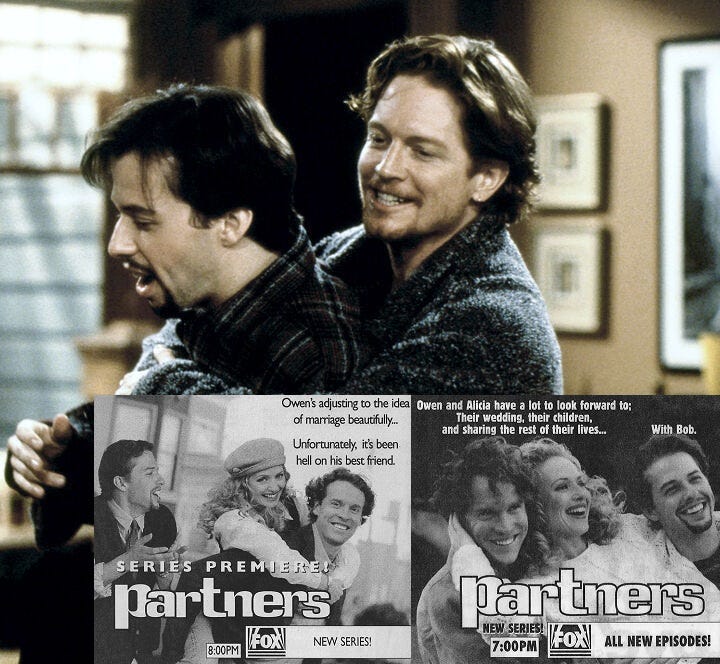
Partners was the next time that Eric Stoltz had worked for Universal. Although it was aired on Fox, the stills are copyrighted to Universal Television. The series only lasted for one season where Eric played a character named Cameron in the tenth episode (How Long Does It Take To Cook A 22-Pound Turkey?) which aired on November 20, 1995. Partners starred two people who auditioned for the role of Marty McFly - Jon Cryer before Eric was cast, and Tate Donovan before Eric was fired. Eric first acted with Tate on Memphis Belle (1990) and again on Homicide: Life on the Street (1997). David Guy Levy, the graphic novelist behind Back to Back to the Future, once said: “I have never met Mr. Stoltz. I did see him eating at a restaurant in New York in the late '90s with Tate Donovan. When I began writing this in 2001, I thought it would be amusing if I just pretended they were close, dear friends based on that interaction alone. I have no idea what their real relationship consists of.”