
Chien

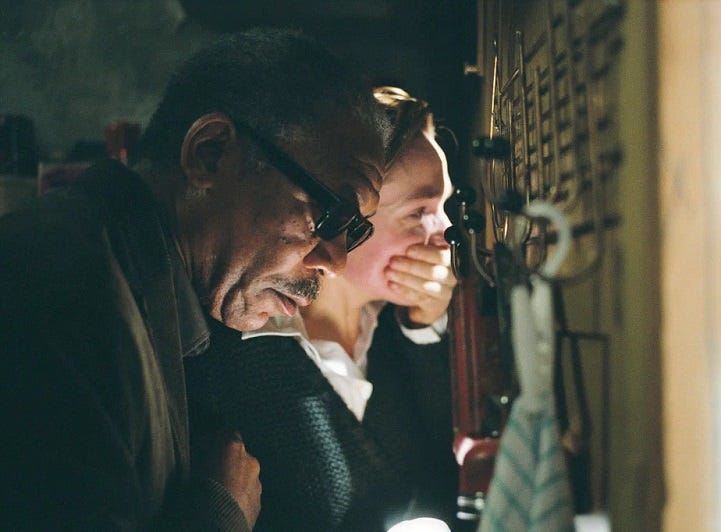
The French word for dog, and also a Chinese name. Written and produced by Luc Besson, Jet Li’s Danny the Dog was retitled Unleashed because it was presumed that people would otherwise think it was a children’s movie. They could easily have solved this problem by having the film called Like a Dog, or perhaps Bark and Bite. In the hands of a smarter writer, the protagonist could have been called Chieh so that the French didn’t perceive the film as being called Dog the Dog. For a film that was shot in Glasgow, it might as well have been filmed somewhere in the South of England when you listen to the accents. This is especially ironic considering the inclusion of Scottish martial artist Michael Ian Lambert.
Bob Hoskins plays a character called Bart, but Mart would have been a better name since it’s reminiscent of market given his profession. It also lends itself to a pun: Marty the martyr. After Kiss of the Dragon (2001), Danny the Dog was Jet Li’s second film for Luc Besson but Luc didn’t direct either film. The former was directed by Chris Nahon, and the latter was directed by Louis Leterrier (who directed the first two Transporter movies), so it was inevitable that French magazine Mad Movies would cover it in their February 2005 issue (#172).
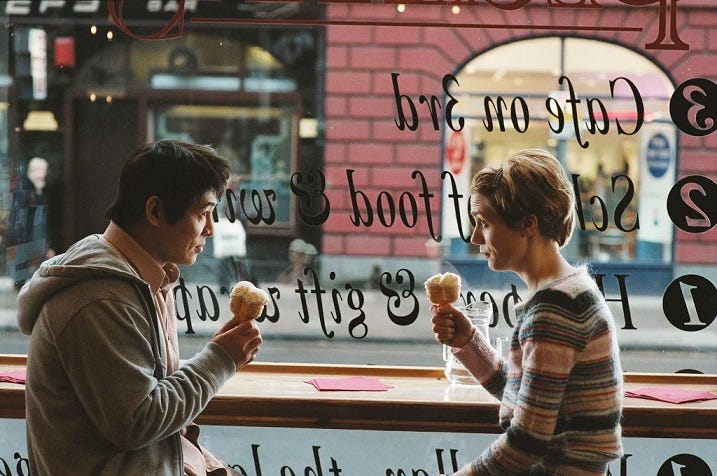
In his interview, Louis said: “The fact remains that, for reasons of nationality, we shot the film in Europe and England since it's a French-English co-production. I chose Glasgow in Scotland, which is an industrial city that we haven't seen much on screen, but also because it's a place with a real cinematic culture, since many films for the BBC were shot there. The local technicians are also exceptional. The other advantage of Glasgow is its very dark urban side, with the underground tunnels under the railways, contrasting with the softness of the large parks and the large greenhouse in which we shot. This allowed us to emphasize the thematic contrast of the film and to reinforce the duality between the brutal aspect and the romantic aspect of the film. It's this challenge that attracted me above all, and that's why we didn't try to "polish" the violent side, nor the romantic side, to see if the audience would like it.”
When a director produces and writes someone else’s film, there’s always the issue of who actually directs. Louis Leterrier remarked: “I realized while working on Transporter 2 that there are films you make for Luc Besson and others you make with Luc Besson. I made Transporter for Luc. I liked the concept, but he was the one who led the way. I said to him, "How do you want me to direct it? Okay, that's a good idea," and then I did it. On Danny the Dog, he was the one who came to me and said, "Here it is, I'm offering you this script, analyze it, come back to me, and then we'll talk about it." The freedom was total. In any case, it's a film that's more personal to me, even if I didn't write the script.”
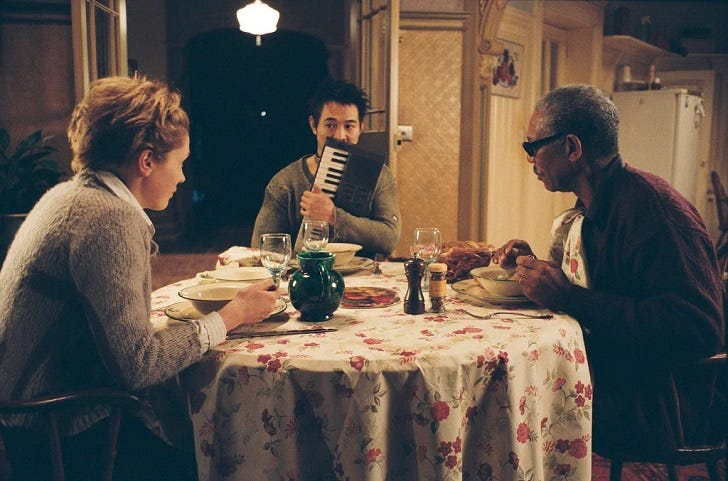
Comparing himself with other employees: “I think the problem with a lot of directors who work for Luc is that they don't dare confront him directly even though he's open to other people's ideas. He's an impressive person. I'm not saying you should walk up to him and say, "Luc, you're really just a big jerk!", but he's someone who has a certain amount of experience that you have to use. I'm pretty frank with him, but on the other hand, he knows the audience and the market well, so when he gives his opinion, it's not stupid. I'm not saying I would only make films with him, but we have a healthier relationship where dialogue is important. I don't consider myself the new Gérard Krawczyk, because even if I think Gérard is a very good director, he's someone who does exactly what Luc wants: he shoots a wide shot, a medium shot and a tight shot, so there's a choice in the editing. When I consider that a certain sequence should be done in a single shot, I do a sequence shot.”
There’s always a caveat, even if it’s a self-defeating one: “On the other hand, I remember that on The Transporter, I edited leaving some passages a bit "jazzy", telling myself that Luc could tighten things up a bit, as he wished, but he told me: "No, do as you wish, that way I have less work!" If we bring him a "perfect" product, he is very happy. One thing that Luc does not allow, however, is complacency. The slightest guy who comes to act "Look at my beautiful camera movement that rocks!", he gets rid of him, unless it is justified. You know that the American version will be different? We see some extra things, notably an end shot where the camera goes into a piano and ends up on the hammer when the last note is played, which makes the room vibrate like the piano string. It is a homage to the shots that David Fincher can do, but Besson did not want it, it was too much for him! Since I am in the Director's Guild of America, I am entitled to a director's cut which worked in my favor for the theatrical release in the United States.”
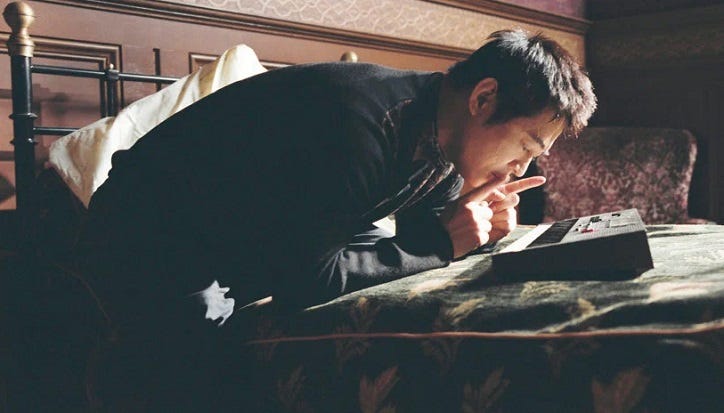
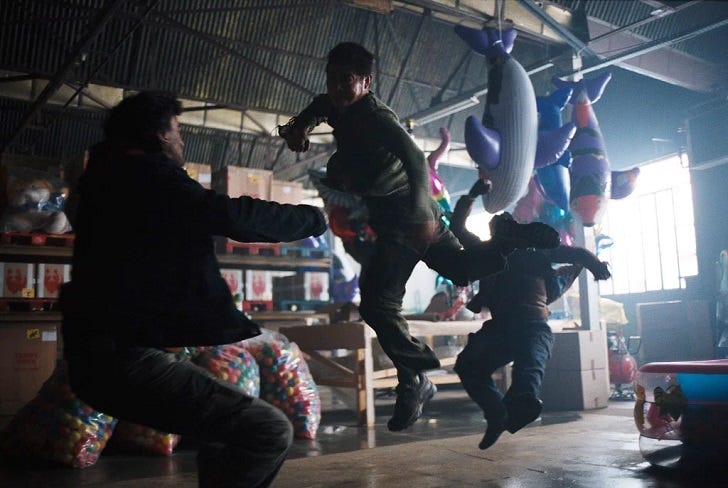
Corey Yuen had already choreographed Jet Li in his previous English language films, so it was time for Yuen Woo-Ping to work with him in this context: “Despite our large budget of 17 million euros, I couldn't afford to cut all the time, so I was forced to experiment and do long takes. It was my second film, and I knew Luc really didn't like that kind of thing, but in the end, it might result in something a little different. But you also have to take into account the difference between Corey Yuen's and Yuen Woo-Ping's choreography. Corey sometimes does four shots in a row, but most of the time, it's boom-boom and cut, shot/reverse shot. Woo-Ping, he hits you twelve times, and we do movements with a crane, it's really interesting, it's fun! In fact, I would say that Yuen Woo-Ping is someone more demanding, while Corey is someone more resourceful.”
Interviewer Stéphane Moïssakis was unwittingly witnessing action movie history being foreshadowed in the most unlikely of ways. One of the stuntmen in this film, Scott Adkins, would star in a film featuring the following concept by Louis: “One of my dreams would be to make an action film in a single take. I'm racking my brains to find a subject. It's hard, I'm not saying the opposite, but I want to try something a little more adventurous. I want to make it dirty, like Gaspar Noé, handheld camera, super violent.”
Scott starred in James Nunn’s One Shot (2021).
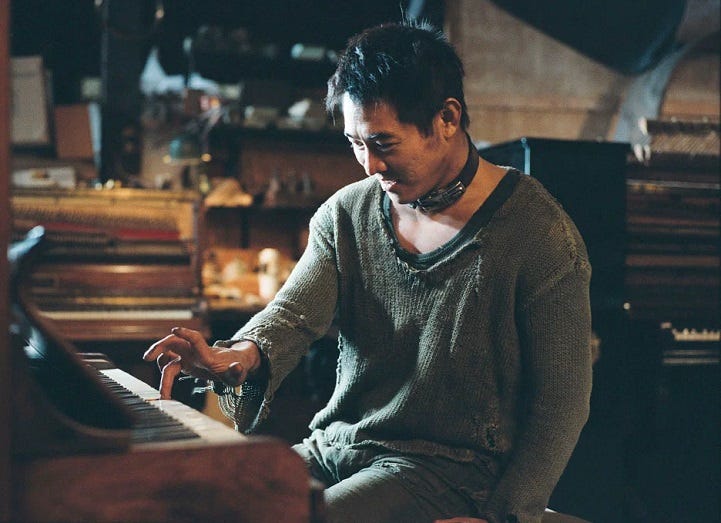
Although Danny the Dog and Transporter 2 were released in 2005, the former was filmed in 2003 whereas the latter was filmed in 2004. Louis Leterrier touched on this by saying: “I get a lot of projects and I turn them all down while waiting for Danny the Dog to come out, because the studios still have The Transporter in mind. So, I've been offered xXx: State of the Union, Doom, etc. I've had everything, all the crap, and it's not at all what suits me. Just last week, New Line sent me a piece of crap! At a pinch, I'd prefer to make The Bourne Ultimatum, especially since I met Matt Damon on the set of Transporter 2 and he's a really cool guy.”
One day, Louis was going to see a movie at the cinema where the cashier recognized him and asked when Danny the Dog was coming out. Even the interviewer picked up on the delay, to which Louis stated: “It wasn't released because we were waiting to have a global, worldwide deal, as well as distribution in the U.S. because the problem with a Jet Li film is that as soon as it's released somewhere, it ends up pirated on the internet within two days. The film would have been released in France shortly after its completion, the DVD would be available today and therefore viewable on the internet, and interest in other countries around the world would have waned. We wanted to treat Danny the Dog as an event, as if it were The Matrix or Lord of the Rings, so we waited for the right moment for that.”
I also think that part of the problem was that Luc Besson’s film company was hoping to cash in on the success of Hero - a Chinese film that was supposed to do for Jet Li what Crouching Tiger, Hidden Dragon did for Chow Yun-Fat in America. Hero was released in China circa 2002, but it didn’t get released in America until 2004. Meanwhile, Jet’s next U.S. film, Cradle 2 the Grave, was released in 2003 - an incredibly busy year for Hong Kong film fans when you consider the number of Chinese people who worked on multiple U.S. projects (this was something that I covered in a WordPress article titled Zany Zeitgeist).
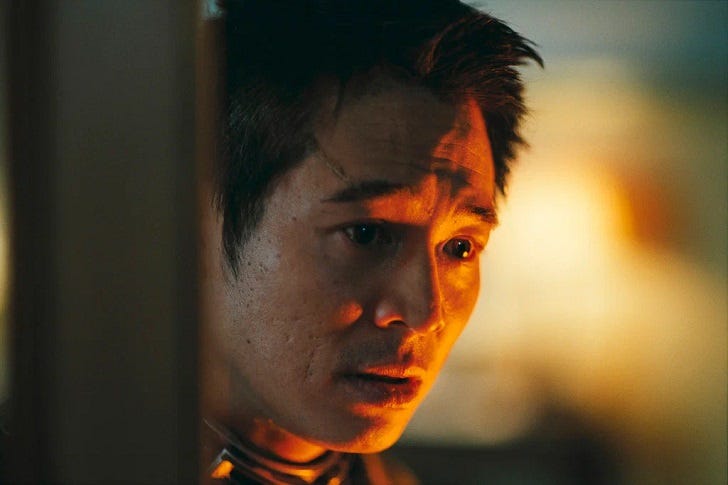
Back to the Mad Movies magazine, Jet Li was also interviewed. Jet said: “Actually, the collaboration with Luc Besson went very well on Kiss of the Dragon, and he offered me to make another film along the same lines, but I said no. It was another action film with martial arts and a lot of violence, and I wanted to do something different. I didn't know what yet, but I told him I absolutely wanted to make another film with him, and he left for two days to think about it. He finally came back with the idea of Danny the Dog. Luc Besson and I work well together because we have the same objective on a film: we try above all to know what we really want to do. Luc instinctively understands what I want and uses all his energy and talent to allow me to be even better. After this second collaboration, I now consider him a brother.”
About the two choreographers who were previously compared: “Corey Yuen and Yuen Woo-Ping are two very competent people in the action movie field. Their respective styles are very different, but I've been friends with both of them for over ten years. If we compared them to painters, I would say that Corey Yuen paints more characters, and Yuen Woo-Ping focuses on landscapes because he emphasizes movement with cinematic space. Lately, I've made a lot of films with Corey, and I wanted to change things up a bit, not repeat myself constantly. That's why Woo-Ping took care of the choreography for Danny the Dog. When you watch The Matrix or Kill Bill, you see his talent shine through; this guy is a real star!”
Interestingly, Jet’s next film with Yuen Woo-Ping (Fearless) was a period film that earned 24.6 million dollars at the U.S. box office versus the 24.5 million of Danny the Dog. Ironically, Jet’s second collaboration with Jason Statham (War) only earned 22 million in the U.S. Then again, the director of Fearless (Ronny Yu) made his name in America as the director of Bride of Chucky and Freddy vs. Jason. It also didn’t hurt that he was known as one of the few men to have directed Brandon Lee in a feature film (Legacy of Rage).
It’s interesting that even Yuen Woo-Ping’s involvement on Danny the Dog couldn’t guarantee an earlier release. This makes it all the more pitiful that Luc Besson didn’t have the confidence to think of hiring Sammo Hung, who is better at directing contemporary martial arts action because it’s more realistic yet still enjoyable enough to be rewatched. Besides, Yuen had already choreographed Jet in a modern movie (Black Mask) whereas Sammo hadn’t. Sammo had choreographed Jet in a fantasy (Kung Fu Cult Master) and a Western (Once Upon a Time in China and America).