
Bon Voyage

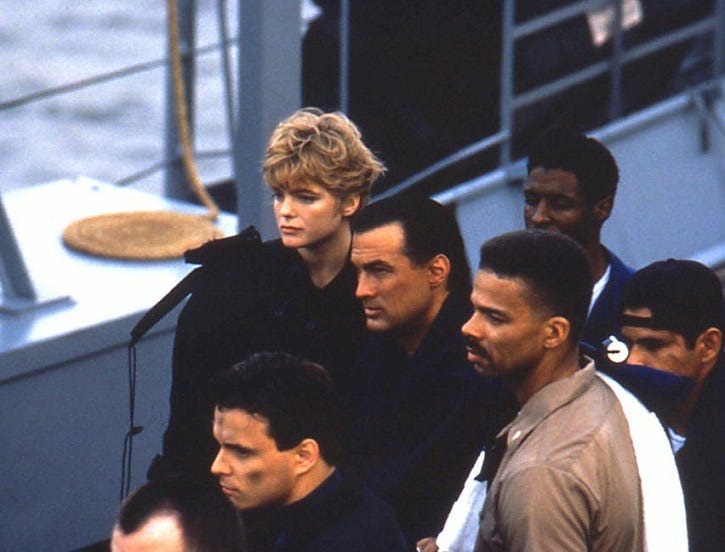
If you want Die Hard on a ship, watch City Hunter or even Red Wolf. As for Under Siege (1992), Steven Seagal was interviewed for the February 1993 issue (#43) of Impact. He complained to French interviewer Marc Toullec: “Maybe you can tell me why all my films fail in France? It's the only country in the world that doesn't make them a success. Here, Van Damme is doing very well, not me. I don't understand anything. Honestly, I think my films are better than his. Well, I can always console myself by referring to the video figures which are excellent. But nothing beats a success in theaters, nothing. I'm counting a lot on Under Siege to restore my popularity rating in France.”
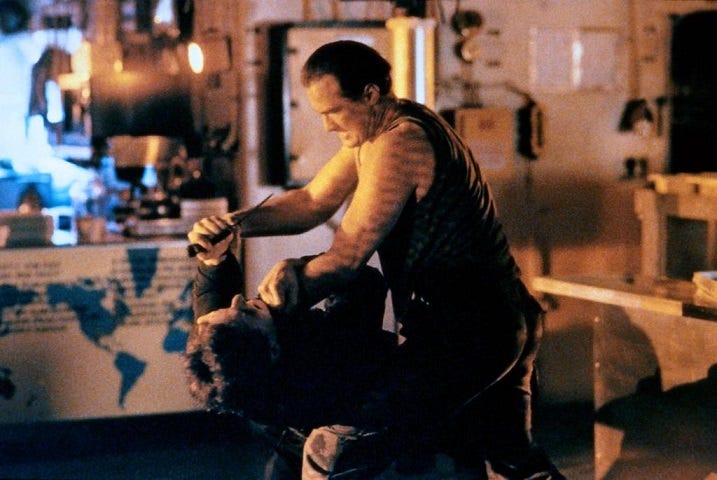
Marc said that Under Siege was less violent and more tongue-in-cheek than Seagal’s previous films, so perhaps he could find a wider audience. Seagal said: “It's true that until now, I've hardly had the opportunity to touch on humor. Above the Law, Hard to Kill, Out for Justice and Marked for Death are very hard films, uncompromising, violent. On the other hand, Under Siege works more on winks, little humorous touches. It's new for me, and quite risky, because I had to constantly stay in touch with my characters from the past so as not to disappoint a loyal audience. Humor allows me to evolve as an actor, to try things I didn't know. But it is not a question of abusing it because, as soon as you slip up even a little, you are no longer credible, you come across as a joker and your character loses its original significance.”
When Bruce Willis transferred his funny tough guy schtick from Moonlighting to Die Hard, it made the latter be perceived as a post-modern action film. The top action movie stars had to step up their game. Sylvester Stallone had to prove that he had a funny bone in Tango & Cash. Arnold Schwarzenegger was already ahead at the curve by starring in a film that was just a comedy - Twins. Willis didn’t quite succeed when Hudson Hawk (1991) was advertised as a straight-up action movie - something that worked for Tango & Cash but not him. However, Stallone misfired with both Oscar (1991) and Stop! Or My Mom Will Shoot (1992). It’s fitting that Arnie’s attempt at parody, Last Action Hero (1993), was less successful than his non-satirical action comedy: True Lies (1994). Of course, Jackie Chan would eventually supercede all of them in that regard.
If Steven Seagal wanted to try his hand at comedy while making a joke of the “Seagal at sea” premise, he would have been better served doing a remake of Jackie’s Project A except by actually having a fight scene that takes place on a pirate ship. In fact, Jackie only did Project A because Robert Clouse (who directed him in Battle Creek Brawl) had kindly written a screenplay for him called Blood Island. The director of Above the Law, Andrew Davis, was the director of Under Siege. After having worked with Dwight H. Little on Marked for Death (1990), perhaps Steven should have hired Mark L. Lester. Since Dwight directed Brandon Lee in Rapid Fire (1992), Steven could have gained something by working with the director who had worked with Lee on Showdown in Little Tokyo (1991). Mark had also directed Arnie in Commando (1985). Like Jackie’s Police Story (also 1985), there is an action sequence in a mall with similar elements (a big jump and guards armed with batons).
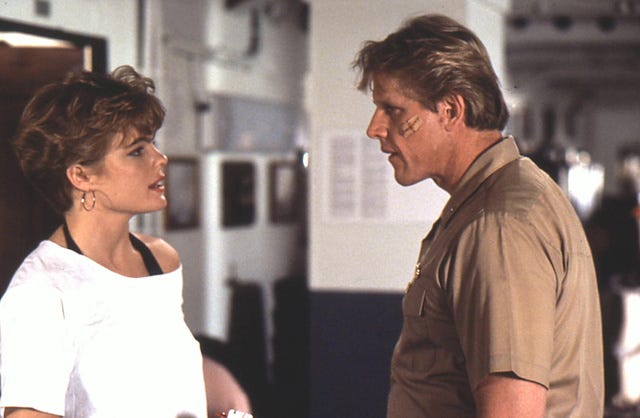
As it stands, Andrew Davis was deemed to be the right director at the right time since he wanted to put a nautical spin on a Jean-Claude Van Damme film that he had been fired from - Universal Soldier (1992). Back to Seagal’s interview, he had to explain why he was first seen wearing a chef’s hat: “I didn't want to show my colours right away, to show that Casey Ryback was a tough guy - a guy with a glowing military record. Putting him in a uniform, in khaki, from the first minutes would have been a considerable detriment to the film. The progression of the story and the suspense depended a little on my attire. From the outset, Casey Ryback was not supposed to look like a hero. What better than a chef's hat for that? The hero he was in the past, he only becomes one again gradually, after half an hour.”
With the weight that he’s put on in recent decades, he could play a chef again. In fact, Under Siege 2 could have been Die Hard in a shopping centre, Die Hard in a food festival or Die Hard in a TV station. Back to Seagal’s interview, he said: “The entire first part belongs to the bad guys who invade Missouri. My character, for his part, freezes in the cold room. Under pressure, he finds his reflexes again. In this sense, Casey Ryback is the most accomplished - the most complex of the characters I have had to play. I had no room for error with him, especially since I had two real actors in front of me - Tommy Lee Jones and Gary Busey, who move a lot. I'm not going to appear in a comedy like Arnold Schwarzenegger or Sylvester Stallone tomorrow, but my character in Under Siege is, in its own way, a step towards another register. I don't want to change suddenly, but to take it slowly, step by step.”
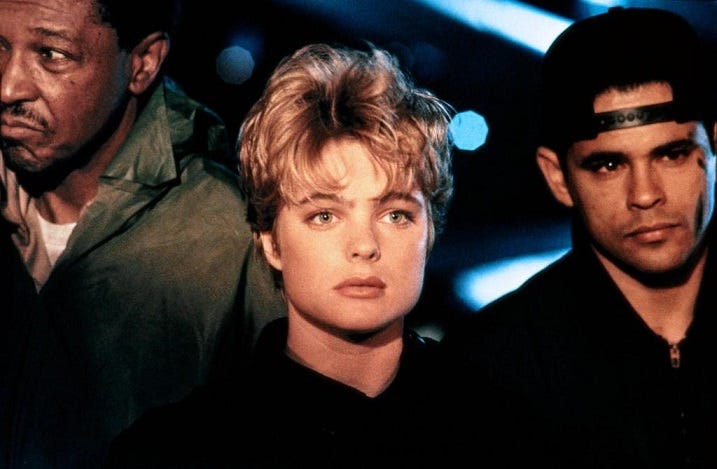
Let’s not forget that Arnie, Willis and Sly had co-founded Planet Hollywood in 1991. Since they were business partners, it was easier for their influence to rub off on each other. Their desire to do action comedy instead of, say, action horror or action romance can be pointed to one of two things. The first thing is to appeal to the Saturday Night Live crowd, as Seagal tried to do in 1991 by having appeared in an episode. It’s been said that the quickest way to a woman’s heart is to make her laugh (although a woman can fake laughs as well as orgasms). That said, SNL star Eddie Murphy one-upped Sly when the latter rejected Beverly Hills Cop (1984). The second thing that compelled the top three U.S. action heroes to deliver “the funnies” is the awareness of martial artists who could deliver an extra thrill to their own action movies. I personally think that Sly had led Cynthia Rothrock on by stonewalling her if not lowballing her. For those who don’t know what I’m talking about, she was signed to a contract for a film that never happened: The Executioner.
Cynthia was informed not to do anymore Hong Kong movies but that doesn’t change the fact that she already had a back catalogue of them. It’s most likely that Cynth’s newfound status as Sly’s sidekick, if he was being genuine, would have put her in a position where she could combine Hollywood production values with Hong Kong fight choreographers for her own movies. Cynthia was the one major contender for martial arts movies who never got the chance to star in a film that was released in U.S. cinemas - everything she did was straight to video. Not that it stopped her from occasionally bringing over a H.K. fight choreographer since H.K. was getting too dangerous with stars being threatened to be in films. Stallone’s Tango & Cash would have looked awfully lame had Jackie Chan and Tom Hanks starred in Singapore Sling a year or so prior. The aforementioned Mark L. Lester was tipped to direct. By the time that it was 1993, Stallone wanted Jackie to play the villain in Demolition Man.
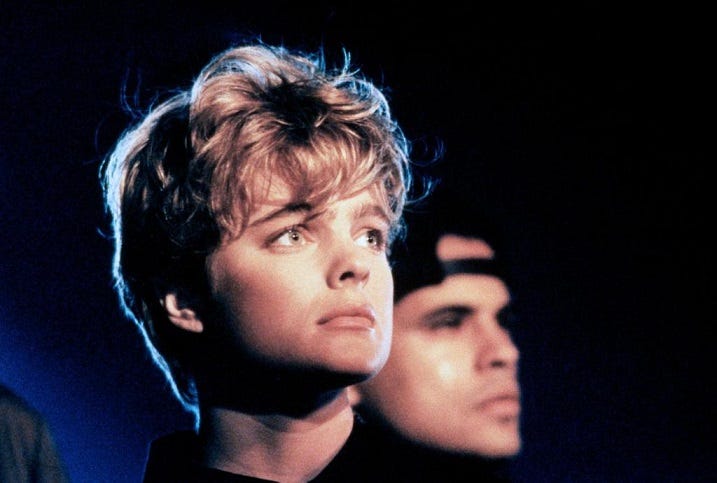
This presents an unusual irony. Sly was okay with fighting a martial arts movie star but not fighting alongside one in The Executioner. Cynthia could have been cast as his sidekick in Demolition Man (1993), especially since producer Joel Silver is a major fan of Hong Kong action movies. Interestingly, this was during a time when JCVD had also expressed a desire to do comedy. Both him and Seagal were almost cast as the leads in Demolition Man. This movie could easily have been Arnie versus Sly, as was almost the case with Face/Off - a John Woo movie produced by another Hong Kong movie fan (Michael Douglas). It’s peculiar that director John McTiernan wasn’t sought after for Under Siege. If he could be okay with reuniting with JCVD on Last Action Hero after he was fired on McTiernan’s Predator then Under Siege should have lured him in, at least for the opportunity to work with Tommy Lee Jones if not Steven Seagal.
Despite Steven not exactly being in a position where he could be directed by Walter Hill or John McTiernan like Arnie, he was asked if he used his power on set in front of the director: “When it is necessary, I do not hesitate. On the set of Under Siege, I was the boss. The entire conception of the film, from A to Z, was in my hands. I chose all my collaborators, the other actors. The choice of director also depends on me. He must correspond to what I want. You have to be flexible, open to all suggestions. Five years after Above the Law, I took on Andrew Davis, because he knows his job perfectly, all the tricks of the action film. We get along well; he knows the parameters of his function. By opting for him, I wanted to avoid the bad experience of Out for Justice. There, I really did not get on with the director, John Flynn. He is a good one, but he saw a different film than the one I had in mind. So I had to replace him on many scenes, reshoot certain sequences in full. I don't really like Out for Justice.”
Say what you will but Steven knows his audience: “In France, I know that you find the Hollywood system aberrant, that you condemn stars who bother filmmakers. But that's the way it is. I'm not here to turn everything upside down. I believe that a film can correspond to the personality of its main actor, that the director, if he doesn't agree with him, can leave, give his place to another. That said, to get the film I really dream of, I will soon officially move on to directing with The Rainbow Warrior, which I will shoot in Alaska.”
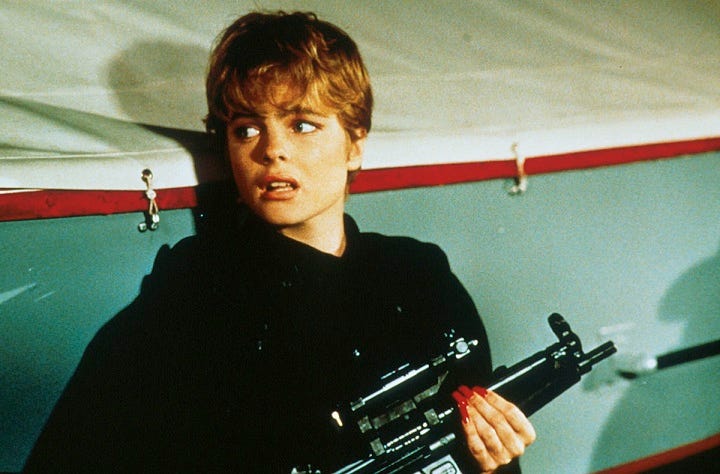
In comparison to the actors who perform martial arts in Hollywood: “I know martial arts because I've practiced them all my life. When I fight, it's not a gimmick; I can really hurt a lot, and even kill with my hands. I'm tired of seeing all these actors in the movies who claim to be martial artists. I'm tired of seeing some people copy all my tricks, all the takes from my fights in their films. Van Damme, for example, regularly copies me. I don't like this guy. He has a big head and his movies suck.”
Perhaps a collaboration wouldn’t have worked out even with the best of spirits. Dolph Lundgren didn’t quite make it as an A-lister after co-starring in Universal Soldier. It’s the same thing with Rutger Hauer. Both men had promising starts to their careers by playing villains in mainstream movies starring Hollywood heavyweights, but perhaps Dolph and Rutger were the wrong kind of Europeans for mainstream Hollywood. Even Englishman Gary Daniels, who set sails for City Hunter, couldn’t quite make it to the big leagues despite having the ponytail gimmick of Seagal with the athleticism of Van Damme. Although it’s been said that the Americans loves the English accent, Gary’s accent made him sound more Australian.
Back to the Impact magazine, journalist Marc Toullec informed Seagal that justice through violence is at odds with the Zen philosophy. The same thing could later have been said to martial arts actor Jet Li when he became a born-again Buddhist. Anyway, Steve’ Sea’ said: “This is one of the great paradoxes of my existence. In life, I am a very calm person, who speaks softly - a kind person. In films, I am quite the opposite. To tell the truth, cinema is in some way an exorcism for me, a medium that allows me to externalize my inner violence. It is there, as it is in everyone. I have to evacuate it through action, even fictional. Before arriving in cinema, I was in the field - a bodyguard, a government agent. Physically, I had plenty of time to exert myself. Today, I still do it, but differently. On screen, I let my dark side speak. My films exist partly for that. And then, there are not a thousand ways to get rid of the bad guys. The confrontation can only be physical. Do you see me sitting cross-legged and deep in meditation facing enemies armed to the teeth?”
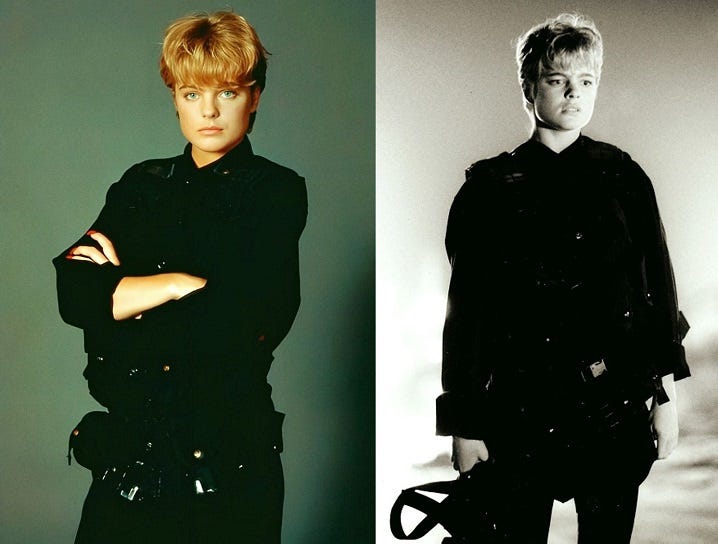
A mind to match his brooding face: “I don't like my public image, that of a guy with a gun who settles all disputes with violence. I have no choice, however, but it's the opinion of my friends that matters most to me. It bothers me to be identified with a kind of Dirty Harry. Learning that someone would leave their house with a gun in their hand, under the influence of one of my films, would really upset me. Clint Eastwood knows something about this and it took him time, a lot of time, to get people to admit that he was not just a tough cop.”
The pony-tailed master is asked to explain what happened to his AIDS film project: “I explain that AIDS is a laboratory product manufactured by scientists. All the studios have refused it. This project is scary, producers would risk a lot by betting on it. People prefer to see me with a gun. It's more profitable. Maybe I should consider a film about my life before cinema. It was very eventful. Besides, my wife often recommends it to me!”
Under Siege would have been better had it been a Cynthia Rothrock movie. Since Gary Busey and Tommy Lee Jones provide most of the entertainment value with their acting, Seagal’s involvement is redundant. Besides, he’s not that believable as a chef. Having Rothrock at the helm, an interesting story could have been told about a woman who you were unsure is a lesbian. With Erika Eleniak having short hair during a time when Rothrock also had short hair, the potential was there.
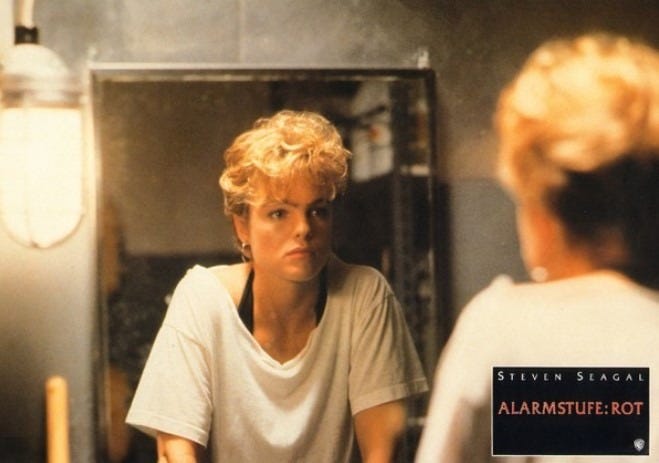
Erika’s transition from Baywatch to Under Siege is worthy to note when you see how she changed her hair length. There seems to be a bit of confusion in the film-makers as to what her character was meant to be. It’s possible that they wanted someone who would be like Nancy Allen’s character in RoboCop (1987). The writer of Under Siege, J.F. Lawton, was certainly not against female protagonists as proven by Pretty Woman (1990) and Cannibal Women in the Avocado Jungle of Death (1987). The latter, featuring Bill Maher, was hailed as a feminist classic by film critic Mark Kermode. As for action movie heroines, J.F. Lawton later adapted a female-driven computer game called DOA: Dead or Alive (2006). Erika Eleniak wasn’t in that but she got to play a boxer as the main character in The Opponent (2000).