
Beau Coup

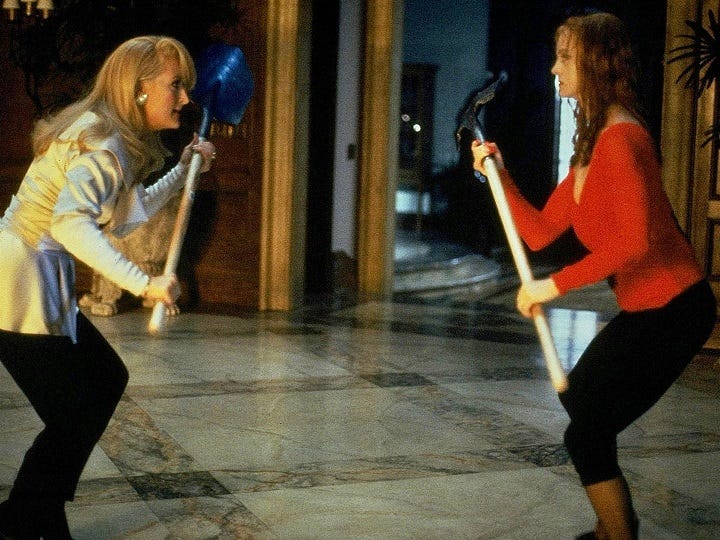
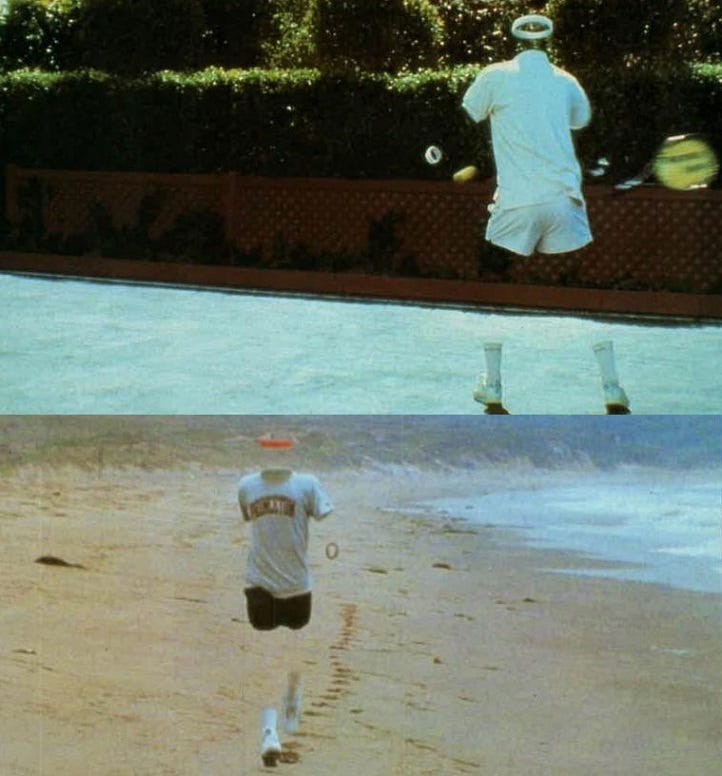
This technically means a seize to get a boyfriend despite “merci beaucoup” meaning thanks a lot. Death Becomes Her is about two women competing for the affections of a man with deadly consequences. The movie was released in July 1992, and was hailed as a ground-breaking achievement. However, there was already a dark comedy with similar special effects that had been released in February - Memoirs of an Invisible Man. Covered in the July 1992 issue (#78 as seen below) of Mad Movies, this John Carpenter movie was less successful at the box office. The combination of Chevy Chase, Daryl Hannah and Sam Neill didn’t quite match Meryl Streep, Goldie Hawn and Bruce Willis. Just to digress, Bruce experimenting in comedy with the Robert Zemeckis film and Hudson Hawk (1991) was still better than Sylvester Stallone’s attempts with Oscar (1991) and Stop! Or My Mom Will Shoot (1992).
In the November 1992 issue (#80) of a French magazine called Mad Movies, there was an interview with composer Alan Silvestri that was overlooked since it wasn’t placed directly after the main four page feature for Death Becomes Her. With no indication in the contents page, it’s quite some distance from page 48 to page 65. Anyway, the film was Alan’s sixth collaboration with director Robert Zemeckis. The conductor of the interview was Didier Allouch.
How Alan first met Robert: “We met when we were both going through a difficult time. Our careers took off thanks to the same film, Romancing the Stone. We had worked together before, but never on a film of this magnitude. We were at the beginning of a new phase in our careers and it created a strong bond between us, so much so that today we are excellent friends.”
An overview: “Above all, we have the same conception of the role that music should have in a film. We work in the same direction, Bob makes entertainment films. What interests him above all is the audience. He wants the audience to understand everything that is happening, for everything to be clear in the film. He never does anything that is out of place. Everyone who works for him, from the lighting technician to the makeup artist, considers him the captain of the ship, because he deserves the respect and the responsibilities that are given to him. I am part of the crew. Bob has a special gift for drawing attention to a joke by any means, including music. Remember the "Damned! Dawned! Damned!" sequence in Back to the Future? That's a Broadway thing, a musical, creating interactivity between the music and the dialogue. Bob isn't afraid to use that kind of effect to make his jokes work. A movie like Back to the Future is there to entertain. Why not indulge in all the extravagances? Anyway, if someone comes to see Back to the Future for anything other than a laugh, they've gone to the wrong place.”
How open to suggestion that Zemeckis is: “He is a man who is very open to the people around him. He talks to us all about the script, the story, the look... When we see the finished film for the first time, he brings his wife and all his friends. He listens to everyone's reactions. He wants the film to be as successful as possible, even if it is no longer as faithful to his ideas. If someone brings an idea that works, Bob does not hesitate to use it as far as music is concerned. It's the same thing. Bob let me enter areas that composers rarely have the opportunity to visit. So it becomes very easy for me to listen to his comments and share them with my work. So it's a two-way collaboration that he not only maintains with me, but with everyone who works with him. It's very rare in cinema today.”
Composing Death Becomes Her was easier than the film itself: “The problem with every film is trying to find its tone, just as the director has to hide it on a grand scale about the look. Will it be dark, moody, neutral, etc.? The composer does the same thing, looking for the musical voice of the film. Once that's done, the music comes very easily. For Death, I found it very quickly. Bob would take very classic sequences and introduce a weird element without ever putting it in the foreground. When Meryl Streep has her head upside down, she acts as if nothing is happening, and Bob films this sequence normally. I did the same thing. I had to find a way to bring the weird element into the composition without it becoming the main element of the scene, but just a way to spice it up. Bob wanted the music to sound like it was coming from Bruce Willis' point of view, because Bruce is kind of the audience's eye in this movie.”
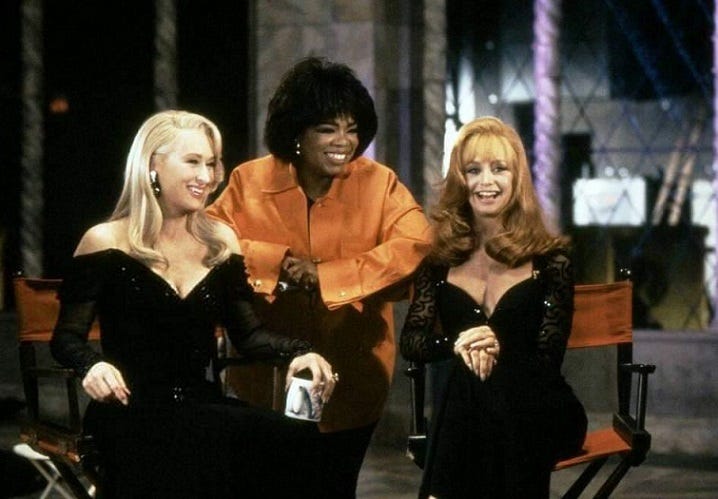
How Alan came up with the main theme: “The subject of the film is eternity, the fountain of youth. But there is something devilish here. The women in the film are, in a sense, tempted by the devil when they choose immortality. Bruce Willis, on the other hand, prefers eternal peace. The film is about this struggle against temptation. I wanted people, when they listen to the theme, to have the impression of seeing the devil's demonic smile waiting to see who will fall into his clutches. So the theme had to be bizarre, unexpected and full of humor.”
Genre being a potential dictator: “I don't think in terms of genre. I look at films scene by scene, moment by moment. The job is to act the film. With comedies, I never try to compose humorous scores. If the film is comical, the music doesn't have to be, it just has to emphasize the dramatic aspects. The contrast will be greater and therefore the effect funnier. If you have a scene where a kid hits an adult on the head with a plastic hammer, you have to play it very seriously, because in the child's mind, what he's doing is very serious.”
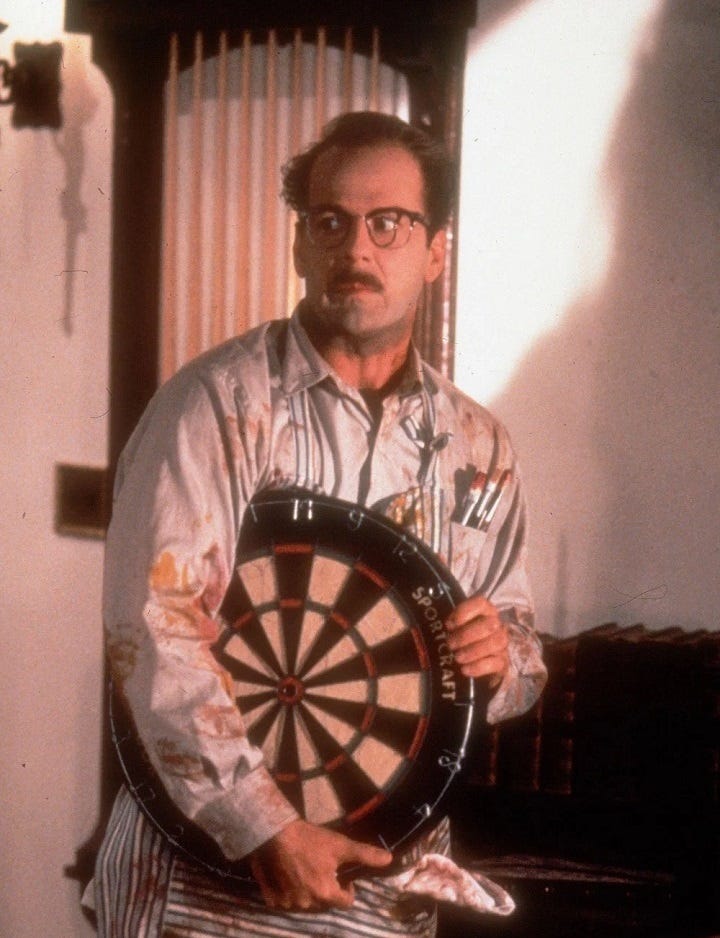
Friendships between composers in Hollywood: “No, not really. We sometimes meet at dinner parties, but that's as far as it goes. Sharing your work with others is not something that's done in our profession. Of course, I have composer friends, like David Newman, but composing is a job that you do in a room all alone. You don't often meet other composers because they're also locked in their room. There's camaraderie between us, but contact is rare.”
Competition: “I don't see it that way. A few rare composers have producers with whom they work regularly, but most of the time, it is the system of lists that predominates. The production presents a list of 15 or 20 musicians to the director who chooses. The lists are established according to several factors: finances, the composer's past experience, etc. The director generally keeps 4 or 5 names and the producer then calls the agents of these musicians to ask them for demos. The final choice is up to the director who, in the meantime, has met the composer(s) who caught his attention. So, the competition exists only in relation to past work. If a director wants to hire the composer of Back to the Future, I have the job immediately, no one can do anything. Conversely, if a director chooses the one who wrote the music for Star Wars, it's me who can't do anything. You always have to be at the top. Otherwise, you won't be hired anymore and you disappear from the lists.”
The system is very harsh: “Very, very hard. It's not enough to get up early in the morning to be sure of working. You have to have proven yourself on other films. So it's extremely difficult for a young person to break through.”
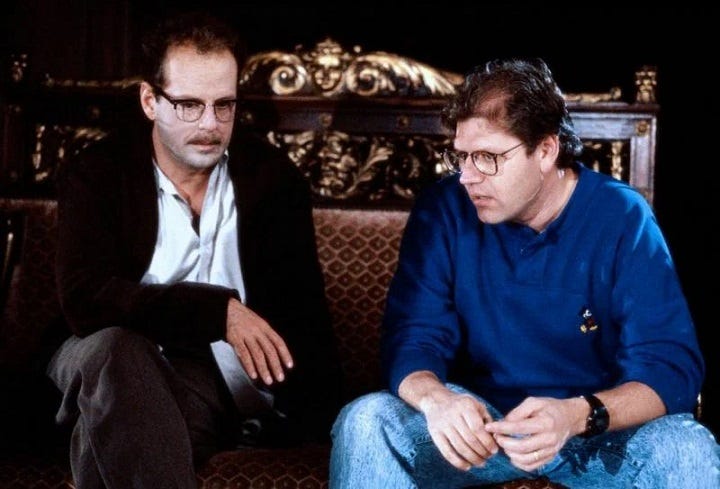
How to succeed in Hollywood: “It's absolutely impossible, but you have to refuse this obvious fact! There are still two or three possibilities. First, you have to be in Hollywood if you want to work there. You know, you have to stand next to a building if you want to get a flower pot on your head! There's little chance that a flower pot will fall over, but if ever it's better to be next to a building! So there are educational programs available in Hollywood sponsored by Broadcast Music or the American Film Institute, sometimes even by the Academy. This allows you to practice composing, to record your own music and send it to people. You can also work for free for young directors. If you're really hungry, there are always things to do. The last resort is to wait for the flower pot!”
The waiting game: “I was walking down the street when the flowerpot hit me in the face. I didn't do any seminars, I didn't do any personal work, my career was based on an accident, a mistake. I was playing guitar and writing arrangements for a songwriter. I was 21. Someone saw this songwriter's name in the credits of a movie - one of his songs had been used in the soundtrack and called him to do the music for his movie. But this guy was a lyricist, not a musician. So he called me and offered me to write the music for the movie. I needed the job, and I accepted. That's how I signed the music for The Doberman Gang, and that's how I became a film composer. By accident... I had never thought about becoming a composer. Since then, I've done the music for 40 or 45 movies. I think I'm finally going to make a career out of it.”
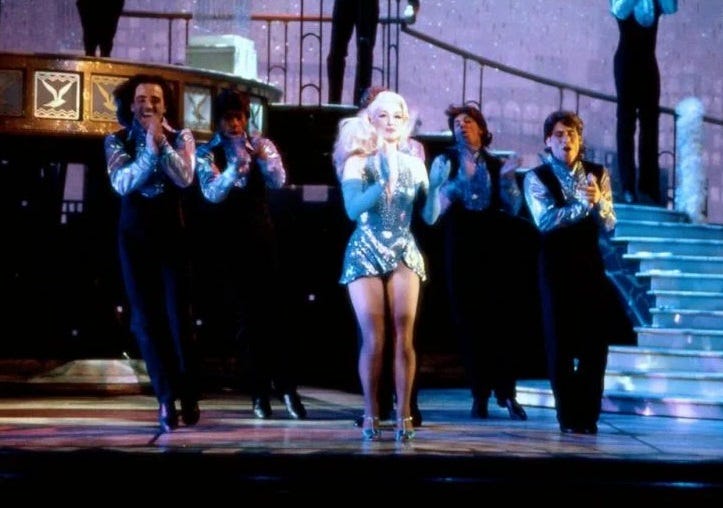
Meryl Steep gave a short interview to Emmanuel Itier for Mad Movies. She had already done a crazy comedy with Roseanne Barr called She-Devil (1989), but still: “It's true that I didn't expect to receive such a script at all. After two comedies, Postcards from the Edge and Defending Your Life, I was looking for a more dramatic, more serious role, a character that was a little more like me. When I was told that Death Becomes You would be directed by Robert Zemeckis, a "turbo" director, I couldn't resist the humor of the story. To tell the truth, I thought that my role would be the one that Goldie Hawn now plays since Madeline Ashton dances and sings, things that I had never accomplished on screen. It wasn't my thing. But I said to myself why not. To be able to dance and sing, even in a mediocre way as the role requires, I had to take classes, suffer.”
Emmanuel Itier asked Meryl if he felt close to her character - Madeline Ashton - a star who is losing momentum because she is getting older: “Not at all. Madeline depends mainly on her "go-go-boom" side, on her excessive glamour. That's really not my case. Madeline bases everything on her physical assets. She is a Barbie doll in her late fifties, she tries in vain to delay the ravages of time. I have played beautiful and young women, but the important thing is to bring a character to life. If you succeed, people will follow you. To achieve this result, there is no need for plastic surgery. I am not obsessed with my physique even if I take care of it. I consider the obsession with youth, with appearances, particularly in Hollywood, to be harmful. I liked making fun of it through Death Becomes Her.”
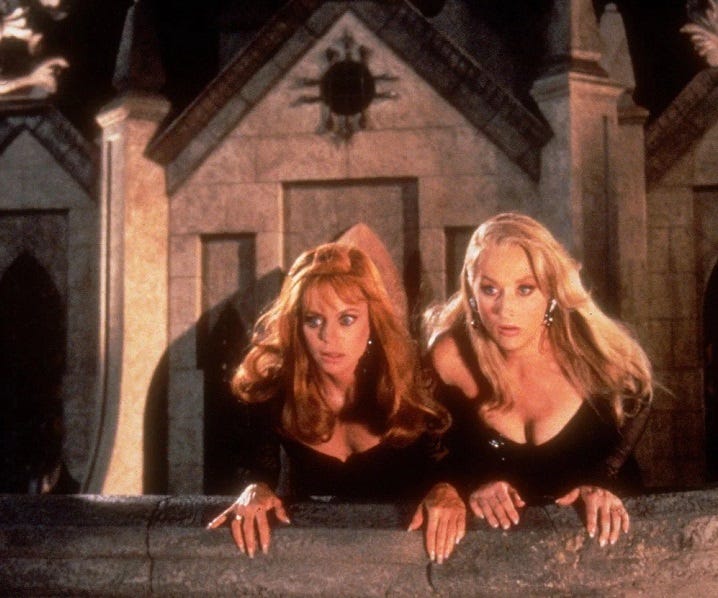
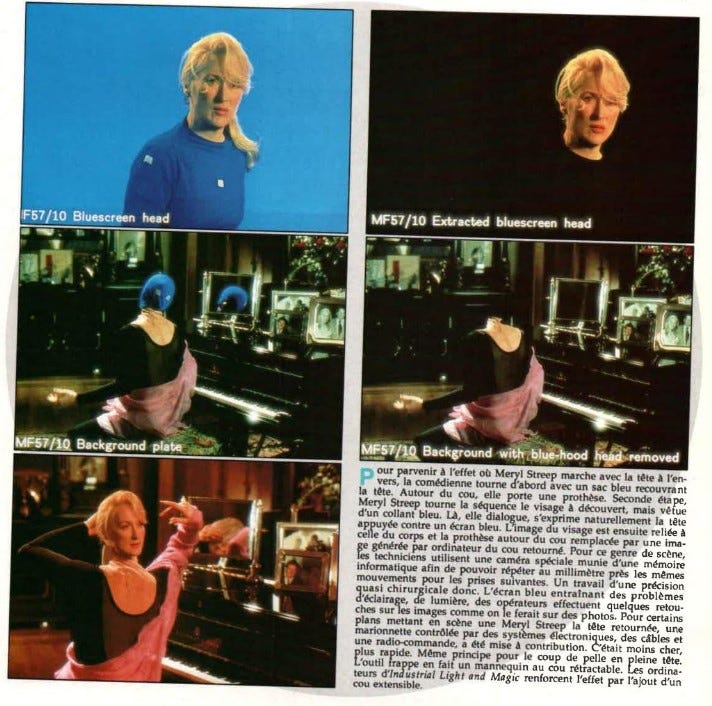
The challenge of acting with special effects: “Seeing special effects on screen is always funny, but for an actor, it's really not fun to shoot. I expected to laugh at the rushes when I saw the special effects; in fact, I was horrified to see myself in that state. In fact, I was horrified. My children are convinced that I was tortured to achieve this result. Filming the special effects sequences was long and tedious. To make me look upside down or to have my head swivel 180, I would shoot the same scene several times, each time hiding a part of my body. One time, I was wearing a blue bag over my head. The head could therefore be eliminated. Three weeks later, I was doing exactly the same scene again, but walking backwards and wearing a blue jumpsuit. Only the head was preserved! Once, my mother visited me on the set. When she saw me with that bag on my head, she wondered why I was being paid so much if it was to hide me. But I didn't steal that money. That said, I still don't understand anything about special effects. Some of them were easier to do. For the sequence where my buttocks reform, I did the stunt myself, without any trickery, just using gymnastics. For the breasts that regain their volume, a makeup artist behind me lifted them up. The special effects people tried all sorts of inflatable breasts, but none of them worked properly! So we resorted to a very simple subterfuge.”