
Bande à Part

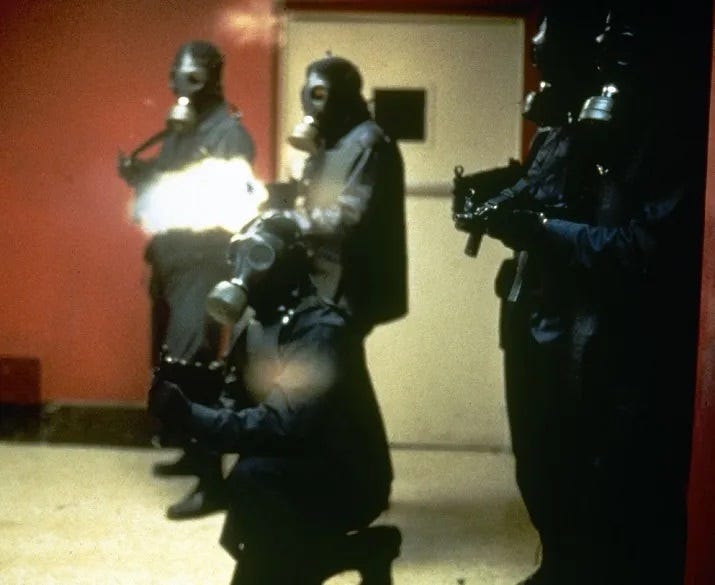
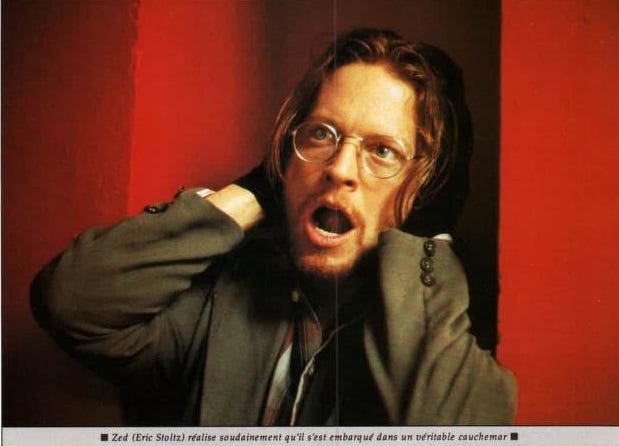
This means band of outsiders. It was the title of a 1964 Jean-Luc Godard film. This resulted in Quentin Tarantino naming his first company, A Band Apart. Lawrence Bender was one of the co-founders. The company logo was an image from Quentin’s feature-length debut about a heist - Reservoir Dogs (1992). Another heist movie, Killing Zoe (1993), was executively produced by Quentin and Lawrence but it wasn’t produced by A Band Apart. Killing Zoe was written and directed by Quentin’s writing partner, Roger Avary. The star, Eric Stoltz, was part of Quentin’s social circle. Not only was he in Pulp Fiction (1994), but Quentin appeared in Eric’s Sleep With Me (1994). Back in the mid-eighties, Eric used to live in France. Killing Zoe takes place in France but only a little bit of the filming took place there.
In the June 1994 issue (No. 51) of the French Impact magazine, Roger was interviewed as part of a six page feature on Killing Zoe. He explained how the project transpired via True Romance (1992): “At the request of the producer, Samuel Hadida, who hired me by phone, I rewrote the finale, retouched blocks of dialogue. Samuel also asked me to "polish" a few scripts. Afterwards, when I came to Cannes to try to find a producer for Killing Zoe, I didn't have a penny in my pocket. I slept on the landing of Monte Hellman's hotel room. At this festival, I finally met Samuel Hadida in person. We talked at length. He loved bank heist films even more than I did. I asked myself the question: "Maybe he secretly dreams of robbing a bank?" Since I have dual American/Canadian nationality, I had a chance of getting a grant from the Canadian government. It didn't work out. In fact, Killing Zoe almost got made three times before Samuel Hadida took it over. I consider myself very lucky to have a producer like him; I was totally free on set, free to make all the artistic decisions. In the United States, it's invaluable to work in such conditions.”
About Monte Hellman, he was one of the executive producers for Reservoir Dogs. The genesis: “Producer Lawrence Bender peeled to tell me: "Great! I found a place, a bank, where we can shoot for next to nothing! Do you have a story about a heist in reserve?" I lied and answered: “Of course.” And so I had to get down to writing immediately. I finished the script for Killing Zoe in two weeks! I later learned that Paul Schrader had feverishly finished the script for Taxi Driver, in one week. Without comparing myself to him, I wrote Killing Zoe in the same state of excitement!”
The MPAA (Motion Picture Association of America): “I should thank the American censors for making the film even more powerful by asking me to cut it up! But the American censorship board is really an association of hypocrites, hypocrites in collusion with business, with the big studios. They leave Cliffhanger, Demolition Man, Menace II Society alone, which are at least as bloody as Killing Zoe, but they attack me with all their might because I am not part of the system, because I do not make a spectacle of violence. I describe it as it is: repulsive and gloomy. You have to look away when you come into contact with it. But the censorship system in the United States works at two speeds - a very soft pedal for the powerful, a much harder pedal for the small and independent. This logic is killing American independent cinema. This is why I prefer to work in France.”
Cheating the system: “I admit that Quentin Tarantino gave me a trick to get away with them. For Reservoir Dogs, he filmed a shot, knowing that he would not use it, the one of the cop's ear that Michael Madsen cuts off with a razor. Of course, the censors balked at this very gory shot. But its removal allowed Quentin to bargain, to negotiate another scene. I imitated him on the set of Killing Zoe by canning images that I did not want to see in the final cut. With Tom Savini, I shot a sequence where Jean-Hugues shoots a hostage at point-blank range, the bullets piercing his hands with which the victim tries to protect his face. This shot allowed me to discuss the piece of fat, to save something that I really intended to show. In any case, I am more attentive to people's reaction to violence than the violence itself. For example, when Jean-Hugues Anglade shoots himself up by pricking himself, why should I show the needle going into the arm when the emotion on the face can be more devastating than any clinical image? In this sense, Killing Zoe is more of a reaction film than an action film. It must also be said that I could not afford to make a genuine action film. When the police invade the bank, I had to resort to economical methods worthy of Roger Corman.”
The bank manager character: “Originally, the role was supposed to be played by a man. After meeting this sweet woman who reminded me of my grandmother, I changed the gender of the character.”
There is a cameo. I won’t reveal his name in the prelude, so witness the art of the reveal (as they say): “I met him for the first time in Cannes two years ago now. Since he was my only contact in the film industry at the time, I hired him. At the auditions, Ron Jeremy was excellent. He surprised me. Since I couldn't give him the role of the American tourist, the actor having already been chosen, I gave him the role of an office worker. By killing his character, I told myself that my popularity rating with the American moral majority would go up. It's politically correct to kill an X-rated film star!”
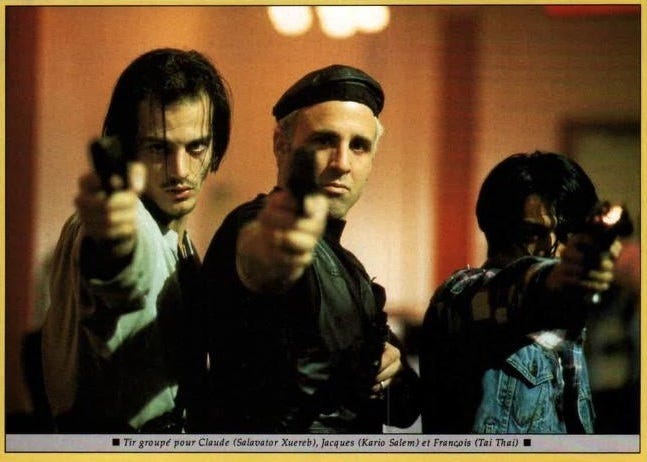
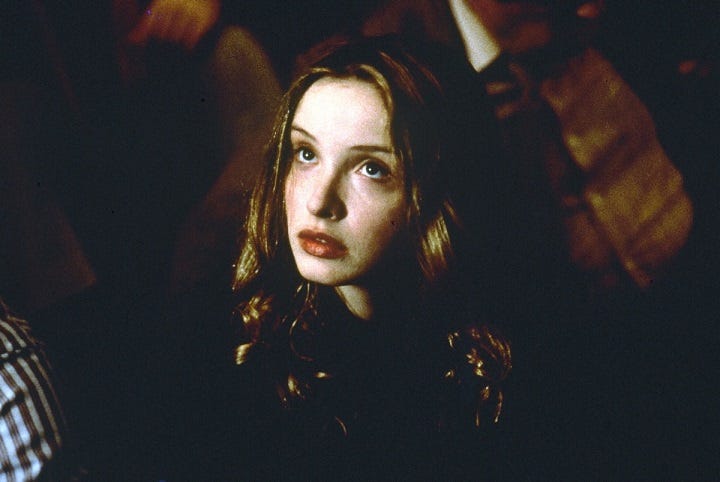
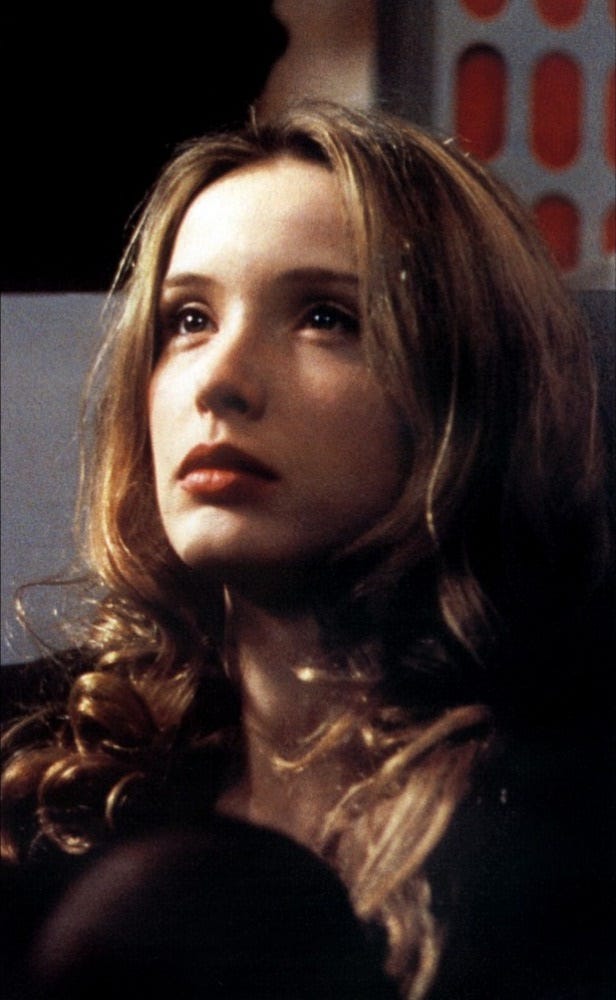
There is a character called Eric, who is not played by Eric Stoltz: “Julie Delpy's name in the film is Zoe. In Latin, it means life. Eric Stoltz's character is called Zed; he is in a way at the end of the moral rope of his life. He is a repeat offender, a guy who gives in to his bad inclinations again. When he meets Zoe in her hotel room, he sees in her a kind of angel, a young woman who could change his life, bring him back to the right path. Eric's influence is contrary - evil. It is therefore logical that Eric hates Zoe instinctively. In fact, the film tells the story of the persistence of Jean-Hugues Anglade's character in wanting to kill Zoe, in other words, in wanting to kill Life. This desire is symptomatic of my generation. My protagonists are its representatives, with their bad and good inclinations. If Killing Zoe is what it is now, it's also because all the people on the team are about my age. They understood what I wanted to get across, they supported me considerably. So all I had to do was take care of the actors.”
A person who is lost in translation: “My French is not excellent, although I manage to understand generally what is said and I know the script by heart, I was sometimes a little lost. It must be said that I did not make my task any easier by encouraging the actors to improvise. Well, I made up for it by listening attentively to the soundtrack. On the other hand, for an American director, directing a film including a lot of dialogue in French is a liberating exercise. I concentrated not only on the words, but also on their intonation, on the emotion they provide. I understood everything through the tone of the voice. That was the main thing, and French is such a beautiful language!”
The interview resumed in the August 1994 issue (No. 52) of Impact. Roger Avary talks about drugs: “The problem is that although I had the opportunity, I never took heroin, I chickened out. And I wondered if it was right to make a film about heroin without having ever tried it. At the end of the shoot, during which I was trapped in a bubble 24/7, I realized that heroin was fashionable in Los Angeles. People take it today like they used to binge on cocaine in the ‘80s; it scared the hell out of me. I invited a friend who was a heroin user to see the film. He told me: 'I feel rotten, corrupt, dirty inside.' Six months later, he was off drugs. This probably has nothing to do with Killing Zoe, but her reaction reassured me about my work.”
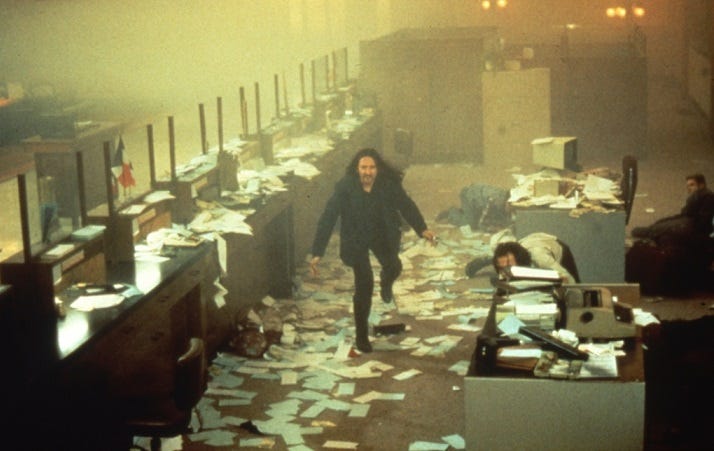
Epiphany: “A strange thing happened in the middle of shooting. All the actors told me that I was a real "actors' director". I who thought I had only taken care of the camera, I realized that the actor and the camera are intimately linked. That's why I don't really believe in storyboards anymore.”
Pitching the film: “When I finished the script, I had to "christen" the film in the hope of finding money. So during meetings, I presented Killing Zoe as a sexy thriller. How awful! There is nothing worse than a sexy scene that seems to say "Well, here it is, your sex scene, now we can get back to the course of the film!" The erotic aspect of this kind of scene excites me much less than a simple kiss for example. But I was almost obliged to go through that to shoot Killing Zoe. However, I knew that the coupling between Zed and Zoe would allow me to go much further than the banal sex scene, that I would probably fool the producer. The reasoning is the same for the film as a whole: I wanted to go beyond the genre, to have one foot in the thriller and the other in the arthouse film. For me, a large part of the director's work is to transform the disadvantages of filming in advantages. Necessity is the mother of invention! For example, the hotel room was very small and I had little time to refine the framing. So, I filmed with a hand-held camera. This inspiration of the moment creates a dynamic for both the actors and the technicians who feel really free and brings a certain fluidity to the film.”
About the leading lady - Julie Delpy - filming topless: “I wanted there to be as few people as possible during the filming of this scene. I tried to be sensitive, to be careful, not to offend Julie, to clear the set as much as possible. While I was busy creating all the ideal conditions, Julie was walking around the hotel half-naked, looking for a cigarette!”
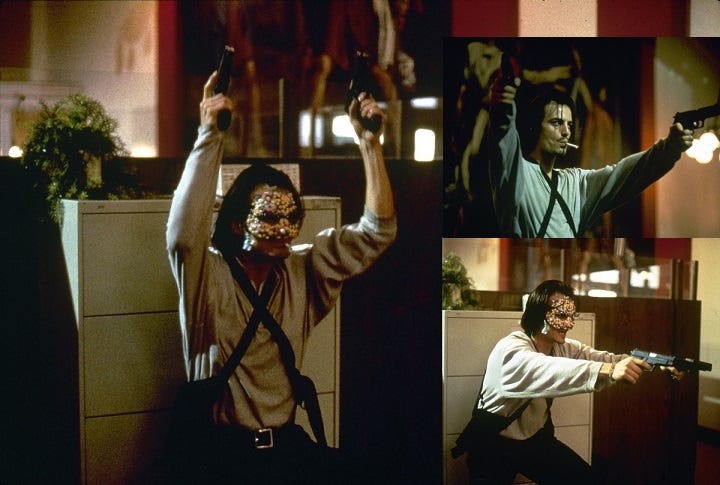
Keepsake prop: “This bag belongs to Jean-Hugues Anglade; he takes it everywhere with him, on all the shoots. This bag means a lot to Jean-Hugues: his mother gave it to him when he was young! I thought that the thing would make a very good "drug bag" for Eric. During the sodomy, Jean-Hugues suddenly took it out of his jacket pocket and started whipping the guy with it. I let him do it. It's funny. A little twisted, yes. But twisted things are sometimes funny!”
Lawrence Bender was also interviewed. He has a surprising background: “For a long time, I was an actor. This experience allowed me to work with very good people, but I often found myself unemployed. To survive, I even had to become a waiter! Even if you rub shoulders with people like Christopher Walken and Ellen Burstyn on stage, in Shakespeare plays, you can find yourself without a penny in your pocket for years. After a few years of this regime, I decided to change my tune. For two years, I worked on technical teams without really orienting myself in a definitive direction. Film production, I actually arrived at it by chance. I produced a B movie in which I was supposed to act, a small budget of $120,000, The Intruder, a gore film written and directed by the co-writer of Evil Dead II, Scott Spiegel. Having no experience in the profession, I of course gave up acting. On the other hand, the role of producer on such a tiny project, with almost no means, requires great flexibility. In addition to the financial problems, I served as assistant director, cook, and coach for the actors. In fact, I became a producer by default. The Intruder did not have a very great career, but it was thanks to this film that I met Quentin Tarantino, who counts Scott Spiegel among his friends. Scott Spiegel was introduced to me by Boaz Yakin, this Boaz Yakin whose Fresh I produced a few years later. So far, all the films I have produced are due to a network of relationships, to the pure chance of encounters.”
Since Quentin Tarantino is a big fan of Hong Kong movies, it should be noted that Lawrence Bender appeared in a martial arts film starring another such fan: Lionheart (1990) starring Jean-Claude Van Damme.
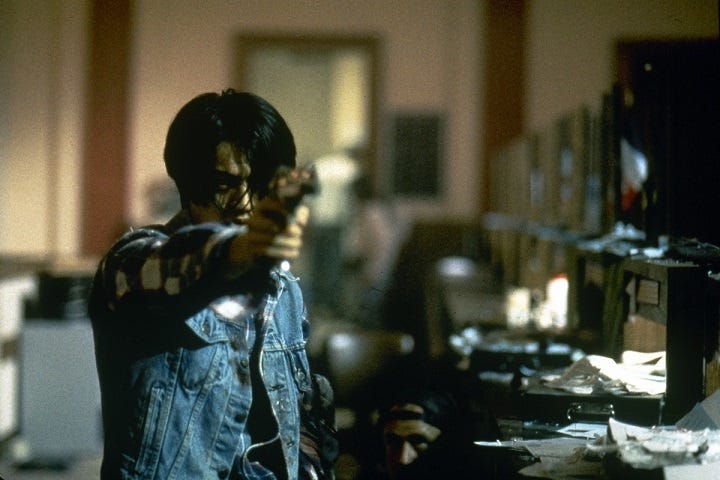
Quentin Tarantino’s official debut: “Quentin talked to me at length about Reservoir Dogs, from the first draft of the script. He literally jumped on me! He was so eager to shoot it that he thought he could complete the project with the $30,000 he had earned from the option taken on the script for True Romance. He was tired of waiting for True Romance and Natural Born Killers to finally be financed. Four years is a long time! Quentin had staged both films in his head so often that he no longer felt the need to bring these manuscripts to the screen himself. On the other hand, this story of a heist that we do not witness, and which takes place almost entirely in a hangar, excited him. I pushed him to rewrite the script. In three weeks and a half, it was done. Only, at the time, neither he nor I had a dollar in the bank. We didn't even have enough money to afford a few photocopies of the manuscript. Quentin was so eager to see Reservoir Dogs finished that he only gave me two months to raise the money needed for its production.”
A person who I mentioned earlier: “I sent the script to Monte Hellman. He was so impressed that he was willing to mortgage his house to produce Reservoir Dogs! Hellman's involvement meant a budget of $200,000. It grew to $500,000 after Live Entertainment, the video arm of Carolco, agreed to invest. I took the script for Reservoir Dogs to my old drama teacher for her opinion. She told me that the role of Mr. White would be perfect for Harvey Keitel, to whom she then passed the manuscript. When Harvey called me, I had one of the most euphoric moments of my life. He was my ideal actor and there I had a message on my answering machine! He told me he hadn't read a story like that in a long time; he absolutely wanted to be in the film. With such a name attached to the project, it was obviously much easier to complete the budget. Harvey advised us to recruit our actors in New York. But Quentin and I didn't have a dime in our pockets. So Harvey paid for the plane, the hotel, the rental of an office... Finally, I asked him to appear in the credits as co-producer.”
Pulp Fiction (a film featuring a scene where two guys beat each other to a pulp): “In a very short time, Quentin Tarantino had acquired such a reputation that the production of Pulp Fiction was very easy. In addition, we took on exactly the same technical team as on Reservoir Dogs. Working with people you know protects you from many problems. The big problem is to bring together twelve stars in the same film. A real nightmare that requires you to constantly juggle with the shooting schedule. They were in the four corners of the world. When one was available, the other was no longer. If Pulp Fiction finally came to fruition, it was only because of the will of its actors; they absolutely wanted to participate.”
The second side of a story: “While I was preparing Reservoir Dogs, I was looking for cheap locations. And I found this bank where the boss agreed to let us shoot for peanuts. Knowing that Roger Avary was planning a film about a heist, I immediately called him to tell him about my discovery. This phone call convinced him to start writing Killing Zoe. The project took a long time to come to fruition. It was only after I introduced Roger Avary to the producer that the film really took shape. The way she raised the money needed to make the film would deserve to be in the Book of Records. It is a combination of bank loans, personal loans, pre-sales from the participation of foreign producers, especially Samuel Hadida.”
Bender’s future projects: “I have no projects with Roger Avary. He should settle in France to work. On the other hand, I have a film in progress with Quentin Tarantino, Four Rooms, which is divided into four sketches. One will be directed by Quentin, the others by Alison Anders, Alex Rockwell and Robert Rodriguez. Steve Buscemi will probably star in the role of a hotel concierge who goes from one room to another, each corresponding to a story. Now, things are easier than in the days of Reservoir Dogs. When you don't have references, investors are always afraid to commit. But, even if it's successful, as long as I produce different, new films, I will have to fight to bring them to fruition. You have to have balls and believe in it very strongly!”